



Quick answer
Creatine works for women: reviews report that women have 70 to 80% lower natural creatine stores than men and that supplementation improves strength and exercise performance in pre-menopausal women, with emerging research after menopause. The dose is the same as for men, 3 to 5g a day. You do not need a women's formula: plain creatine monohydrate is the same, and the cheapest UK powders cost about £0.10 per 5g on our 31 October 2026 prices.
Does creatine work for women?
Yes. A 2021 review of creatine in women's health reports that women have 70 to 80% lower natural creatine stores than men, and that supplementation in pre-menopausal women appears to improve strength and exercise performance. A 2025 follow-up review by the same lead author described creatine as a promising strategy across the lifespan.
Research after menopause is earlier but encouraging: the 2021 review reports benefits for muscle size and function at higher doses and favourable effects on bone when combined with resistance training. Research on mood and cognition is at a preliminary stage.
How much creatine should women take?
The usual approach is the same for everyone: 3 to 5g of creatine monohydrate a day, every day including rest days. A loading phase of about 20g a day for five to seven days fills muscles faster, but a steady daily dose reaches a similar level within about three to four weeks, according to the 2025 review.
Smaller bodies do not need a special 'women's' dose. If you want to be precise, see how dose relates to body weight in our daily dose guide.
Water weight, bloating and hair loss
Some people see the scale rise slightly in the first weeks. Creatine draws water into muscle, and an expert review of common creatine questions explains that early weight gain mainly reflects water stored in muscle, and that longer studies have not shown lasting water retention. It is not fat gain.
Bloating is commonly reported during high-dose loading. Skipping the loading phase and taking 3 to 5g a day avoids it for most people.
Hair loss worries trace back to a 2009 study of 20 male rugby players that measured a hormone ratio, not hair. A 2025 randomised trial gave 5g a day for 12 weeks and found no difference in DHT or hair outcomes compared with placebo. That trial studied men, so direct evidence in women is limited, but it does not support the concern.
What to buy
Plain creatine monohydrate is the form behind most of the research and the best value. In our 31 October 2026 UK data, the cheapest plain powders cost about £0.10 per 5g (Myprotein Impact Creatine 500g and Warrior Creatine Monohydrate 1kg). We found no women-branded creatine in the UK catalogue.
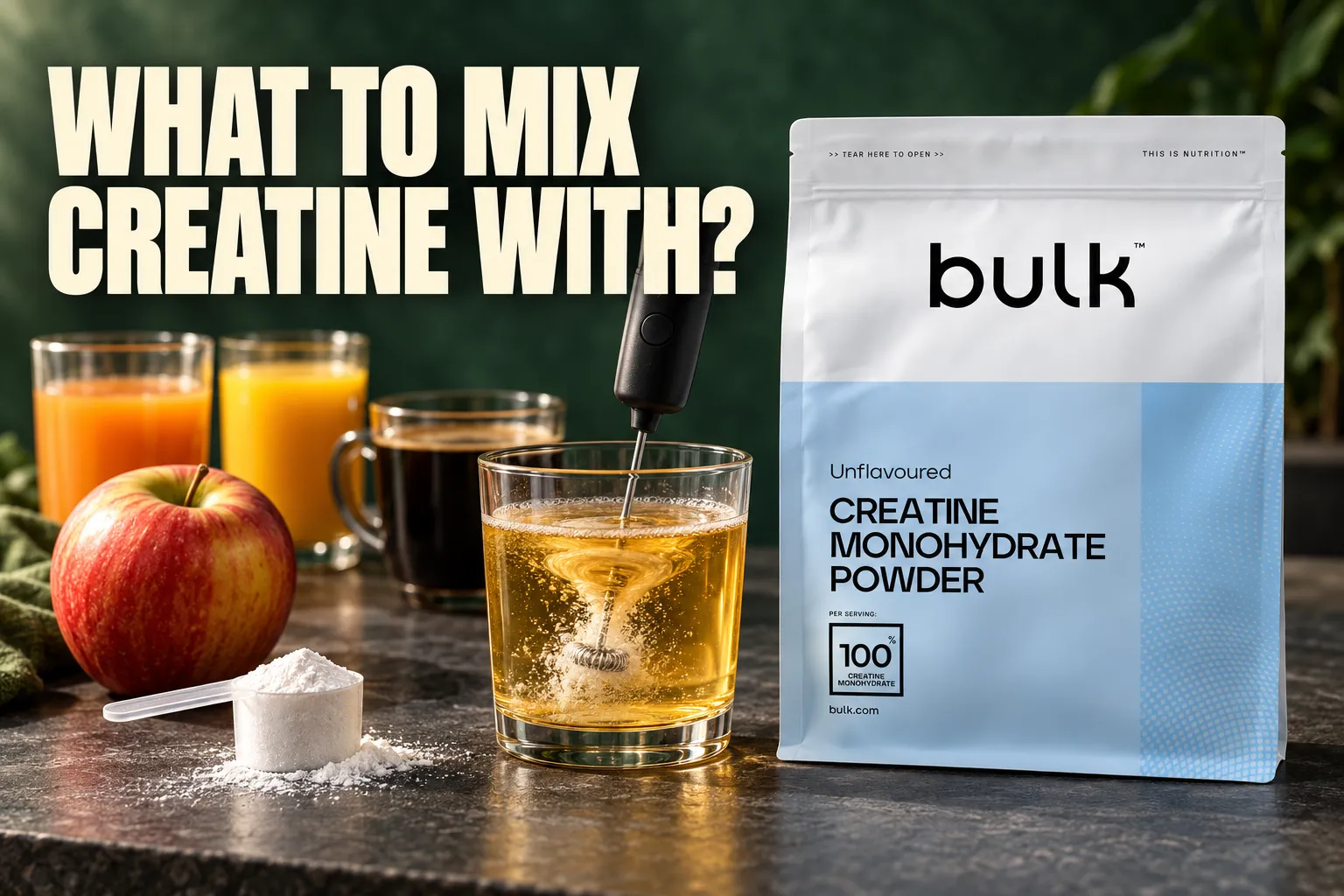
If texture puts you off, it is easy to fix: shaking does not mix creatine well, but a handheld milk frother works really well, and my recommendation for juice is apple juice.

Cheapest Creatine
XCelerate Nutrition Creatine Powder
XCelerate Nutrition · 1kg
Pregnancy, breastfeeding and health conditions
Research on creatine during pregnancy is at an early stage, and it is not an established recommendation. If you are pregnant, trying to conceive or breastfeeding, speak to your midwife, GP or doctor before starting.
The same applies if you have kidney disease or take regular medication. Check the full label of any women's formula too: herbal extracts such as uva ursi are not plain creatine and may not suit everyone.
References
Sources and further reading
- 01Smith-Ryan et al. (2021), Nutrients: Creatine supplementation in women's health
Lower natural creatine stores in women; strength and performance benefits; post-menopausal muscle and bone findings.
- 02Smith-Ryan et al. (2025), JISSN: Creatine in women's health from menstruation to menopause
Updated review of creatine across women's lifespan, including dosing.
- 03Antonio et al. (2021), JISSN: Common questions and misconceptions about creatine
Expert review addressing water retention, hair loss and whether creatine works for women.
- 04Lak et al. (2025), JISSN: Does creatine cause hair loss? A 12-week randomised trial
5g a day for 12 weeks in 38 trained men; no differences in DHT or hair outcomes versus placebo.
- 05van der Merwe et al. (2009), Clinical Journal of Sport Medicine
Three weeks of creatine in 20 rugby players increased the DHT to testosterone ratio; hair was not measured.
- 06Australian Institute of Sport, Creatine
Daily 3 to 5g maintenance dosing and practical use.
- 07ProteinDeals catalogue prices and labels, 31 October 2026
UK creatine prices per 5g.
Frequently asked questions
Is creatine good for women?+
Yes. Reviews report that women have 70 to 80% lower natural creatine stores than men and that creatine improves strength and exercise performance in pre-menopausal women, with emerging benefits after menopause when combined with resistance training.
How much creatine should a woman take?+
The same as anyone: 3 to 5g of creatine monohydrate a day, every day. A loading phase is optional; a steady daily dose fills muscle stores within about three to four weeks.
Will creatine make women gain weight?+
Some people gain a small amount of scale weight early on because creatine draws water into muscle. It is not fat, and skipping a high-dose loading phase reduces bloating.
Does creatine cause hair loss in women?+
There is no good evidence that it does. A 2025 randomised trial found no change in DHT or hair outcomes after 12 weeks of 5g a day, although it studied men.
Is creatine for women different from regular creatine?+
No. The creatine is the same molecule and the dose is the same, 3 to 5g a day. Plain creatine monohydrate is the form behind most of the research and usually the best value.
Can I take creatine while pregnant?+
Research on creatine in pregnancy is still early and it is not an established recommendation. Speak to your midwife, GP or doctor before taking it if you are pregnant, trying to conceive or breastfeeding.