
Weight Gain Calculator
Calculate your daily calorie and protein targets to gain weight and build muscle at a controlled rate.
Science
How This Calculator Works
The Formula
This calculator uses the Mifflin-St Jeor equation to estimate your Basal Metabolic Rate (BMR) — the calories your body burns at rest. BMR is then multiplied by an activity factor to give your Total Daily Energy Expenditure (TDEE). A calorie surplus is added on top to drive weight gain.
Mifflin-St Jeor BMR
Published in 1990 and validated across multiple populations, Mifflin-St Jeor is the most accurate BMR formula for the general population according to the Academy of Nutrition and Dietetics. It accounts for weight, height, age and sex:
Male
10 × kg + 6.25 × cm − 5 × age + 5
Female
10 × kg + 6.25 × cm − 5 × age − 161
Related reading

Activity Multipliers
BMR reflects calories burned at complete rest. The activity factor scales this up to reflect your actual daily expenditure based on exercise frequency and intensity:
Sedentary
×1.2Lightly active
×1.375Moderately active
×1.55Very active
×1.725Calorie Surplus for Muscle Gain
A surplus of 200–500 kcal above TDEE is the evidence-based range for lean muscle gain. Hall et al. (2012) and subsequent research confirm that a modest surplus maximises muscle protein synthesis while limiting fat accumulation. Larger surpluses do not build muscle faster — they primarily increase fat storage. The slow pace (200 kcal) suits those prioritising body composition; the fast pace (500 kcal) suits hardgainers or those in a dedicated bulk.

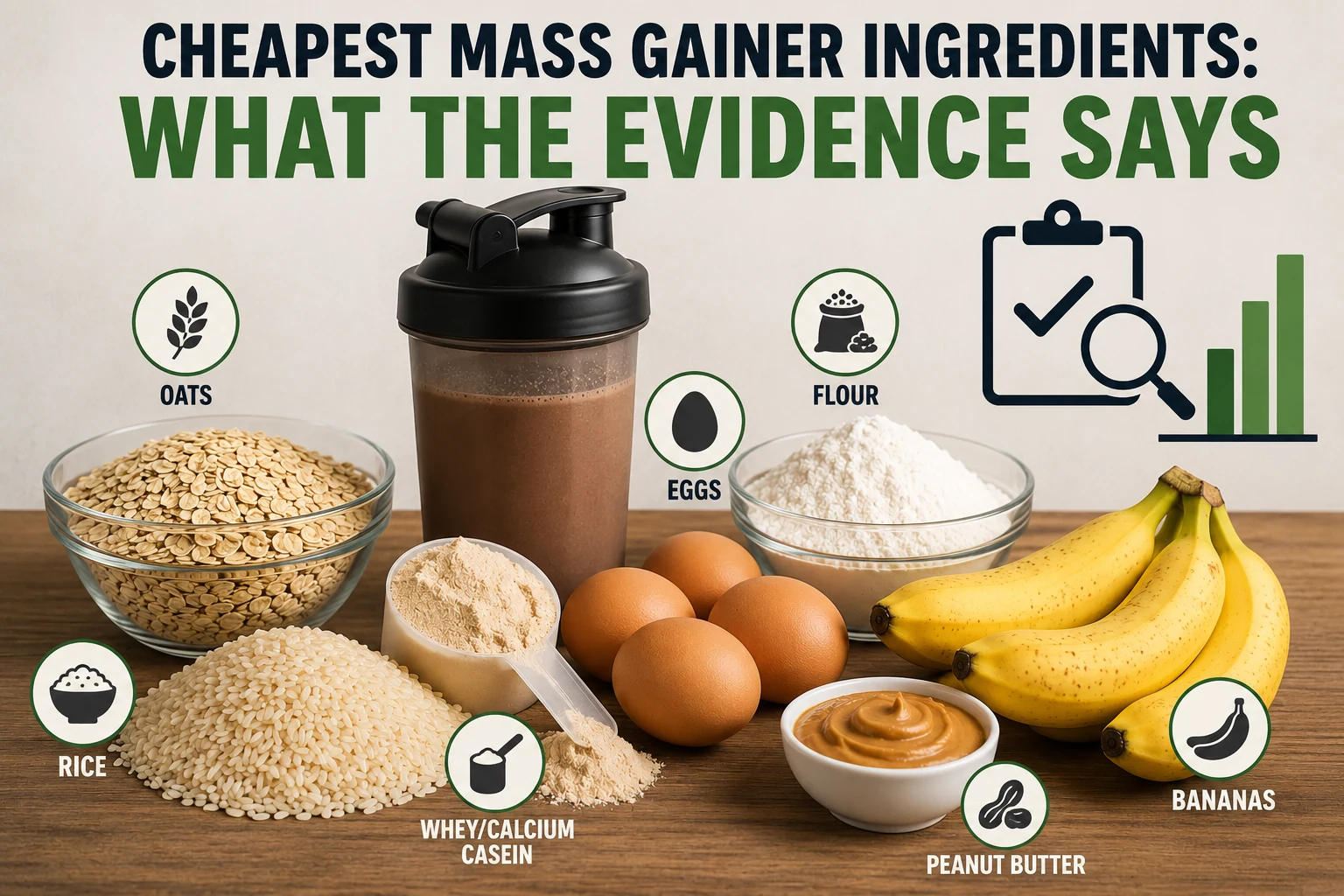
Cheapest Mass Gainer
Hard Gainer Powder
Pure Source Nutrition · 5kg
Pros
- 48% below the £1.08/100g average across 10 comparable /compare listings
- 24g protein per 100g
Macronutrient Split
Protein is set at 2.0g/kg bodyweight — within the range supported by Morton et al. (2018) for resistance-trained individuals in a surplus. Fat is set at 25% of total calories (a minimum floor for hormone health). Remaining calories are allocated to carbohydrates, which fuel training performance and glycogen replenishment.
Important Note
These calculations are estimates based on population averages. Individual metabolic rate can vary by 10–15% from formula predictions. If you are not gaining weight after 2–3 weeks at the target calories, increase by 100–150 kcal and reassess. This calculator is for educational purposes and does not replace advice from a registered dietitian or sports nutritionist.