
Quick answer
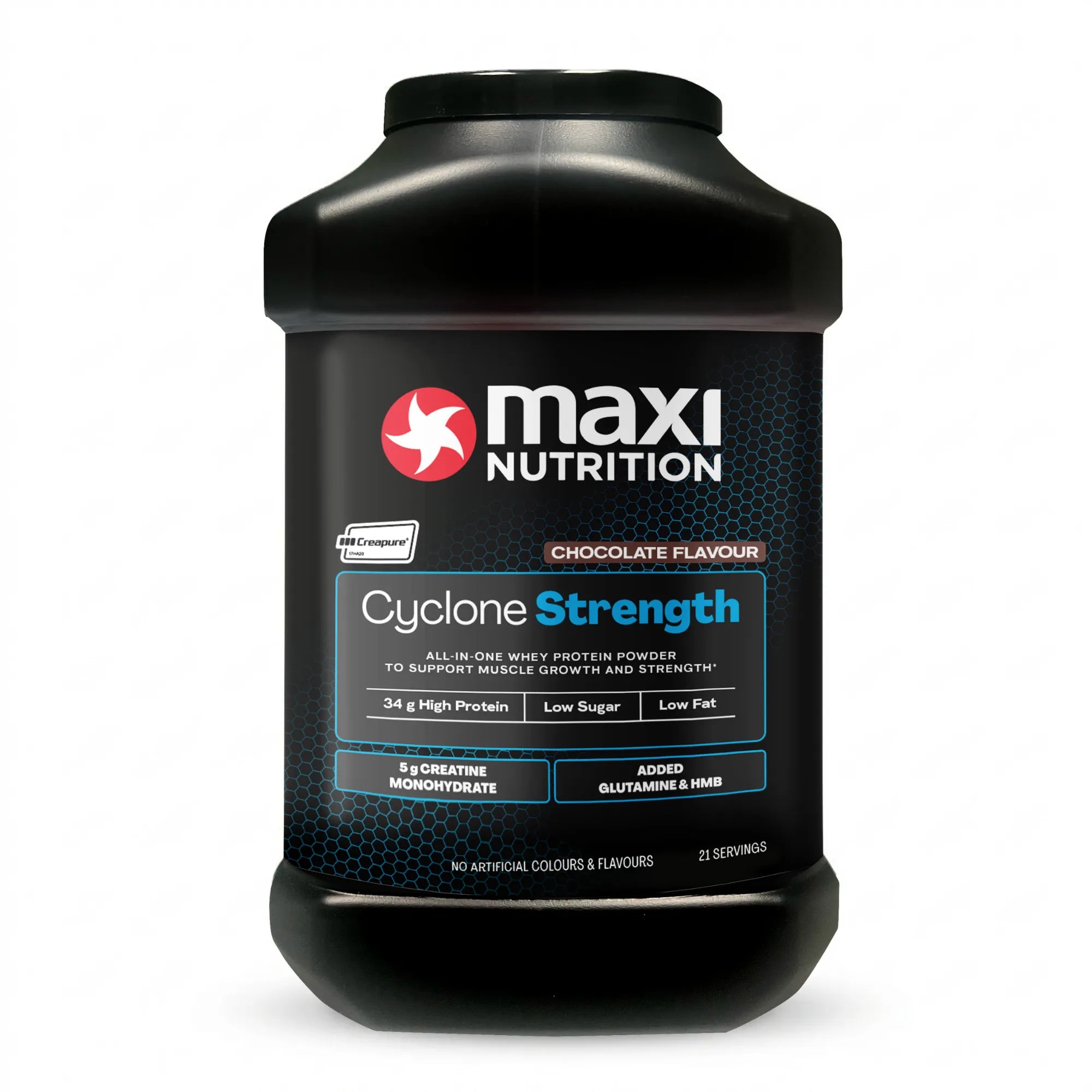
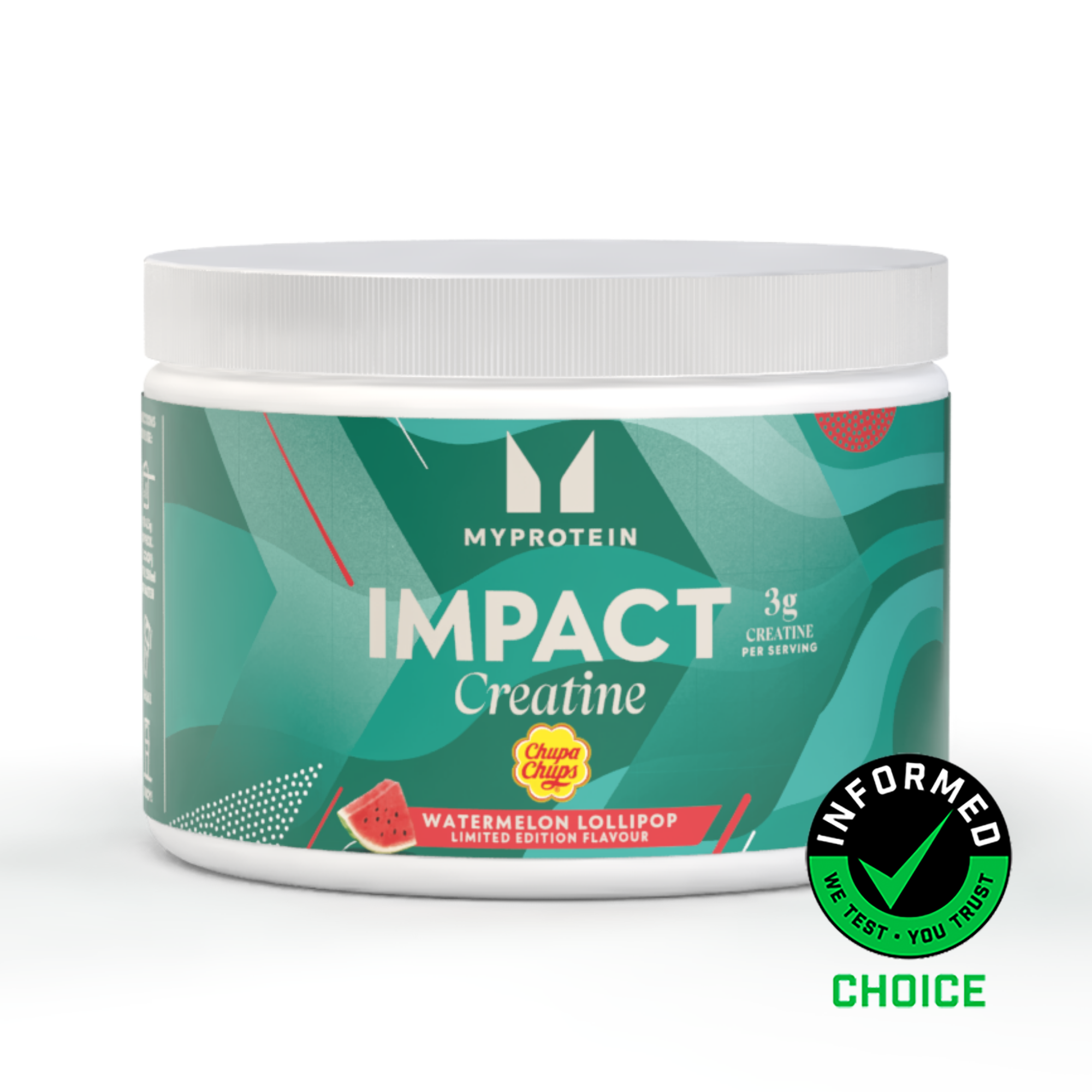
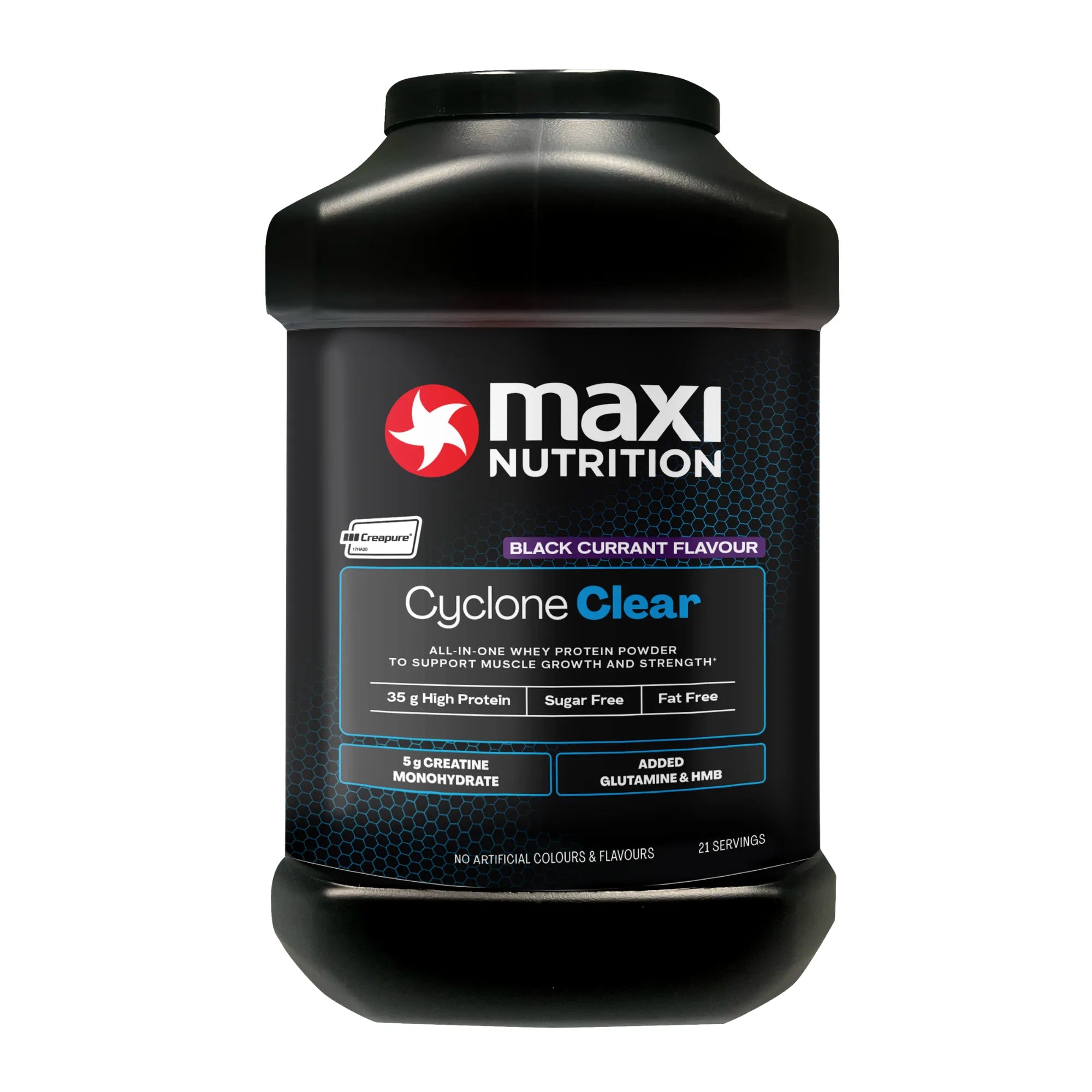
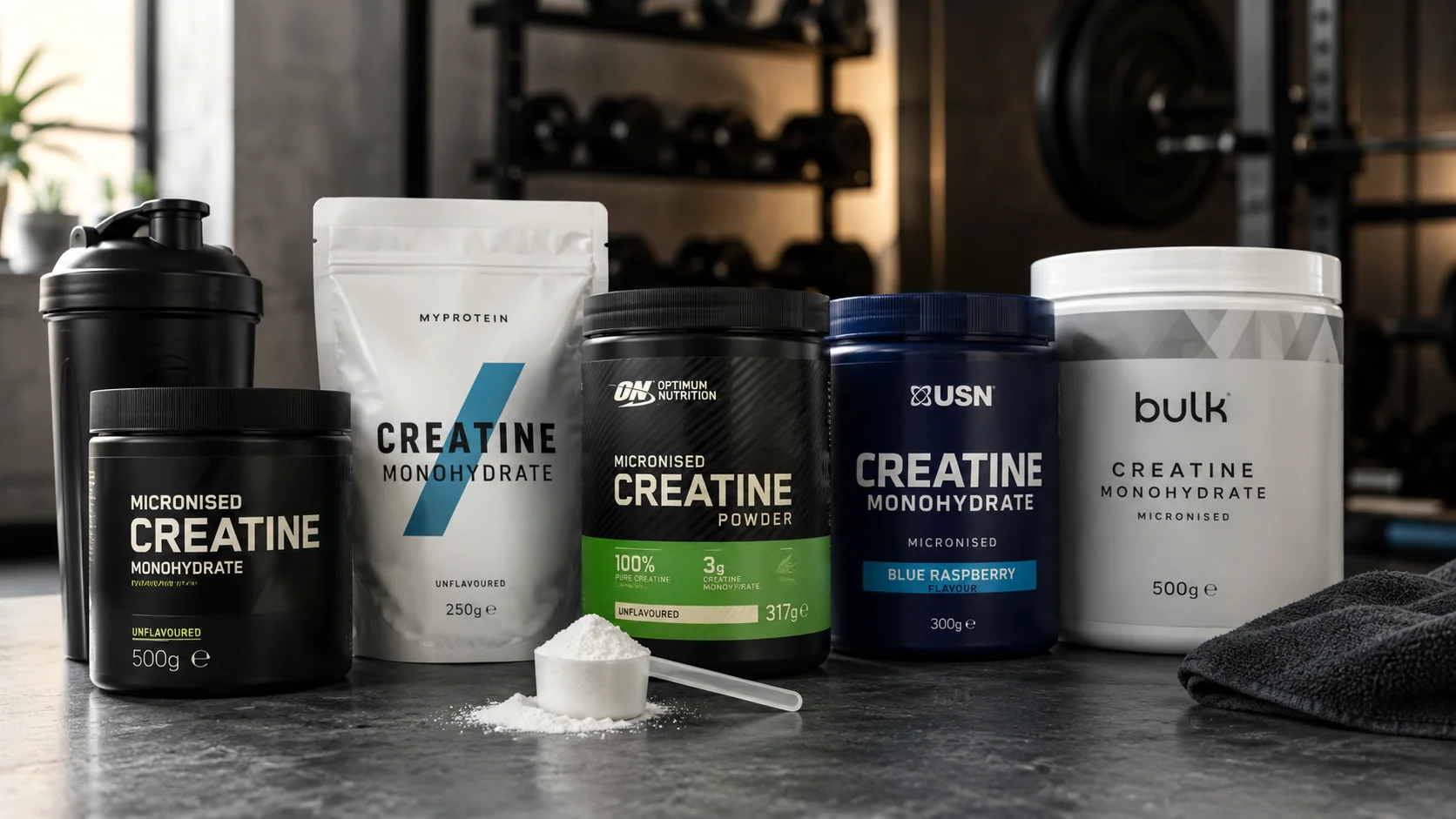
Creatine helps replenish rapid muscular energy and can improve repeated high-intensity performance over time. Our recommendation is the cheapest reputable 100% creatine monohydrate per 5g dose. Creapure is a traceability upgrade; gummies, HCl and branded blends rarely justify their premium.
What creatine is
Creatine is a naturally occurring compound made from three amino acids, arginine, glycine and methionine. Your body synthesises it in the liver, kidneys and pancreas, and approximately 95% of your body's creatine is stored in skeletal muscle in the form of phosphocreatine.
It is also found in food, primarily in meat and fish. A 100g serving of raw beef contains roughly 400mg of creatine. Vegetarians and vegans have lower baseline muscle creatine stores because they consume no dietary creatine, which is one reason they often see the largest performance improvements from supplementation.
Live comparison
Creatine products
FlavourSize (g)QtyServingsOfferTotal Per serving 10001200 £13.99 --£0.070 7501150 £11.99 --£0.080 5001100 £9.99 --£0.100 |
FlavourSize (g)QtyServingsOfferTotal Per serving 500011000 £77.49 --£0.077 20001400 £31.99 --£0.080 10001200 £16.99 --£0.085 |
FlavourSize (g)QtyServingsOfferTotal Per serving 900130 £13.99£30.00 -53%30.0g76£0.466 |
FlavourSize (g)QtyServingsOfferTotal Per serving 4050130 £62.99 44.8g474£2.100 2700120 £44.99 44.8g474£2.250 1350110 £24.99 44.8g474£2.499 |
FlavourSize (g)QtyServingsOfferTotal Per serving 3000160 £49.00 17.0g177£0.817 |
FlavourSize (g)QtyServingsOfferTotal Per serving 10001200 £19.99 --£0.100 5001100 £11.99 --£0.120 300160 £8.99 --£0.150 |
FlavourSize (g)QtyServingsOfferTotal Per serving 250173 £5.00 --£0.068 10001222 £21.99 --£0.099 5001147 £11.99 --£0.082 |
FlavourSize (g)QtyServingsOfferTotal Per serving 10001167 £21.99 --£0.132 500183 £11.49 --£0.138 250142 £6.99 --£0.166 |
FlavourSize (g)QtyServingsOfferTotal Per serving 43219 £10.00 30.0g152£1.111 564112 £15.00 30.0g150£1.250 1192.5125 £34.99 30.0g152£1.400 |
FlavourSize (g)QtyServingsOfferTotal Per serving 10001200 £24.99 --£0.125 5001100 £12.99 --£0.130 250150 £8.99 --£0.180 |
FlavourSize (g)QtyServingsOfferTotal Per serving 10001- £24.99 --- 5001- £14.99 --- 2501- £7.99 --- |
FlavourSize (g)QtyServingsOfferTotal Per serving 10001294 £27.49 --£0.094 |
FlavourSize (g)QtyServingsOfferTotal Per serving 9001- £25.00 --- |
FlavourSize (g)QtyServingsOfferTotal Per serving 10001200 £29.95 --£0.150 5001100 £24.95 --£0.249 250150 £18.95 --£0.379 |
FlavourSize (g)QtyServingsOfferTotal Per serving 3901- £11.99£16.99 -29%--- |
FlavourSize (g)QtyServingsOfferTotal Per serving 1260121 £39.99 34.0g202£1.904 |
FlavourSize (g)QtyServingsOfferTotal Per serving 10001200 £31.99 --£0.160 20001400 £64.99 --£0.162 5001100 £20.99 --£0.210 |
FlavourSize (g)QtyServingsOfferTotal Per serving 1000133 £31.99 22.2g105£0.969 500117 £17.99 22.2g105£1.058 25018 £9.99 22.2g105£1.249 |
FlavourSize (g)QtyServingsOfferTotal Per serving 300160 £9.99£19.99 -50%--£0.167 |
FlavourSize (g)QtyServingsOfferTotal Per serving 15003300 £50.13 --£0.167 9003180 £33.78 --£0.188 5001100 £18.99 --£0.190 |
FlavourSize (g)QtyServingsOfferTotal Per serving 250155 £8.99 --£0.163 |
FlavourSize (g)QtyServingsOfferTotal Per serving 500120 £17.99 15.6g-£0.899 |
FlavourSize (g)QtyServingsOfferTotal Per serving 500120 £17.99 15.6g-£0.899 |
FlavourSize (g)QtyServingsOfferTotal Per serving 50015 £18.00 --£3.600 23012 £9.00 --£4.500 1001- £4.99 --- |
FlavourSize (g)QtyServingsOfferTotal Per serving 20001- £72.95 --- 10001- £49.95 --- 5001- £26.95 --- |
FlavourSize (g)QtyServingsOfferTotal Per serving 9001180 £32.99 --£0.183 6001120 £22.49 --£0.187 300160 £11.49 --£0.192 |
FlavourSize (g)QtyServingsOfferTotal Per serving 4001- £14.99 --- |
FlavourSize (g)QtyServingsOfferTotal Per serving 400180 £14.99 500.0g-£0.187 |
FlavourSize (g)QtyServingsOfferTotal Per serving 400180 £14.99 500.0g-£0.187 |
FlavourSize (g)QtyServingsOfferTotal Per serving 500187 £19.99 --£0.230 250143 £13.49 --£0.314 |
FlavourSize (g)QtyServingsOfferTotal Per serving 5001100 £19.99 --£0.200 |
FlavourSize (g)QtyServingsOfferTotal Per serving 1000133 £39.99 -115£1.212 |
FlavourSize (g)QtyServingsOfferTotal Per serving 3001100 £12.00 --£0.120 |
FlavourSize (g)QtyServingsOfferTotal Per serving 10001250 £42.00 --£0.168 300175 £19.00 --£0.253 |
FlavourSize (g)QtyServingsOfferTotal Per serving 1260121 £56.00 35.0g192£2.667 |
FlavourSize (g)QtyServingsOfferTotal Per serving 330130 £15.00 -4£0.500 |
FlavourSize (g)QtyServingsOfferTotal Per serving 5001167 £22.99 --£0.138 |
FlavourSize (g)QtyServingsOfferTotal Per serving 210142 £10.00 --£0.238 |
FlavourSize (g)QtyServingsOfferTotal Per serving 250150 £11.99£23.99 -50%--£0.240 |
FlavourSize (g)QtyServingsOfferTotal Per serving 501212 £29.00 15.0g200£2.417 |
FlavourSize (g)QtyServingsOfferTotal Per serving 5001100 £24.99 --£0.250 250150 £14.99 --£0.300 |
FlavourSize (g)QtyServingsOfferTotal Per serving 5001100 £25.00 --£0.250 |
FlavourSize (g)QtyServingsOfferTotal Per serving 5001121 £25.00 --£0.207 100124 £10.00 --£0.417 |
FlavourSize (g)QtyServingsOfferTotal Per serving 450190 £23.99 --£0.267 |
FlavourSize (g)QtyServingsOfferTotal Per serving 450190 £26.00 --£0.289 |
FlavourSize (g)QtyServingsOfferTotal Per serving 25019 £15.19 --£1.688 |
FlavourSize (g)QtyServingsOfferTotal Per serving 6341186 £40.00 --£0.215 317193 £22.00 --£0.237 187155 £14.00 --£0.255 |
FlavourSize (g)QtyServingsOfferTotal Per serving 5001100 £31.99 --£0.320 250150 £17.49 --£0.350 |
FlavourSize (g)QtyServingsOfferTotal Per serving 249130 £16.00 --£0.533 |
FlavourSize (g)QtyServingsOfferTotal Per serving 300160 £19.95 --£0.332 |
FlavourSize (g)QtyServingsOfferTotal Per serving 300160 £19.99 --£0.333 |
FlavourSize (g)QtyServingsOfferTotal Per serving 250150 £16.99 --£0.340 |
FlavourSize (g)QtyServingsOfferTotal Per serving 400180 £27.99 1.1g-£0.350 |
FlavourSize (g)QtyServingsOfferTotal Per serving 400180 £27.99 1.1g-£0.350 150130 £11.99 1.1g-£0.400 |
FlavourSize (g)QtyServingsOfferTotal Per serving 5001- £35.00 --- |
FlavourSize (g)QtyServingsOfferTotal Per serving 5001100 £35.99 --£0.360 300160 £26.99 --£0.450 100120 £18.99 --£0.949 |
FlavourSize (g)QtyServingsOfferTotal Per serving 10001200 £74.99 --£0.375 5001100 £39.99 --£0.400 100120 £9.99 --£0.499 |
FlavourSize (g)QtyServingsOfferTotal Per serving 300160 £23.00 --£0.383 |
FlavourSize (g)QtyServingsOfferTotal Per serving 4441- £34.95 --- 2221- £19.95 --- |
FlavourSize (g)QtyServingsOfferTotal Per serving 252184 £19.99 --£0.238 |
FlavourSize (g)QtyServingsOfferTotal Per serving 3101124 £24.99 21.0g-£0.202 |
FlavourSize (g)QtyServingsOfferTotal Per serving 10001200 £82.99 --£0.415 5001147 £42.49 --£0.289 250183 £28.99 --£0.349 |
FlavourSize (g)QtyServingsOfferTotal Per serving 200140 £17.99 --£0.450 |
FlavourSize (g)QtyServingsOfferTotal Per serving 5001100 £49.99 --£0.500 |
FlavourSize (g)QtyServingsOfferTotal Per serving 350150 £35.00 --£0.700 |
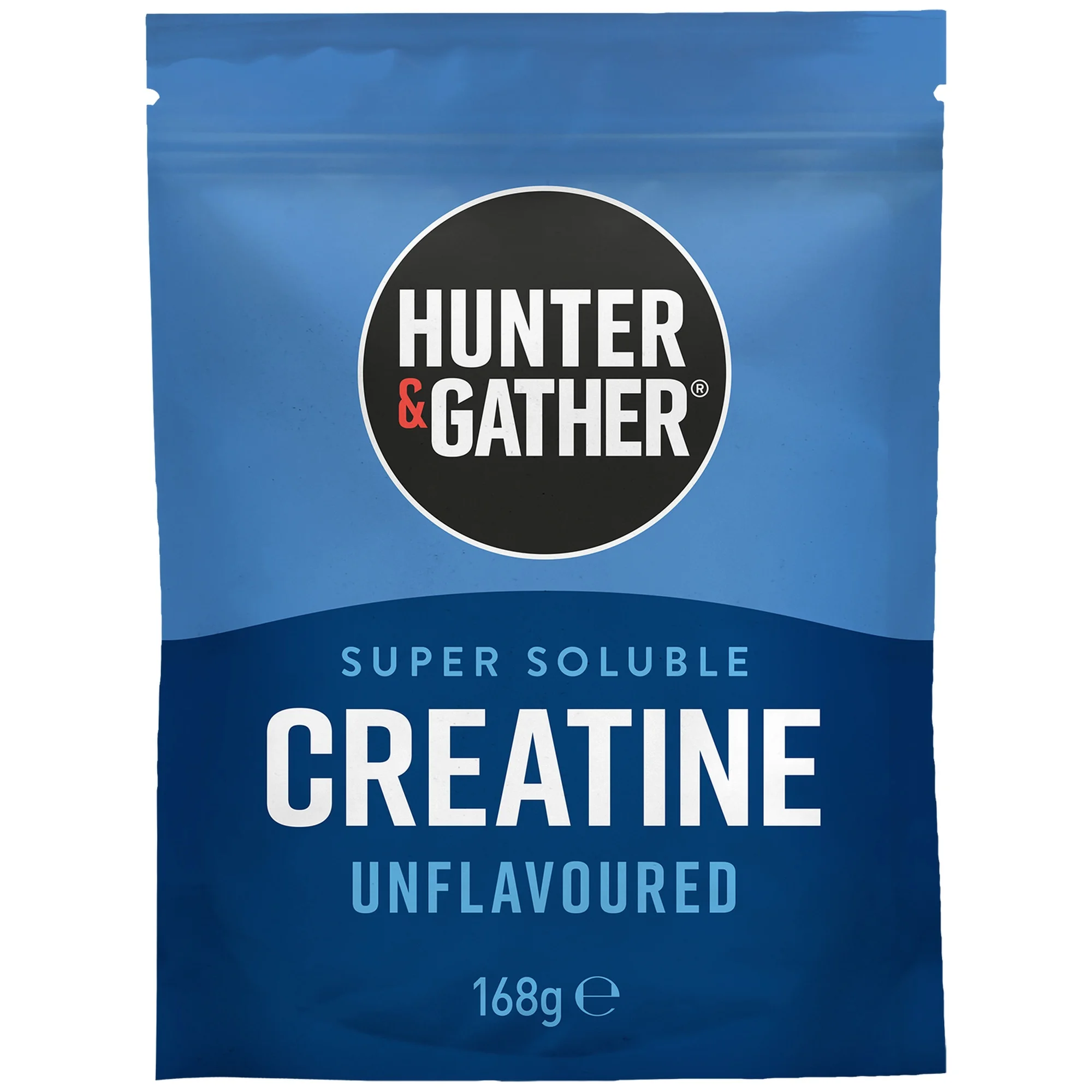
FlavourSize (g)QtyServingsOfferTotal Per serving 168128 £25.00 --£0.893 |
FlavourSize (g)QtyServingsOfferTotal Per serving 150130 £22.50 --£0.750 |
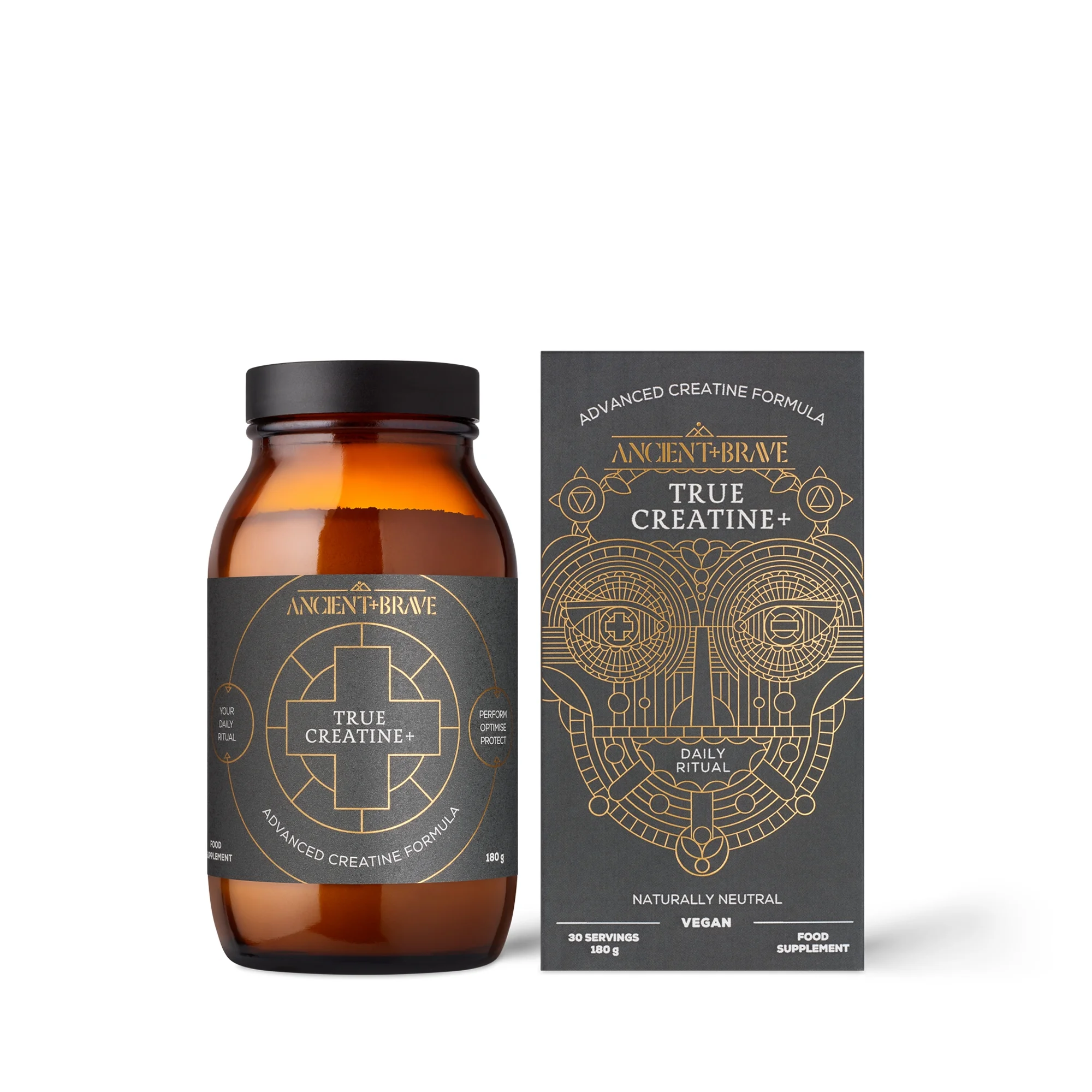
FlavourSize (g)QtyServingsOfferTotal Per serving 180130 £28.00 4.1g21£0.933 |
FlavourSize (g)QtyServingsOfferTotal Per serving 12020 £12.50£25.00 -50%--£0.625 |
FlavourSize (g)QtyServingsOfferTotal Per serving 2828 £24.99£30.00 -17%--£0.892 |
FlavourSize (g)QtyServingsOfferTotal Per serving 120120 £39.49 --£0.329 180180 £58.99 --£0.328 6060 £19.99 --£0.333 |
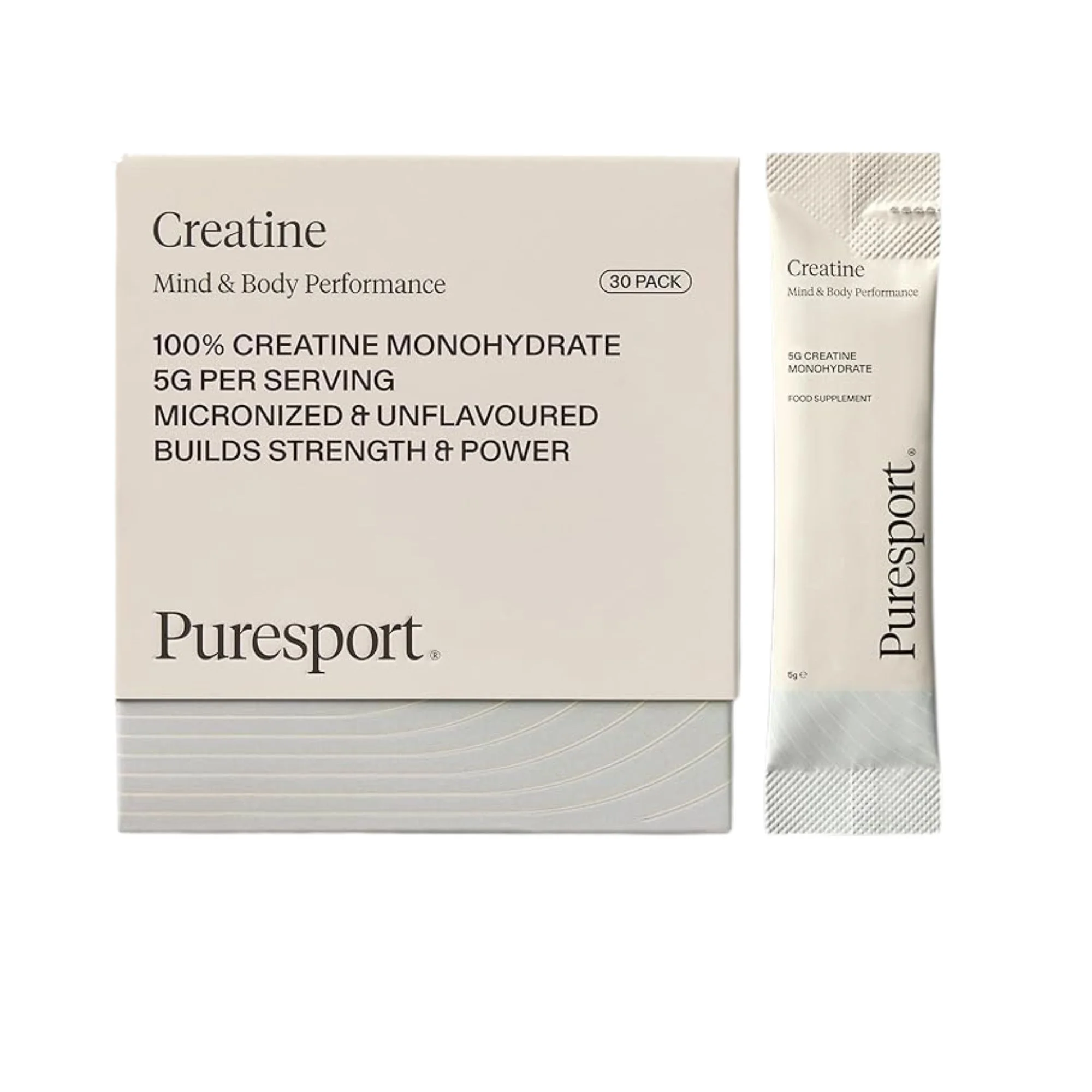
FlavourSize (g)QtyServingsOfferTotal Per serving 3030 £21.99 --£0.733 |
FlavourSize (g)QtyServingsOfferTotal Per serving 3030 £12.99 --£0.433 |
FlavourSize (g)QtyServingsOfferTotal Per serving 217 £4.49 --£0.641 3010 £5.00 0.5g12£0.500 9030 £18.99 0.5g12£0.633 |
FlavourSize (g)QtyServingsOfferTotal Per serving 8026 £18.49 --£0.711 9030 £8.49 --£0.283 |
FlavourSize (g)QtyServingsOfferTotal Per serving 3010 £5.00 0.5g12£0.500 9030 £18.99 0.5g12£0.633 |
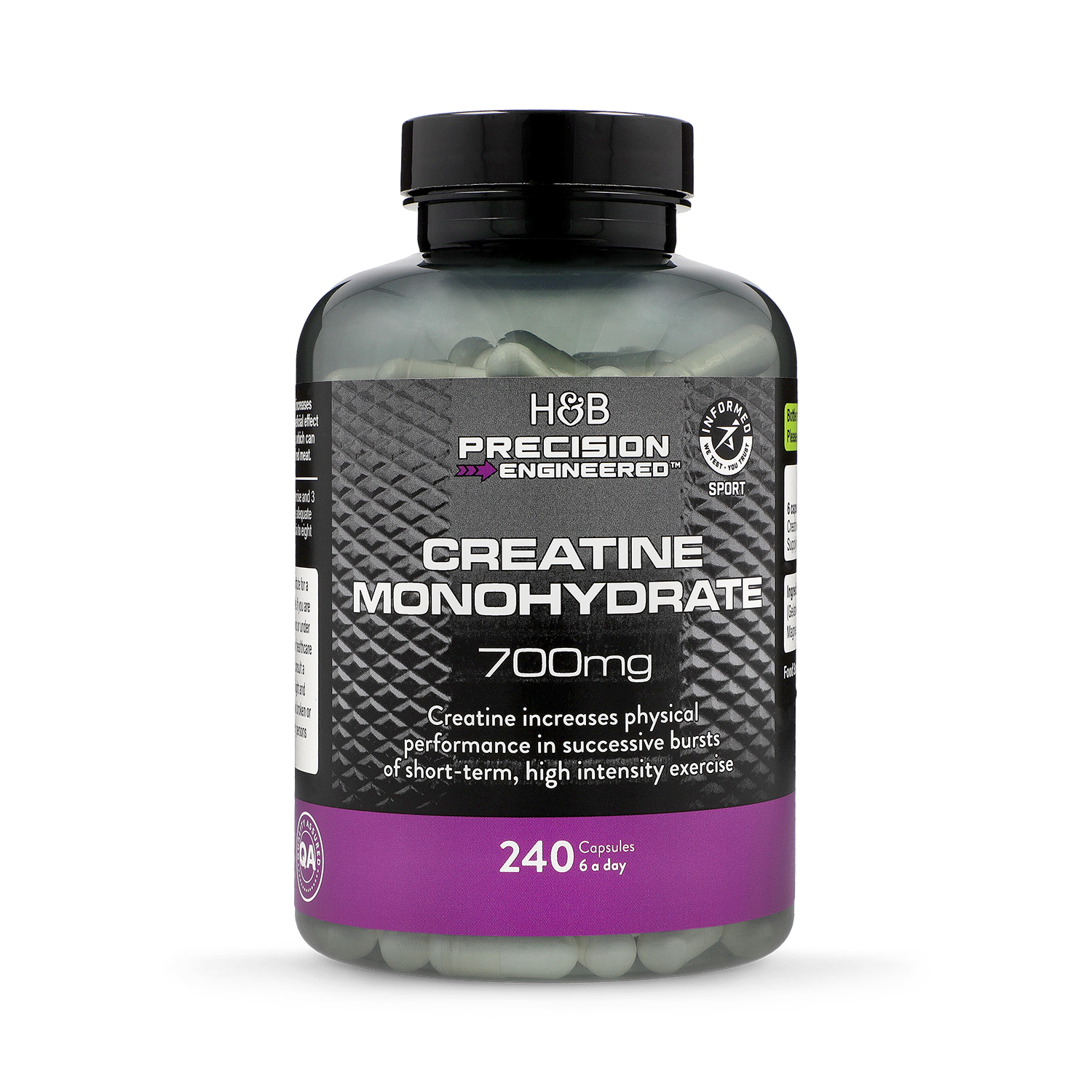
FlavourSize (g)QtyServingsOfferTotal Per serving 24040 £16.00 --£0.400 |
FlavourSize (g)QtyServingsOfferTotal Per serving 12020 £10.00 --£0.500 |
FlavourSize (g)QtyServingsOfferTotal Per serving 6030 £16.00 --£0.533 |
FlavourSize (g)QtyServingsOfferTotal Per serving - £12.00 --- |
FlavourSize (g)QtyServingsOfferTotal Per serving 6020 £14.99 --£0.750 |
FlavourSize (g)QtyServingsOfferTotal Per serving 25 £14.99 --£0.600 |
FlavourSize (g)QtyServingsOfferTotal Per serving 9030 £14.99 --£0.500 |
FlavourSize (g)QtyServingsOfferTotal Per serving 1212 £14.99 26.8g316£1.249 |
FlavourSize (g)QtyServingsOfferTotal Per serving 18060 £9.95 --£0.166 6020 £4.89 --£0.244 |
FlavourSize (g)QtyServingsOfferTotal Per serving 120120 £8.99 --£0.075 240240 £14.99 --£0.062 360360 £17.99 --£0.050 |
FlavourSize (g)QtyServingsOfferTotal Per serving 12020 £5.99 --£0.299 24040 £7.99 --£0.200 36060 £10.99 --£0.183 |
FlavourSize (g)QtyServingsOfferTotal Per serving 9030 £19.99 21.0g-£0.666 |
FlavourSize (g)QtyServingsOfferTotal Per serving 120120 £8.75 80.0g-£0.073 180180 £11.49 80.0g-£0.064 360360 £17.99 80.0g-£0.050 |
FlavourSize (g)QtyServingsOfferTotal Per serving 180180 £7.99 80.0g-£0.044 360360 £14.99 80.0g-£0.042 9090 £4.99 80.0g-£0.055 |
FlavourSize (g)QtyServingsOfferTotal Per serving 18060 £24.99 --£0.416 |
FlavourSize (g)QtyServingsOfferTotal Per serving 1010 £8.99 --£0.899 |
FlavourSize (g)QtyServingsOfferTotal Per serving 200200 £9.95 --£0.050 |
FlavourSize (g)QtyServingsOfferTotal Per serving 8020 £19.00 --£0.950 |
FlavourSize (g)QtyServingsOfferTotal Per serving 2 £10.00 10.0g-£5.000 |
FlavourSize (g)QtyServingsOfferTotal Per serving 150 £38.00 --£0.253 |
FlavourSize (g)QtyServingsOfferTotal Per serving 15 £18.00 --£1.200 |
FlavourSize (g)QtyServingsOfferTotal Per serving 60 £27.00 --£0.450 90 £33.00 --£0.367 |
FlavourSize (g)QtyServingsOfferTotal Per serving 12030 £28.00 --£0.933 |
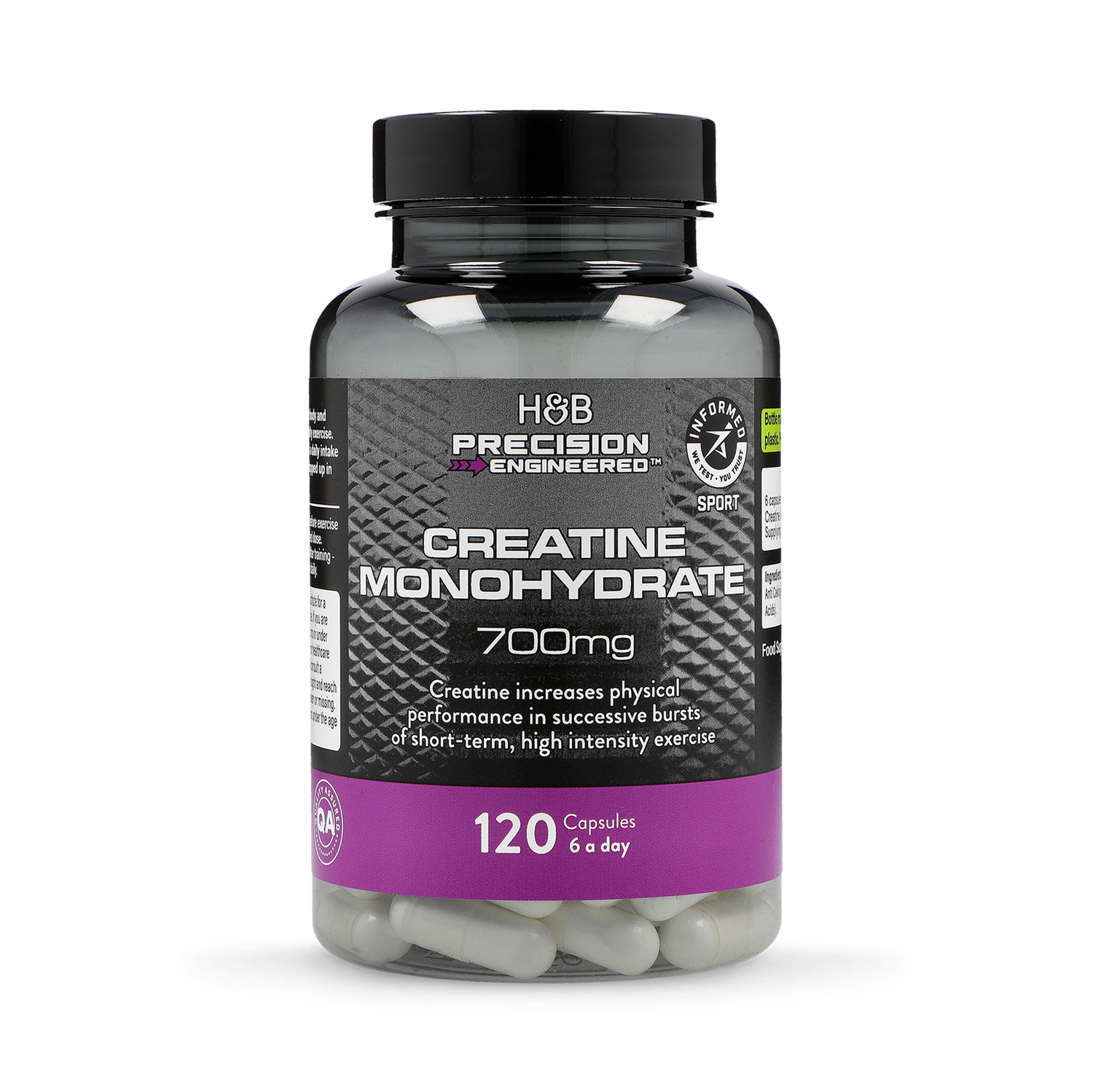
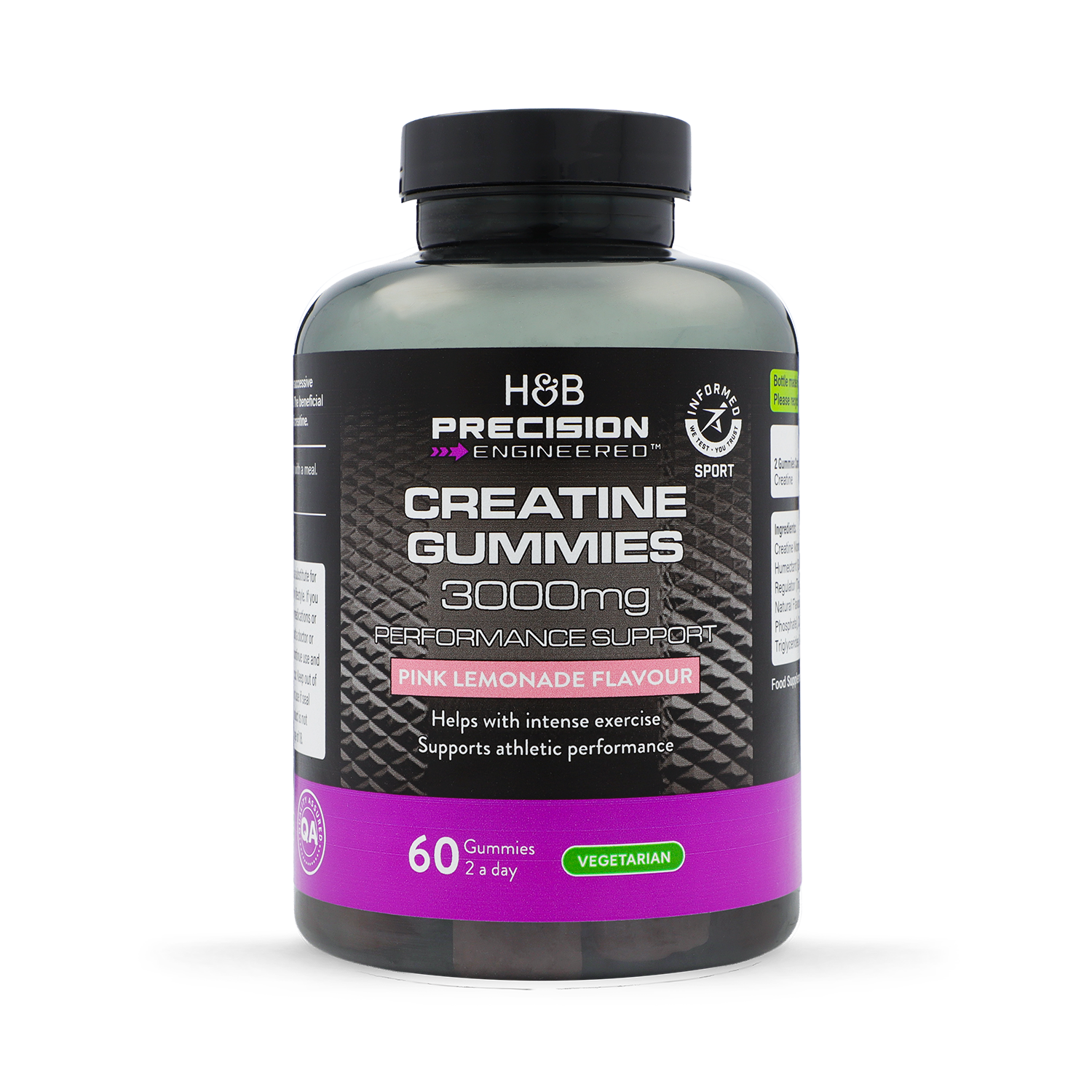
FlavourSize (g)QtyServingsOfferTotal Per serving - £13.99 --- |






























How creatine works
During high-intensity exercise, sprinting, heavy lifting, explosive movements, your muscles use ATP as their primary energy currency. ATP is depleted rapidly, typically within 8-10 seconds of maximal effort.
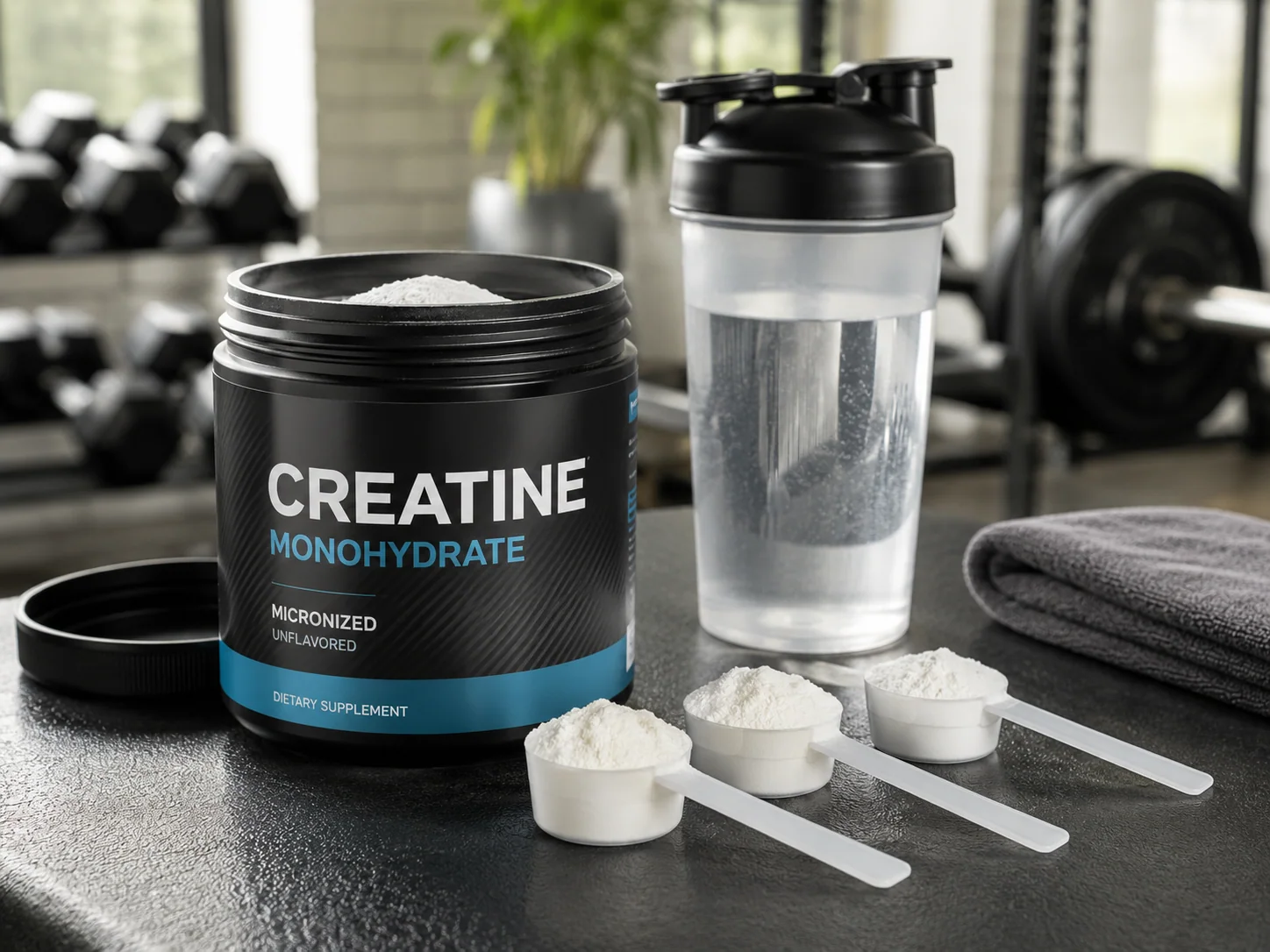
Phosphocreatine stored in muscle acts as a rapid reservoir for regenerating ATP. It donates a phosphate group to ADP to recreate ATP, extending the duration of high-intensity output before fatigue sets in. Supplementing with creatine increases the phosphocreatine stored in muscle, directly expanding this energy buffer.
What creatine does in practice
More phosphocreatine means more ATP can be regenerated quickly during short, intense efforts. This translates to more reps at a given weight, faster sprint times, and reduced fatigue during high-intensity repeated efforts.
Over time, the ability to train at higher volumes produces greater muscular adaptation. This is why creatine's muscle-building effect is indirect. It works by improving training quality and recovery, not by directly stimulating muscle protein synthesis.
Community perspective
What others are saying
I agree, high dose creatine is magical for me on low energy days. It doesn’t take away all the fatigue, but it is the difference between getting things done and not at all.
u/Agodoga in r/Biohackers
That is great, and this is just the beginning of your journey. The creatine is a patch for something going on with your energy production cycle in general. Its fantastic that you discovered this because it gives you a starting point, but you don't want to stay here, you want to figure out why you need to supplement that much creatine to feel normal.
u/1800-5-PP-DOO-DOO in r/Supplements
Creatine is hit and miss, but it's a real hit for some people. I thin those people just naturally don't store a lot or don't replenish it enough during sleep.
u/Unused_Vestibule in r/Biohackers
Watch what buyers found
Hands-on opinions
The BEST Creatine Supplements of 2023 — GROW Your Muscles!
BarBend
A topic-specific video selected for additional practical context on What is Creatine: Top Picks, Prices and What to Buy.
Who benefits most from creatine
People who perform resistance training, sprint-based sports, or any activity requiring repeated high-intensity bursts benefit most. Creatine's mechanism is specific to the phosphocreatine energy system, so it is most relevant for activities lasting under about 30 seconds of maximal effort.
Vegetarians and vegans tend to see larger improvements than meat-eaters because their baseline muscle creatine is lower, giving more room to increase stores with supplementation.
Endurance athletes doing pure steady-state work see less benefit, since the phosphocreatine system is not the primary energy source for low-intensity sustained activity. However, creatine still supports high-intensity efforts within endurance training sessions.

Cheapest Creatine
Creatine Monohydrate Powder
Pure Source Nutrition · 100g
Pros
- Straightforward creatine monohydrate format
- Protein source and pack format are disclosed
Cons
- 41.7% above the £4.23/100g average across 48 comparable /compare listings
- Small pack can cost more per 100g
Creatine and the brain
Creatine is not only stored in muscle, the brain also contains phosphocreatine and relies on it for rapid ATP regeneration during demanding cognitive tasks. Emerging research suggests creatine supplementation may support cognitive performance, particularly during sleep deprivation or mental fatigue.
This area of research is less mature than the athletic performance evidence but is growing. For now, cognitive benefits are a plausible secondary effect rather than a primary reason to supplement.
References
Sources and further reading
- 01International Society of Sports Nutrition — creatine position stand
Evidence review covering creatine effectiveness, established dosing and safety in healthy people.
Frequently asked questions
Is creatine a steroid?+
No. Creatine is a naturally occurring compound found in food and made by the body. It has no structural or hormonal relationship to anabolic steroids. It is legal, unscheduled, and approved for use in all sports.
Does creatine work immediately?+
Muscle creatine saturation takes time. With a loading protocol, saturation can be reached in 5-7 days. Without loading, gradual daily supplementation reaches saturation in 3-4 weeks. Benefits typically become noticeable once saturation is achieved.
Do vegetarians benefit more from creatine?+
Yes. Vegetarians and vegans have lower baseline muscle creatine due to no dietary intake from meat or fish. They typically experience larger performance improvements from supplementation than omnivores.