

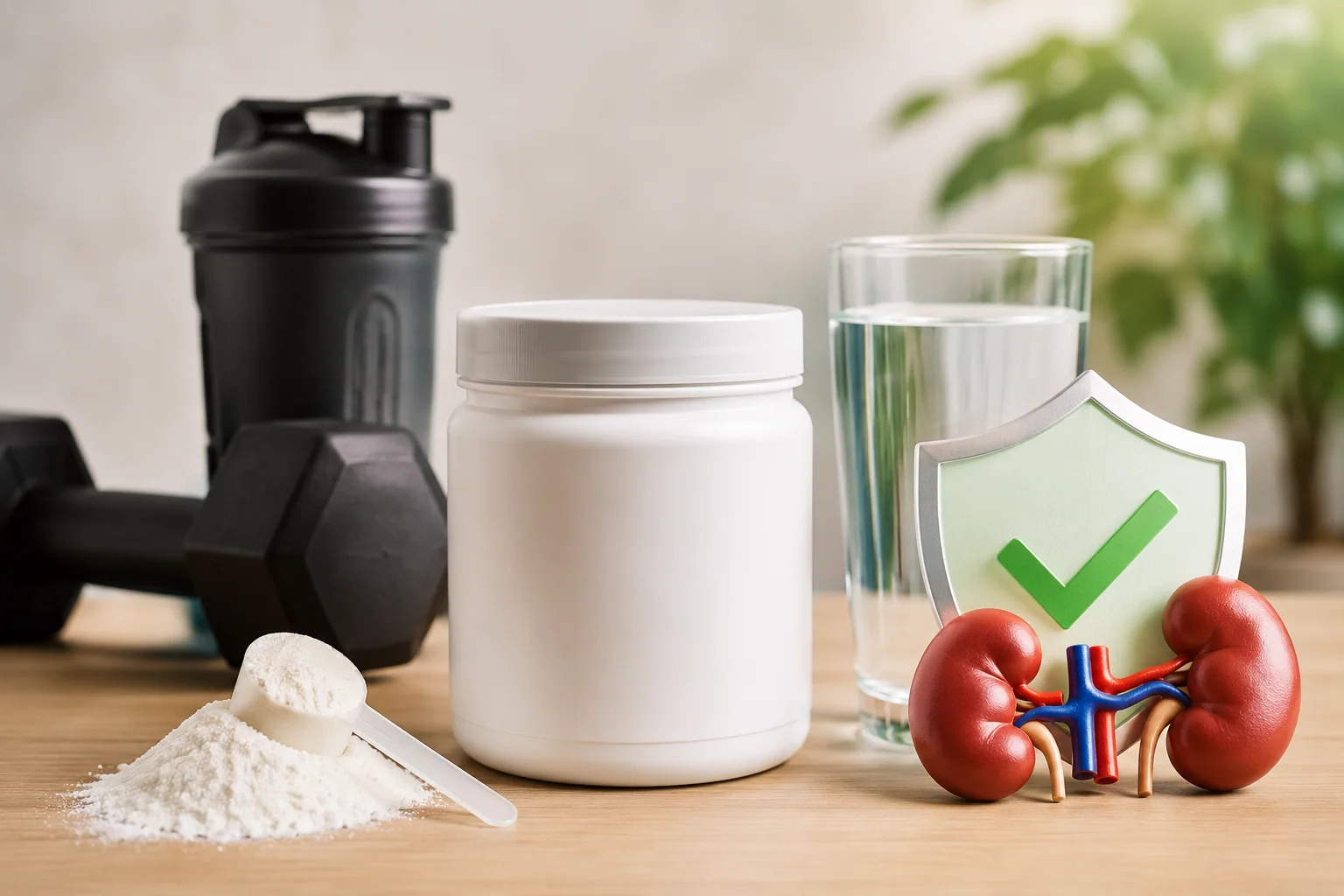
Quick answer
Creatine monohydrate is well studied and generally considered safe for healthy adults at normal doses. Take 3–5g daily, expect possible water-weight gain and do not treat general evidence as personal clearance if you have kidney disease, pregnancy, relevant medication or unexplained symptoms—ask an appropriate clinician.
The overall safety picture
Creatine monohydrate has been studied in clinical trials for over 30 years at doses ranging from 3g to 20g per day, in populations from adolescents to elderly adults, for durations from days to years. The consistent finding is that it is safe for healthy individuals at recommended doses.
International bodies including the International Society of Sports Nutrition have published position statements concluding that creatine monohydrate is the most effective ergogenic nutritional supplement currently available to athletes and is safe for use in healthy adults.
Does creatine damage the kidneys?
This is the most persistent creatine myth. It originates partly from the fact that creatine supplementation raises creatinine levels in blood. Creatinine is a metabolic byproduct of creatine breakdown. Elevated blood creatinine is one clinical marker used to assess kidney function, so the association looked concerning to early observers.
However, creatinine from creatine supplementation is a different context from elevated creatinine caused by kidney disease. Multiple studies in healthy individuals have found no adverse effect on kidney function from long-term creatine supplementation. The International Society of Sports Nutrition specifically states that creatine does not cause kidney damage in healthy people.
The caveat: people with pre-existing kidney disease should consult a doctor before supplementing, as impaired kidneys may handle creatine metabolism differently.
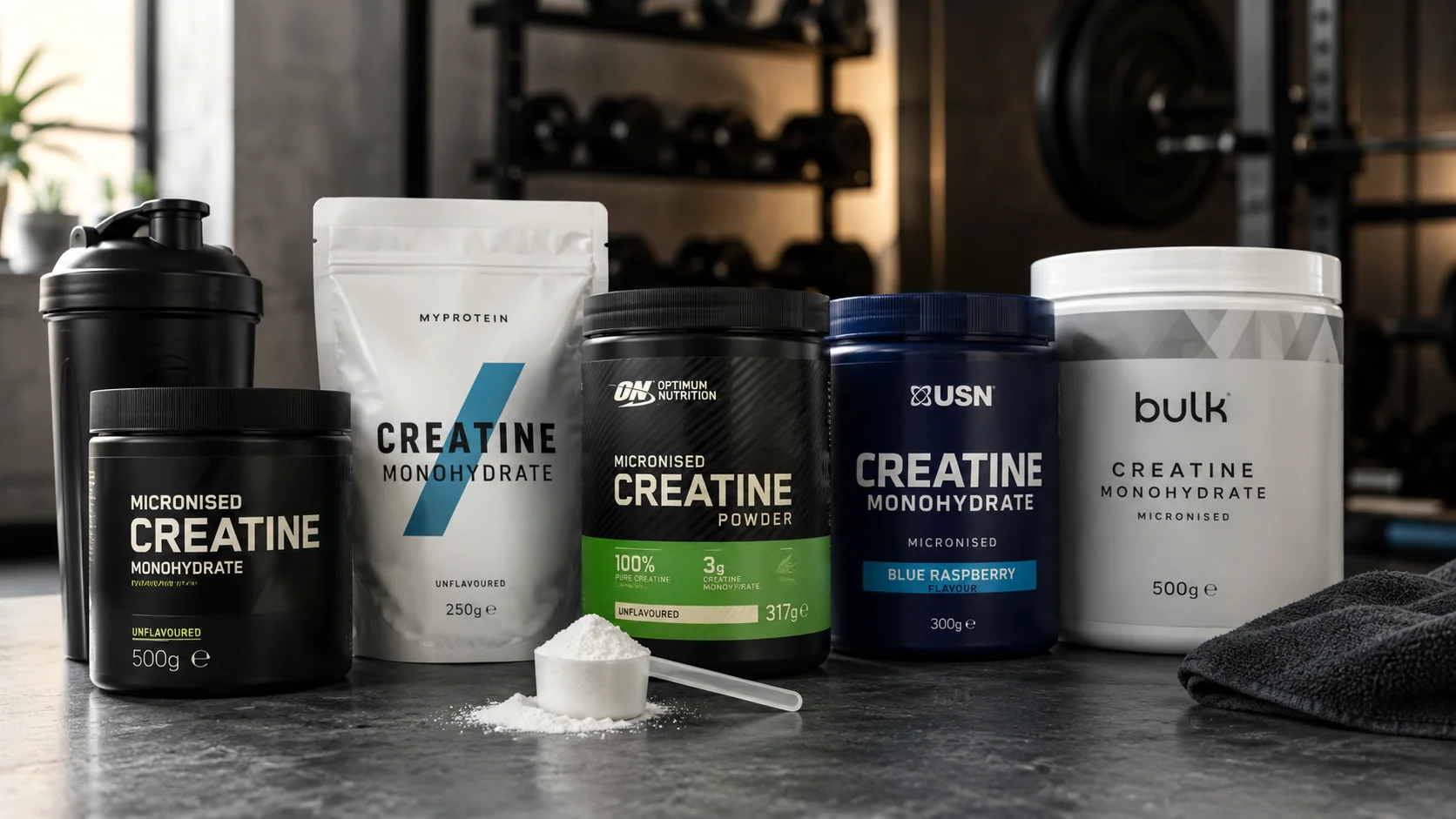
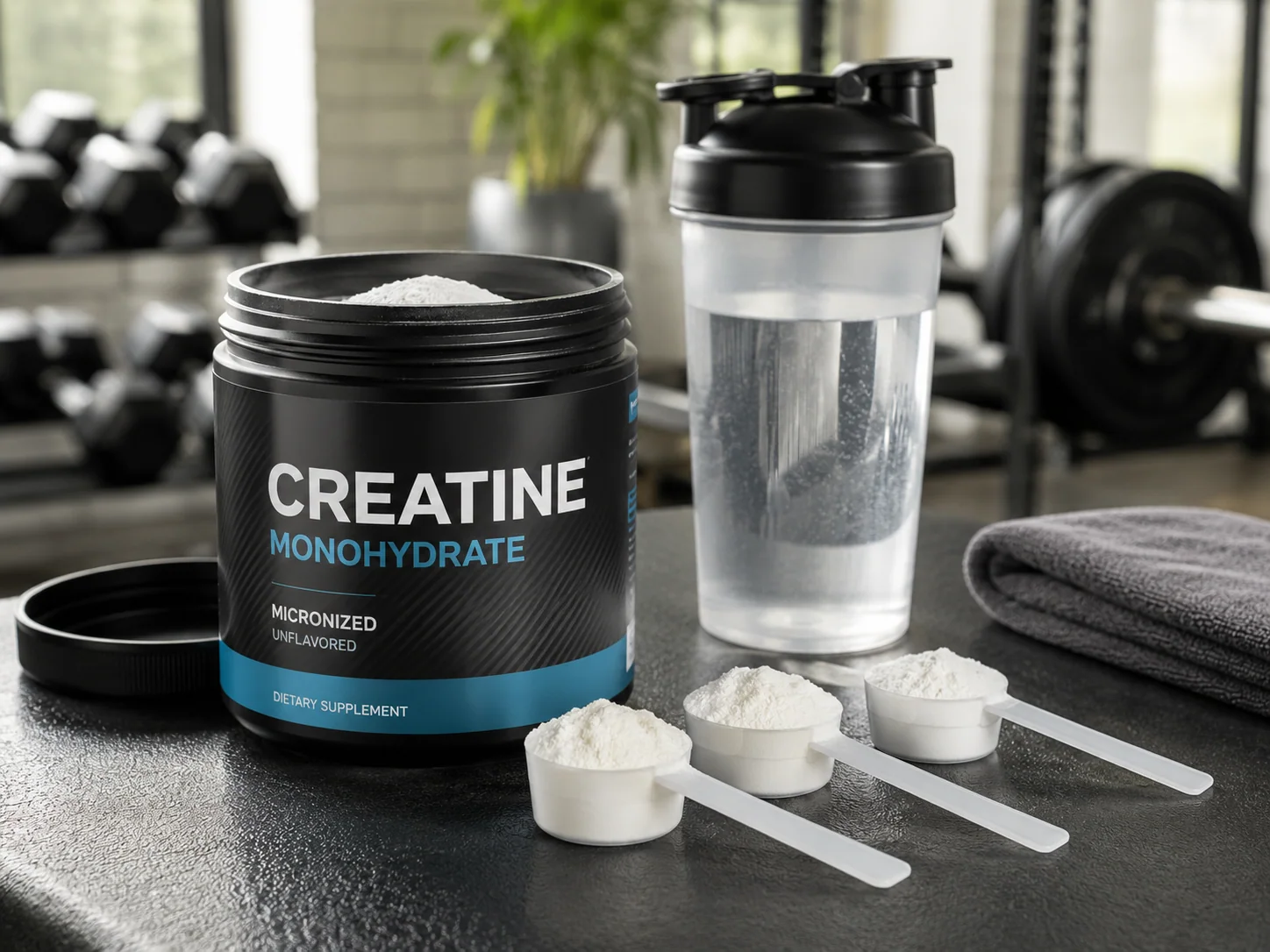
Does creatine cause hair loss?
This claim stems from a single 2009 study on rugby players that found creatine supplementation raised levels of dihydrotestosterone (DHT), a hormone associated with male pattern hair loss. The study measured DHT, not actual hair loss, in a small cohort.
No subsequent study has replicated the DHT finding. No study has demonstrated a direct link between creatine supplementation and accelerated hair loss in humans. If you are genetically predisposed to male pattern baldness and DHT is a known trigger, some caution is reasonable given the single DHT study, but the claim that creatine causes hair loss is not established by the available evidence.
Community perspective
What others are saying
I've been using it almost daily for years. There have been some study's to say it's carcinogenic, but I wasn't convinced by them (they also say that of processed meat) Creatine is safe and very useful! Though just double check the reason you're using it. If it's for the gym - gaining muscle and strength it's ideal. If you're doing something like climbing, it's probably not for you.
u/Afraid-Frosting-4062 in r/AskReddit
Creatine has been heavily studied, it's safe. side effects is you'll retain water so puff up and piss like a fountain
u/PlayfulMonk4943 in r/AskReddit
Watch what buyers found
Hands-on opinions
What Does Creatine Do? | Nutritionist Explains... | Myprotein
Myprotein
A topic-specific video selected for additional practical context on Is Creatine Safe: Evidence, Causes and Practical Advice.
Does creatine cause dehydration and cramping?
Creatine draws water into muscle cells, which led to a hypothesis that it might increase dehydration risk or muscle cramping, particularly in hot conditions. This concern was largely based on theoretical reasoning rather than empirical evidence.
Multiple studies in athletes exercising in heat have found no increase in cramping, dehydration or heat-related illness from creatine supplementation compared to placebo. Some research has found the opposite. Creatine may slightly improve thermoregulation by increasing intracellular water.

Cheapest Creatine
Creatine Monohydrate Powder
Pure Source Nutrition · 500g
Pros
- Current tracked price is £9.99 for 500g (£2.00/100g)
- Straightforward creatine monohydrate format
Weight gain from creatine
Creatine causes an increase in scale weight of approximately 1-2kg when supplementation begins, particularly with a loading phase. This is water drawn into muscle cells and is not fat gain.
This temporary weight increase is often misinterpreted as fat or unwanted mass. For weight-class athletes or those monitoring weight carefully, it is worth being aware of. The water weight is not harmful and partially reverses when supplementation stops.
Who should be cautious
People with pre-existing kidney conditions should get medical advice before supplementing. Those with a personal or family history of polycystic kidney disease in particular should approach with caution.
Pregnant and breastfeeding women are typically advised to avoid creatine supplementation as a precaution, since data in these populations is limited. Anyone on medication that affects kidney function should consult a doctor.
For healthy adults with normal kidney function, the safety profile of creatine at 3-5g per day is well established across decades of research.

References
Sources and further reading
- 01International Society of Sports Nutrition — creatine position stand
Evidence review covering creatine effectiveness, established dosing and safety in healthy people.
Frequently asked questions
Can teenagers take creatine?+
The International Society of Sports Nutrition notes that creatine may be appropriate for adolescents engaged in serious competitive training when the diet is otherwise adequate. However, many practitioners recommend waiting until adulthood as a precaution given limited long-term data in younger populations.
Does creatine cause acne?+
There is no well-established link between creatine supplementation and acne. The DHT hypothesis from the single 2009 study provides a theoretical mechanism, but no clinical evidence directly connects creatine use to acne breakouts.
Can women take creatine?+
Yes. Creatine is effective and safe for women. Research in female athletes shows performance and recovery benefits comparable to those seen in men. The water retention effect is the same but represents a smaller percentage of total body weight.