

Quick answer
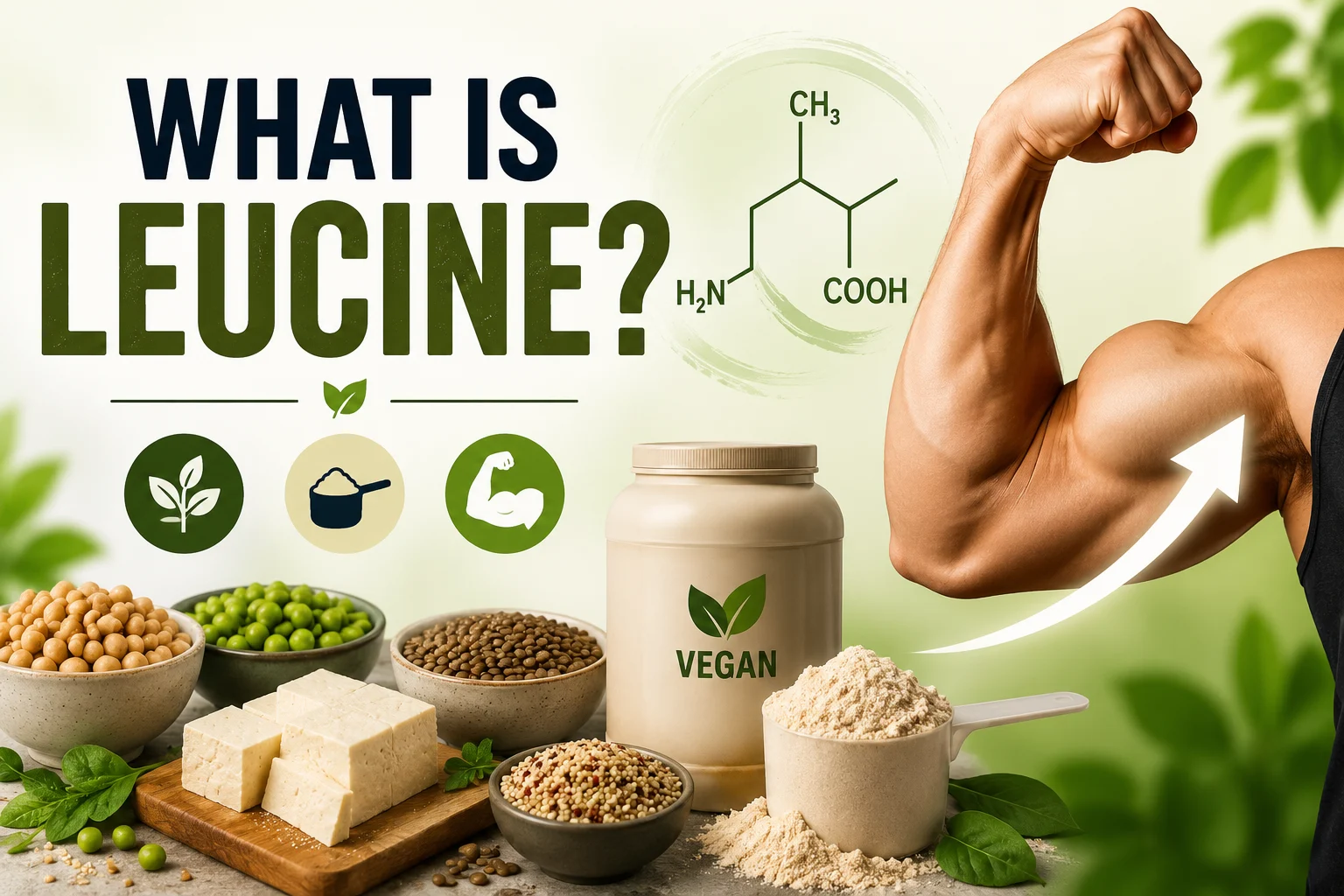
Leucine is an essential branched-chain amino acid that helps signal the start of muscle protein synthesis. Whey is naturally rich in it, but soy, pea, rice and blended vegan powders also contain leucine. For most healthy adults, a protein-rich meal supplying roughly 2–3g is a useful practical benchmark—not a magic threshold—and a separate leucine supplement is usually unnecessary when total protein and essential amino acids are already adequate.
What leucine is and what it actually does
Leucine is one of nine essential amino acids, meaning the body cannot manufacture enough of it and must obtain it from food. It is also one of the three branched-chain amino acids, alongside isoleucine and valine.
Its special reputation comes from signalling. Leucine helps activate the mTORC1 pathway, part of the cellular machinery that begins muscle protein synthesis. That makes leucine important, but the marketing shorthand that it single-handedly "builds muscle" is wrong. Turning on a building site without delivering bricks does not complete the building; the remaining essential amino acids provide much of that material.
This is why research using a small whey dose plus extra leucine found a stronger early response, while a full 25g whey serving sustained post-exercise muscle protein synthesis for longer. Leucine can strengthen a weak protein dose, but it does not replace intact protein.
How much leucine do you need per meal?
A meal containing roughly 2–3g of leucine is a useful practical target for stimulating muscle protein synthesis. It is not a universal on/off switch. Training status, age, meal size, the other amino acids present and total daily protein all influence the response.
The distinction matters most with ageing. A 2024 review found that older adults often benefited from meals providing about 2.8g leucine with around 30g protein, while younger adults showed a more gradual dose-response rather than one fixed threshold. A 2023 systematic review likewise found no single leucine threshold that predicted the response in every population.
For a younger healthy lifter, repeatedly hitting sensible protein servings across the day matters more than calculating leucine to a decimal place. For an older adult, somebody eating small meals, or a person relying heavily on lower-protein plant foods, leucine density deserves more attention.
- 1
Practical whey serving: usually 20–30g protein is enough to land in a useful leucine range.
- 2
Practical plant serving: often 25–35g protein, depending on the source and amino-acid profile.
- 3
Daily priority: distribute adequate protein across several meals rather than adding leucine to an otherwise protein-poor diet.
- 4
Older adults: favour protein-rich meals rather than saving most daily protein for one evening meal.

5 protein powders compared for leucine
Very few UK labels declare leucine separately, so a responsible comparison must distinguish a published amino-acid profile from an estimate. The products below illustrate the main choices rather than pretending every flavour has an identical laboratory result.
Peak Supps publishes the clearest worked example: its unflavoured Whey Protein Isolate 90 lists 10.6g leucine per 100g protein. A serving containing 26.2g protein therefore supplies about 2.8g leucine. Huel publishes 9g essential amino acids and 5g total BCAAs per Complete Protein serving, but does not break that BCAA figure into leucine alone.
| Product | Protein type | What the label tells us | ProteinDeals verdict |
|---|---|---|---|
Pros
| Whey isolate | 10.6g leucine per 100g protein; about 2.8g in its 26.2g-protein unflavoured serving | Best transparent example because the full amino profile is published. |
| Pea, faba and brown-rice blend | 20g protein, 9g EAAs and 5g total BCAAs per serving | A genuinely complete vegan blend; do not mistake its total BCAAs for leucine alone. | |
Pros
| Soy isolate | Soy supplies all nine essential amino acids and is naturally leucine-containing | Our straightforward single-source vegan choice when price and protein density beat blends. |
Pros
| Pea isolate | Contains every essential amino acid but is relatively limited by methionine | Use a full serving and obtain varied protein elsewhere in the day. |
Pros
| Whey blend | Common labels state about 5.5g total BCAAs per serving—not 5.5g leucine | Dependable whey, but the BCAA headline is not a leucine measurement. |


Live comparison
Leucine-Rich Protein products
FlavourSize (g)QtyServingsOfferTotal Per 25g protein 50001180 £35.99 25.0g102£0.200 2500190 £20.99 25.0g102£0.233 1000136 £11.99 25.0g102£0.333 |
FlavourSize (g)QtyServingsOfferTotal Per 25g protein 50001170.7 £35.99 25.0g107£0.211 2000168.3 £17.99 25.0g107£0.264 1000134.1 £11.99 25.0g107£0.351 |
FlavourSize (g)QtyServingsOfferTotal Per 25g protein 50001160 £35.99 25.0g121£0.225 2000164 £17.99 25.0g121£0.281 1000132 £11.99 25.0g121£0.375 |
FlavourSize (g)QtyServingsOfferTotal Per 25g protein 50001172 £39.99 25.0g117£0.232 2500186 £21.99 25.0g117£0.256 1000134.4 £12.99 25.0g117£0.378 |
FlavourSize (g)QtyServingsOfferTotal Per 25g protein 50001160 £38.99 25.0g106£0.244 3000196 £29.99 25.0g106£0.312 1000132 £13.49 25.0g106£0.422 |
FlavourSize (g)QtyServingsOfferTotal Per 25g protein 50001160 £39.99£59.99 -33%25.0g119£0.250 1000132 £14.99£19.99 -25%25.0g119£0.468 |
FlavourSize (g)QtyServingsOfferTotal Per 25g protein 50001177 £44.99 25.0g105£0.254 30001106.2 £27.99 25.0g105£0.264 1000135.4 £13.99 25.0g105£0.395 |
FlavourSize (g)QtyServingsOfferTotal Per 25g protein 1000132.8 £8.99£20.00 -55%25.0g118£0.274 |
FlavourSize (g)QtyServingsOfferTotal Per 25g protein 2024.8 £7.99 25.0g116£0.322 402024.8 £17.99 25.0g116£0.725 |
FlavourSize (g)QtyServingsOfferTotal Per 25g protein 40001139.2 £47.99 25.0g108£0.345 2000169.6 £25.99 25.0g108£0.373 1000134.8 £13.99 25.0g108£0.402 |
FlavourSize (g)QtyServingsOfferTotal Per 25g protein 40001129.4 £44.99£59.99 -25%25.0g118£0.348 |
FlavourSize (g)QtyServingsOfferTotal Per 25g protein 40001114.9 £39.99£54.99 -27%25.0g117£0.348 |
FlavourSize (g)QtyServingsOfferTotal Per 25g protein 40001114.9 £39.99£54.99 -27%25.0g117£0.348 |
FlavourSize (g)QtyServingsOfferTotal Per 25g protein 50001168 £59.99 25.0g106£0.357 2500184 £31.99 25.0g106£0.381 1000133.6 £13.99 25.0g106£0.416 |
FlavourSize (g)QtyServingsOfferTotal Per 25g protein 50001160 £59.99 25.0g123£0.375 2500180 £31.49 25.0g123£0.394 1000132 £13.99 25.0g123£0.437 |
FlavourSize (g)QtyServingsOfferTotal Per 25g protein 40001128 £47.99 25.0g127£0.375 2000164 £24.99 25.0g127£0.390 1000132 £13.99 25.0g127£0.437 |
FlavourSize (g)QtyServingsOfferTotal Per 25g protein 50001190 £77.99 25.0g111£0.410 2000176 £38.99 25.0g111£0.513 1000138 £19.99 25.0g111£0.526 |
FlavourSize (g)QtyServingsOfferTotal Per 25g protein 3000191.2 £37.99 25.0g125£0.417 2000160.8 £27.99 25.0g125£0.460 1000130.4 £15.99 25.0g125£0.526 |
FlavourSize (g)QtyServingsOfferTotal Per 25g protein 50001168 £70.99 25.0g113£0.423 30001100.8 £46.99 25.0g113£0.466 1000133.6 £17.99 25.0g113£0.535 |
FlavourSize (g)QtyServingsOfferTotal Per 25g protein 2500180 £33.99 25.0g117£0.425 1000132 £14.99 25.0g117£0.468 |
FlavourSize (g)QtyServingsOfferTotal Per 25g protein 50001166 £72.99 25.0g119£0.440 3000199.6 £52.99 25.0g119£0.532 1000133.2 £17.99 25.0g119£0.542 |
FlavourSize (g)QtyServingsOfferTotal Per 25g protein 50001102.2 £44.99£48.99 -8%25.0g187£0.440 2250146 £22.99 25.0g187£0.500 907118.5 £12.99 25.0g187£0.701 |
FlavourSize (g)QtyServingsOfferTotal Per 25g protein 50001152 £67.49 25.0g113£0.444 2500176 £35.49 25.0g113£0.467 1000130.4 £14.99 25.0g116£0.493 |
FlavourSize (g)QtyServingsOfferTotal Per 25g protein 50001100.6 £44.99£49.99 -10%25.0g196£0.447 2250145.3 £24.49 25.0g196£0.541 |
FlavourSize (g)QtyServingsOfferTotal Per 25g protein 1000132.3 £14.99£19.99 -25%25.0g118£0.463 |
FlavourSize (g)QtyServingsOfferTotal Per 25g protein 1000132.3 £14.99£19.99 -25%25.0g118£0.463 |
FlavourSize (g)QtyServingsOfferTotal Per 25g protein 2700182.1 £41.49 25.0g127£0.505 900127.4 £13.99 25.0g127£0.511 960129.2 £14.99 25.0g127£0.514 |
FlavourSize (g)QtyServingsOfferTotal Per 25g protein 5000196 £48.99 25.0g180£0.510 3000157.6 £30.99 25.0g180£0.538 1000119.2 £14.49 25.0g180£0.755 |
FlavourSize (g)QtyServingsOfferTotal Per 25g protein 50001162 £82.99 25.0g106£0.512 2500181 £45.99 25.0g106£0.568 1000132.4 £20.00 25.0g106£0.617 |
FlavourSize (g)QtyServingsOfferTotal Per 25g protein 2500170 £36.99 25.0g141£0.528 1000128 £18.99 25.0g141£0.678 |
FlavourSize (g)QtyServingsOfferTotal Per 25g protein 5000166 £34.99£38.99 -10%25.0g317£0.530 2250129.7 £17.99 25.0g317£0.606 |
FlavourSize (g)QtyServingsOfferTotal Per 25g protein 40001136 £72.99 25.0g107£0.537 2000168 £39.49 25.0g107£0.581 1000133.6 £21.99 25.0g108£0.654 |
FlavourSize (g)QtyServingsOfferTotal Per 25g protein 40001137.6 £77.49 25.0g105£0.563 2000168.8 £41.99 25.0g105£0.610 1000134.4 £22.99 25.0g105£0.668 |
FlavourSize (g)QtyServingsOfferTotal Per 25g protein 1000117.2 £9.80 25.0g174£0.570 50018.6 £7.75 25.0g174£0.901 |
FlavourSize (g)QtyServingsOfferTotal Per 25g protein 50001138 £79.99 25.0g132£0.580 2500169 £42.99 25.0g132£0.623 1000127.6 £18.99 25.0g132£0.688 |
FlavourSize (g)QtyServingsOfferTotal Per 25g protein 900123.3 £13.99 25.0g130£0.602 500112.9 £8.99 25.0g130£0.696 |
FlavourSize (g)QtyServingsOfferTotal Per 25g protein 50001161.2 £99.99 25.0g109£0.620 2000164.5 £47.99 25.0g109£0.744 1000132.2 £26.99 25.0g109£0.837 |
FlavourSize (g)QtyServingsOfferTotal Per 25g protein 25018 £4.99£8.99 -44%25.0g123£0.624 |
FlavourSize (g)QtyServingsOfferTotal Per 25g protein 25018 £4.99£8.99 -44%25.0g123£0.624 |
FlavourSize (g)QtyServingsOfferTotal Per 25g protein 50001180 £113.76 25.0g112£0.632 908132.7 £23.94 25.0g112£0.732 |
FlavourSize (g)QtyServingsOfferTotal Per 25g protein 50001161.6 £102.99 25.0g108£0.637 3000197 £63.99 25.0g108£0.660 2000164.6 £45.99 25.0g108£0.711 |
FlavourSize (g)QtyServingsOfferTotal Per 25g protein 50001180 £114.99 25.0g113£0.639 2500190 £59.99 25.0g113£0.667 1000136 £26.99 25.0g113£0.750 |
FlavourSize (g)QtyServingsOfferTotal Per 25g protein 1000119.2 £12.99 25.0g180£0.677 50019.6 £8.99 25.0g180£0.936 25014.8 £4.99 25.0g180£1.040 |
FlavourSize (g)QtyServingsOfferTotal Per 25g protein 4000138.4 £25.99£58.49 -56%25.0g399£0.677 |
FlavourSize (g)QtyServingsOfferTotal Per 25g protein 4000138.4 £25.99£58.49 -56%25.0g399£0.677 |
FlavourSize (g)QtyServingsOfferTotal Per 25g protein 40001129.6 £87.99 25.0g110£0.679 2000164.8 £48.49 25.0g110£0.748 1000132.4 £25.99 25.0g110£0.802 |
FlavourSize (g)QtyServingsOfferTotal Per 25g protein 1000136 £24.99 25.0g108£0.694 25019 £9.99 25.0g108£1.110 |
FlavourSize (g)QtyServingsOfferTotal Per 25g protein 2700179.9 £55.49 25.0g131£0.694 2790179.2 £55.49 25.0g133£0.700 900128.4 £19.99 25.0g122£0.703 |
FlavourSize (g)QtyServingsOfferTotal Per 25g protein 1000127.3 £18.99 25.0g138£0.695 |
FlavourSize (g)QtyServingsOfferTotal Per 25g protein 1000120.8 £14.50 25.0g158£0.697 500110.4 £11.70 25.0g158£1.125 |
FlavourSize (g)QtyServingsOfferTotal Per 25g protein 48001113.3 £80.49 25.0g155£0.711 2400156.6 £40.99 25.0g155£0.724 1200128.3 £21.29 25.0g155£0.752 |
FlavourSize (g)QtyServingsOfferTotal Per 25g protein 48001130.6 £95.99 25.0g136£0.735 2400165.3 £51.99 25.0g136£0.796 1200132.6 £28.29 25.0g136£0.867 |
FlavourSize (g)QtyServingsOfferTotal Per 25g protein 27018.1 £5.95 25.0g136£0.739 |
FlavourSize (g)QtyServingsOfferTotal Per 25g protein 1000132 £24.99 25.0g127£0.781 25018 £9.99 25.0g127£1.249 |
FlavourSize (g)QtyServingsOfferTotal Per 25g protein 48001132.5 £104.49 25.0g131£0.789 2400166.2 £56.49 25.0g131£0.853 1200133.1 £30.49 25.0g131£0.921 |
FlavourSize (g)QtyServingsOfferTotal Per 25g protein 870130.3 £23.99 25.0g115£0.792 840129.9 £23.99 25.0g113£0.802 1000134.8 £41.49 25.0g114£1.192 |
FlavourSize (g)QtyServingsOfferTotal Per 25g protein 43501125.3 £99.99 25.0g132£0.798 1000128.8 £25.99 25.0g127£0.902 50001146 £144.49 25.0g129£0.990 |
FlavourSize (g)QtyServingsOfferTotal Per 25g protein 5000188 £70.80 25.0g215£0.805 1400124.6 £23.94 25.0g215£0.972 700112.3 £14.34 25.0g215£1.164 |
FlavourSize (g)QtyServingsOfferTotal Per 25g protein 50001153 £126.00 25.0g129£0.824 1000130.6 £35.94 25.0g129£1.175 30019.2 £14.34 25.0g129£1.562 |
FlavourSize (g)QtyServingsOfferTotal Per 25g protein 600119.2 £15.99 25.0g108£0.833 1000132.4 £39.99 25.0g112£1.234 45001142.2 £177.49 25.0g112£1.248 |
FlavourSize (g)QtyServingsOfferTotal Per 25g protein 840126.2 £22.00 25.0g131£0.839 |
FlavourSize (g)QtyServingsOfferTotal Per 25g protein 60001168 £143.99 25.0g129£0.857 3000184 £77.99 25.0g129£0.928 1500142 £41.99 25.0g129£1.000 |
FlavourSize (g)QtyServingsOfferTotal Per 25g protein 2000157 £49.99£99.99 -50%25.0g136£0.878 1000128.5 £29.99£49.99 -40%25.0g136£1.053 500114.2 £17.99£24.99 -28%25.0g136£1.263 |
FlavourSize (g)QtyServingsOfferTotal Per 25g protein 2250163 £55.99 25.0g156£0.889 750121 £19.99 25.0g156£0.952 375110.8 £11.99 25.0g153£1.110 |
FlavourSize (g)QtyServingsOfferTotal Per 25g protein 720120.2 £17.99£29.99 -40%25.0g133£0.892 2000156 £69.99 25.0g134£1.250 15001- £64.99 --- |
FlavourSize (g)QtyServingsOfferTotal Per 25g protein 303023.3 £20.99 25.0g130£0.903 301511.6 £11.99 25.0g130£1.031 3075.4 £5.99 25.0g130£1.104 |
FlavourSize (g)QtyServingsOfferTotal Per 25g protein 50001142 £129.99 25.0g133£0.915 2500171 £67.99 25.0g133£0.958 1000128.4 £27.99 25.0g133£0.986 |
FlavourSize (g)QtyServingsOfferTotal Per 25g protein 2000164.8 £60.00 25.0g127£0.926 |
FlavourSize (g)QtyServingsOfferTotal Per 25g protein 50001150 £139.99 25.0g125£0.933 2500175 £74.99 25.0g125£1.000 1000130 £31.99 25.0g125£1.066 |
FlavourSize (g)QtyServingsOfferTotal Per 25g protein 1800158.3 £54.95 25.0g115£0.942 900129.2 £33.95 25.0g115£1.164 15014.9 £7.95 25.0g115£1.636 |
FlavourSize (g)QtyServingsOfferTotal Per 25g protein 2100163 £59.95 25.0g126£0.952 510115.3 £29.95 25.0g126£1.957 |
FlavourSize (g)QtyServingsOfferTotal Per 25g protein 1800157.6 £54.95 25.0g113£0.954 1000132 £32.95 25.0g113£1.030 450114.4 £19.95 25.0g113£1.385 |
FlavourSize (g)QtyServingsOfferTotal Per 25g protein 50001112 £107.99 25.0g151£0.964 2500154 £59.99 25.0g162£1.111 1000123.2 £28.49 25.0g155£1.228 |
FlavourSize (g)QtyServingsOfferTotal Per 25g protein 2500131 £29.99 25.0g298£0.967 |
FlavourSize (g)QtyServingsOfferTotal Per 25g protein 908130.5 £30.02£49.99 -40%25.0g108£0.984 |
FlavourSize (g)QtyServingsOfferTotal Per 25g protein 400013.8 £49.99£59.99 -17%25.0g5951£13.018 |
FlavourSize (g)QtyServingsOfferTotal Per 25g protein 400013.8 £49.99£59.99 -17%25.0g5951£13.018 |




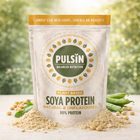




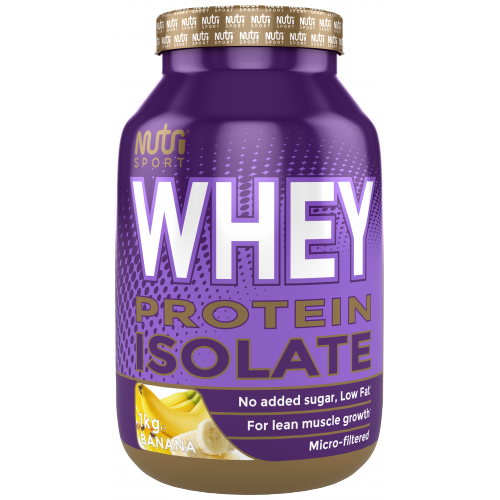

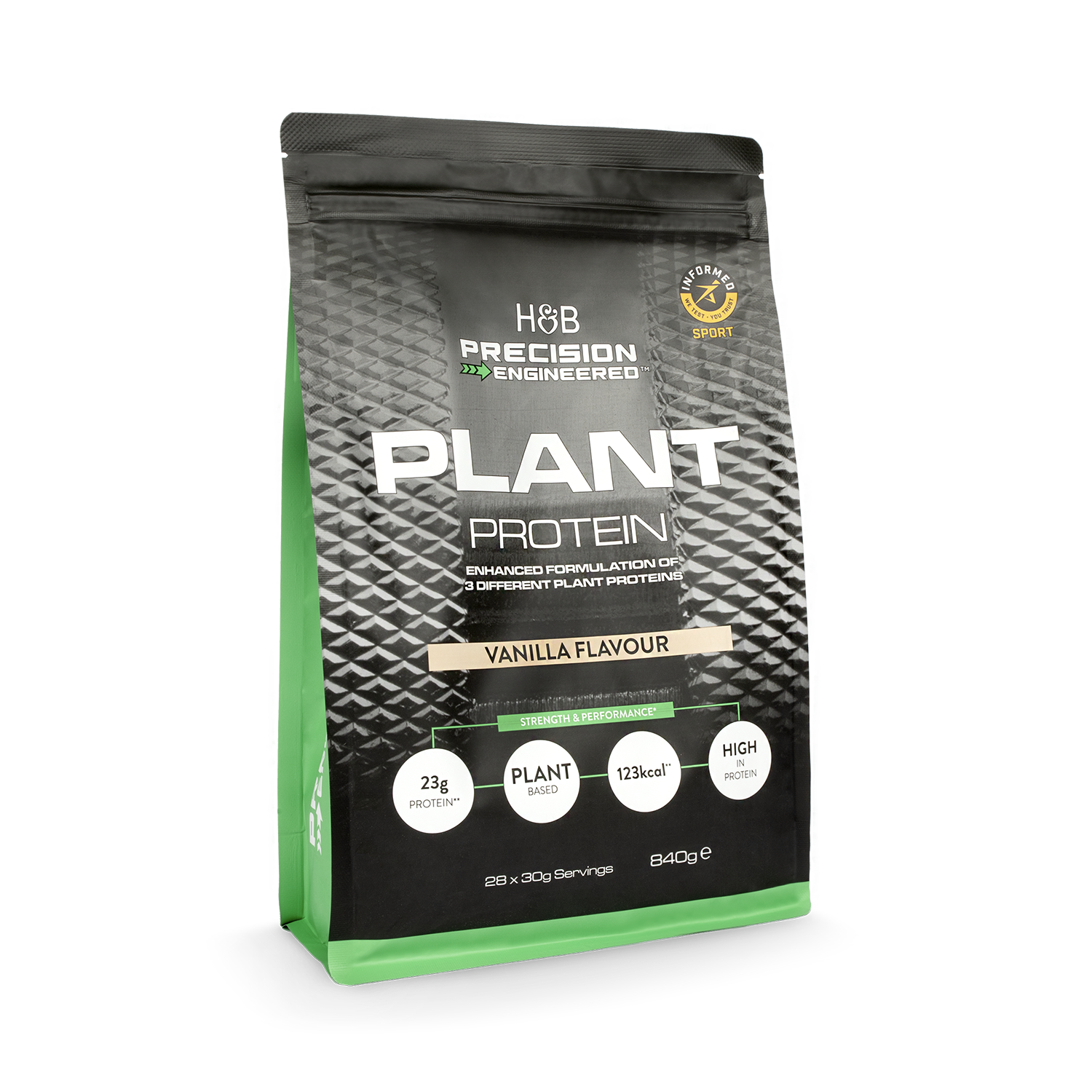
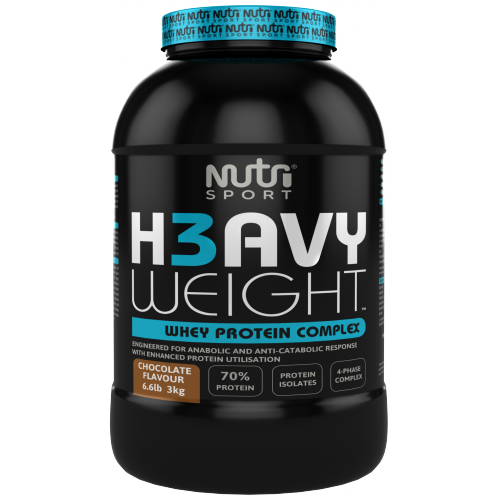


Best overall Leucine-Rich Protein
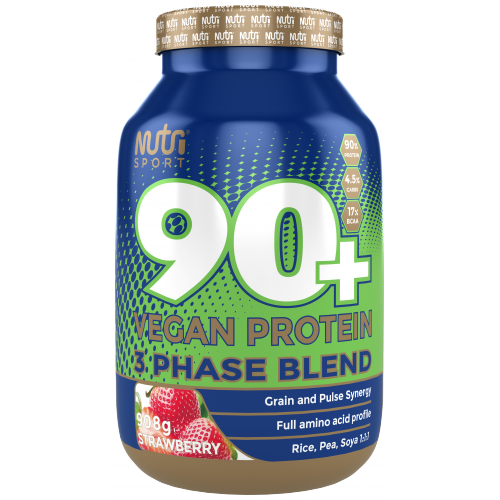
Soy Protein Isolate Powder – 90% Protein
Pure Source Nutrition · 500g
Pros
- Provides 25g protein for about 103 kcal, keeping non-protein calories low (0.4g fat)
Does vegan protein contain leucine?
Yes. The claim that vegan protein powder lacks leucine is false. Pea, soy, rice, faba bean, hemp and pumpkin proteins all contain leucine. The real question is whether a normal serving provides enough leucine and the other essential amino acids for the intended job.
Soy isolate is a complete protein because it supplies all nine essential amino acids in useful proportions. Pea protein also contains all nine, but is relatively lower in methionine; rice is relatively lower in lysine. Calling either one "leucine-free" or saying it contains no complete protein is misleading. A pea-and-rice blend is popular because the two limiting patterns complement one another.
A 2024 trial found that a plant blend stimulated less muscle protein synthesis than whey when taken alone, but adding leucine brought its response close to whey in young adults. The lesson is not that plant protein fails. It is that source, serving size and amino-acid design matter when comparing equal gram doses.
Whey, soy, pea and rice compared
Whey is the most leucine-dense mainstream powder, which is one reason it performs efficiently at moderate serving sizes. Soy sits closer to animal protein quality than its reputation suggests. Pea supplies a useful amount of leucine but benefits from enough total protein and a varied diet; rice often works best as part of a blend.
These are broad nutritional patterns rather than guarantees for every brand and flavour. Processing, protein purity and added ingredients alter the final powder, so prefer products that publish an amino-acid profile.
| Protein | Leucine context | Main limitation | Practical use |
|---|---|---|---|
| Whey | Typically about 10–11% of protein | Dairy and possible lactose in concentrate | 20–30g protein usually supplies a strong leucine dose. |
| Soy isolate | Typically about 8% of protein | Taste and soy avoidance for some buyers | A complete single-source vegan protein. |
| Pea isolate | Typically about 7–8% of protein | Relatively lower methionine | Use a full serving or combine with a varied diet/blend. |
| Rice protein | Usually lower leucine density than whey | Relatively lower lysine | Best paired with pea in a complementary blend. |
| Collagen | Very low leucine and incomplete for muscle building | Lacks tryptophan and has a poor muscle-building profile | Use for connective-tissue goals, not as the main gym protein. |
Will you get enough leucine from food?
Most people who eat enough protein from a varied diet already obtain plenty of leucine. Meat, fish, dairy, eggs, soy foods, beans, lentils, nuts and seeds all contribute. The issue is more likely to be an undersized protein portion than a mysterious absence of leucine.
Approximate food values vary by cut, brand and preparation, so use them as meal-planning ranges rather than laboratory prescriptions. A chicken-and-rice meal, Greek yoghurt bowl, eggs with dairy, or tofu-and-lentil meal can all reach a useful amount when the protein portion is substantial.
| Food portion | Approximate leucine | Useful context |
|---|---|---|
| 100g cooked chicken breast | About 2g | A larger 130–150g portion usually clears the practical meal benchmark. |
| 100g lean beef | About 2g | Naturally complete and leucine-rich. |
| 200g high-protein Greek yoghurt | About 1.5–2g | Brand protein content varies considerably. |
| 2 large eggs | About 1g | Add milk, yoghurt or another protein source for a larger dose. |
| 150g firm tofu | About 1.1–1.3g | Soy is complete; portion size still matters. |
| 200g cooked lentils | About 1.2–1.4g | Combine across the meal with grains, soy or another protein source. |
Do you need a leucine or BCAA supplement?
For most ProteinDeals readers, no. If you already consume enough complete protein, standalone leucine adds a signal that the meal already supplies. A BCAA product is even harder to justify because it omits several essential amino acids needed to build new tissue.
Supplemental leucine may be useful when appetite is limited, a meal contains only a small amount of protein, an older adult struggles to eat enough, or a plant-based product has a clearly published low leucine dose. Even then, improving the intact protein serving is usually our first move.
Do not use extra leucine to make collagen a muscle-building protein. Collagen remains incomplete and lacks the balanced essential-amino-acid material required for the job.
How to read a protein label without being misled
First check protein per serving and per 100g. Then look for a full amino-acid profile, not a front-label BCAA number. If the manufacturer publishes leucine per 100g of protein, multiply that percentage by the protein in your serving. Peak Supps' 10.6% leucine example multiplied by 26.2g protein gives about 2.78g.
A claim such as 5.5g BCAAs combines leucine, isoleucine and valine. It does not mean 5.5g leucine. Likewise, a product saying "contains all nine EAAs" tells you they are present but not necessarily that every one is present in an ideal proportion.
Finally, compare price per 25g protein. A premium leucine claim does not rescue a weak-value powder when a normal serving of a cheaper complete protein already covers the practical requirement.
- 1
Best evidence: a full amino-acid table split per serving or per 100g protein.
- 2
Acceptable evidence: the protein source and a transparent EAA/BCAA breakdown.
- 3
Weak evidence: a large BCAA badge with no split by amino acid.
- 4
Red flag: treating added leucine as a replacement for protein content.
What UK protein buyers are saying
A recent discussion captured the exact confusion this guide is designed to resolve. One commenter suggested vegan powder as a cheaper alternative; the original poster replied that it was not complete and "lacks amino acids like leucine". Other users correctly challenged the idea, while taste and chalkiness emerged as the more practical objections.
The evidence supports the correction: vegan powders contain leucine. The sharper buying question is whether the serving supplies enough high-quality protein and whether you will actually enjoy drinking it consistently.
u/Zealousideal_Tip1421: “Its not a complete protein though. It lacks amino acids like leucine”
r/Myprotein
u/Alternative_Bad_4848: “All vegan protein powders Ive seen contain all 9 amino acids.”
r/Myprotein
u/SelphisTheFish: “myprotein soy isolate used to be not chalky or grainy, but now they add apple extract and every flavour just tastes like apple”
r/Myprotein
The ProteinDeals recommendation
Choose whey isolate or concentrate if you tolerate dairy and want the simplest leucine-rich option. Choose soy isolate or a pea-and-rice blend if you want vegan protein. Increase the plant serving slightly when its protein or leucine density is lower rather than assuming it cannot support muscle.
Among products with unusually transparent evidence, Peak Supps Whey Protein Isolate 90 stands out because its published amino profile lets buyers calculate leucine rather than guess. Huel Complete Protein is the clearer vegan example because it publishes total EAAs and BCAAs and deliberately blends complementary plant sources.
Whichever source you choose, rank the live products by cost per 25g protein, check the serving protein, and only pay extra for an amino profile when the manufacturer actually publishes one.
Watch what buyers found
Hands-on opinions
Protein, Muscle Protein Synthesis and the Leucine Threshold
FoundMyFitness
Dr Rhonda Patrick and muscle-protein researcher Professor Luc van Loon discuss protein quality, plant versus animal protein and how resistance training changes the practical leucine threshold.
Whey vs Plant Protein: Is One Better Than the Other?
Myprotein
A nutritionist-led comparison that provides useful context for the article's discussion of leucine density and complete vegan protein.
References
Sources and further reading
- 01PubMed — Leucine intake and post-exercise muscle protein synthesis systematic review
Review examining whether leucine dose predicts muscle protein synthesis in younger and older adults.
- 02PubMed — Leucine-fortified plant protein blend versus whey
Randomised trial comparing whey, a plant blend and the same plant blend fortified with leucine.
- 03PubMed — Leucine requirements in protein meals for older adults
Review of meal protein and leucine amounts associated with muscle protein synthesis in older adults.
- 04PubMed — Leucine added to a suboptimal whey dose
Study showing why leucine can improve an undersized dose but does not replace a full intact-protein serving.
- 05Peak Supps — Whey Protein Isolate 90
Official nutrition and amino-acid profile used for the worked leucine calculation.
- 06Huel — Complete Protein formula explained
Official UK explanation of the vegan protein blend, total essential amino acids and BCAAs.
- 07FAO — Dietary protein quality evaluation
Reference report explaining indispensable amino-acid patterns and protein quality.
- 08USDA FoodData Central
Food composition database used for approximate dietary leucine ranges.
Frequently asked questions
What is leucine?+
Leucine is an essential branched-chain amino acid. It helps activate mTORC1 signalling and begin muscle protein synthesis, but muscle still requires the other essential amino acids, adequate total protein and resistance training.
How much leucine should a meal contain?+
Roughly 2 to 3g is a useful practical benchmark for a protein-rich meal, especially for older adults, but it is not a universal magic threshold. Age, training, total protein, energy intake and the full amino-acid profile affect the response.
Does vegan protein contain leucine?+
Yes. Soy, pea, rice, faba, hemp and other plant proteins all contain leucine. Whey generally supplies more per gram, so some plant powders use a larger serving, complementary blend or added leucine.
Is soy protein a complete protein?+
Yes. Soy protein contains all nine essential amino acids in useful proportions. Its leucine density is usually lower than whey, but a normal serving of soy isolate can still provide an effective complete-protein dose.
Do I need a leucine supplement?+
Usually not if you eat adequate protein from whey, meat, fish, dairy, eggs, soy or a well-designed plant blend. Supplemental leucine is more relevant to an undersized meal, older adults with poor appetite or a clearly low-leucine plant serving.
Is a BCAA number the same as leucine?+
No. Total BCAAs combine leucine, isoleucine and valine. A label advertising 5.5g BCAAs does not contain 5.5g leucine unless the amino-acid table explicitly says so.
Which foods contain leucine?+
Chicken, beef, fish, milk, yoghurt, cheese, eggs, soy foods, lentils, beans, nuts and seeds all contain leucine. A substantial protein portion from a varied diet generally supplies enough without an isolated supplement.