

Quick answer
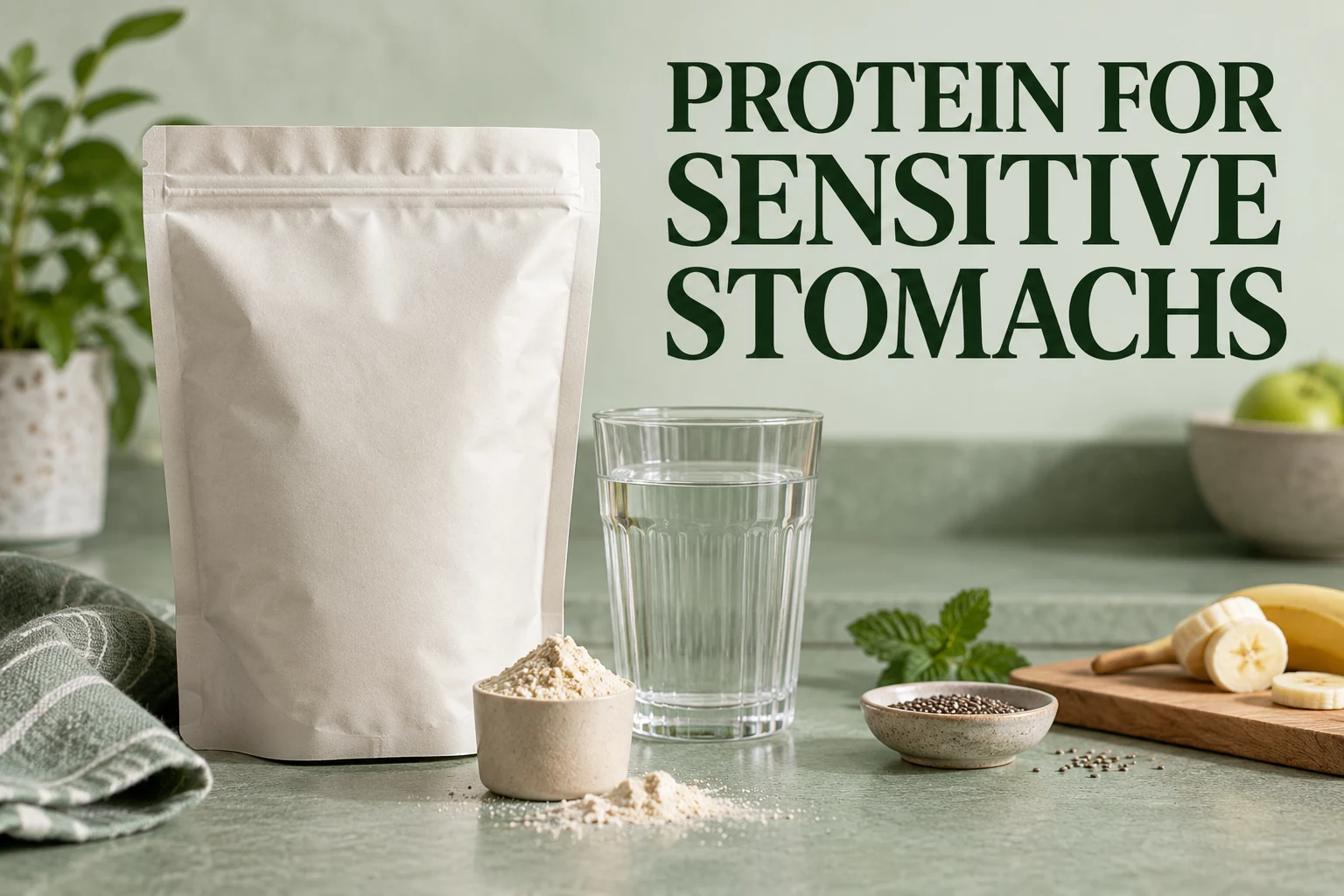
Do not assume whey itself is the cause. Lactose, serving size, sweeteners, gums, milk allergy and unrelated gut conditions can produce similar symptoms. Our first trial is a half-serving of a simple whey isolate such as Applied Nutrition ISO-XP; if dairy remains a problem, use a simple plant blend. Stop repeatedly testing a product that causes significant symptoms. Persistent pain, vomiting, diarrhoea, blood, weight loss or allergic symptoms need medical advice, not another supplement recommendation.
What is the best protein powder for a sensitive stomach?
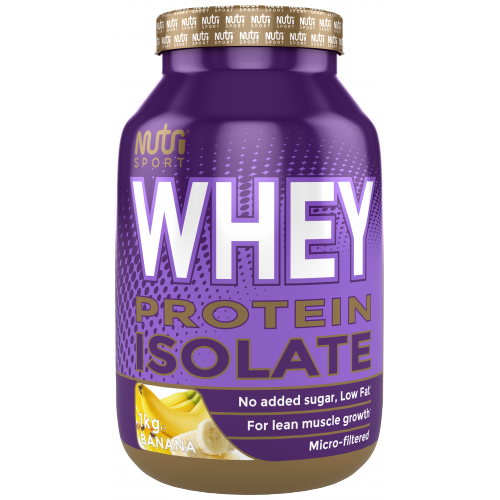
Applied Nutrition ISO-XP is our simple isolate pick and Bulk Pure Whey Isolate is the value alternative. If milk protein itself is unsuitable, choose a short-ingredient pea-and-rice blend. Clear whey is still dairy protein and is not a solution to milk allergy merely because it drinks like juice.
Why does protein powder cause bloating and gas?
Protein powder causes bloating for three specific reasons, and identifying which one applies to you points straight to the fix. A smaller group of people react to the milk proteins themselves, whey and casein, rather than the lactose. For them, even isolate can cause issues, and a plant protein is the reliable answer. See our guide to dairy-free protein powder UK for that route.
- 1
Lactose, the most common cause. Whey concentrate retains 3 to 5g of lactose per 30g serving. If you lack enough lactase enzyme to break it down, that lactose ferments in the gut and produces gas, bloating, and cramps. Roughly 1 in 20 to 1 in 7 adults of Northern European descent are lactose intolerant, and the rate is far higher across most of the world.
- 2
Sweeteners and sugar alcohols. Sorbitol, maltitol, xylitol, and large amounts of inulin or chicory fibre are common in diet and high-fibre powders. They are poorly absorbed and pull water into the gut, causing bloating independent of any dairy issue.
- 3
Dose size. A single 50g or larger protein hit is harder to digest than two 25g servings. Splitting the dose often fixes protein bloat on its own.

The 6 best UK protein powders for sensitive stomachs in 2026
| Rank | Product | Best for | ProteinDeals verdict |
|---|---|---|---|
| 1 | MyProtein Impact Whey IsolateFrom £15.99 Pros
| Best overall | is the most widely stocked low-lactose whey in the UK. Around 79g protein per 100g, under 1g of lactose per serving, and almost no fat or carbs, which is exactly the profile that removes the concentrate bloat while keeping dairy protein's leucine advantage. It is the best first switch for anyone who currently bloats on Impact Whey concentrate. |
| 2 | Bulk Pure Whey IsolateFrom £59.99 Pros
| Cheapest credible whey isolate from a major UK brand, around 84g protein pe | is the cheapest credible whey isolate from a major UK brand, around 84g protein per 100g and routinely under £3.50 per 100g in larger bags. It carries the same near-zero lactose benefit as the MyProtein pick, usually a touch cheaper per 25g protein when bought in bulk. |
| 3 | MyProtein Clear WheyFrom £99.99 | Specialist option | is whey isolate reformulated to mix thin and fruity like a cordial rather than a creamy milkshake. The lighter texture is the single most common reason people who feel heavy or bloated after a normal shake get on better with it, and it keeps low lactose and low fat with no thick dairy mouthfeel sitting in the stomach. |
| 4 | Bulk Vegan Protein PowderFrom £29.99 Cons
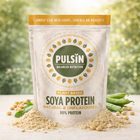
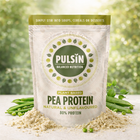
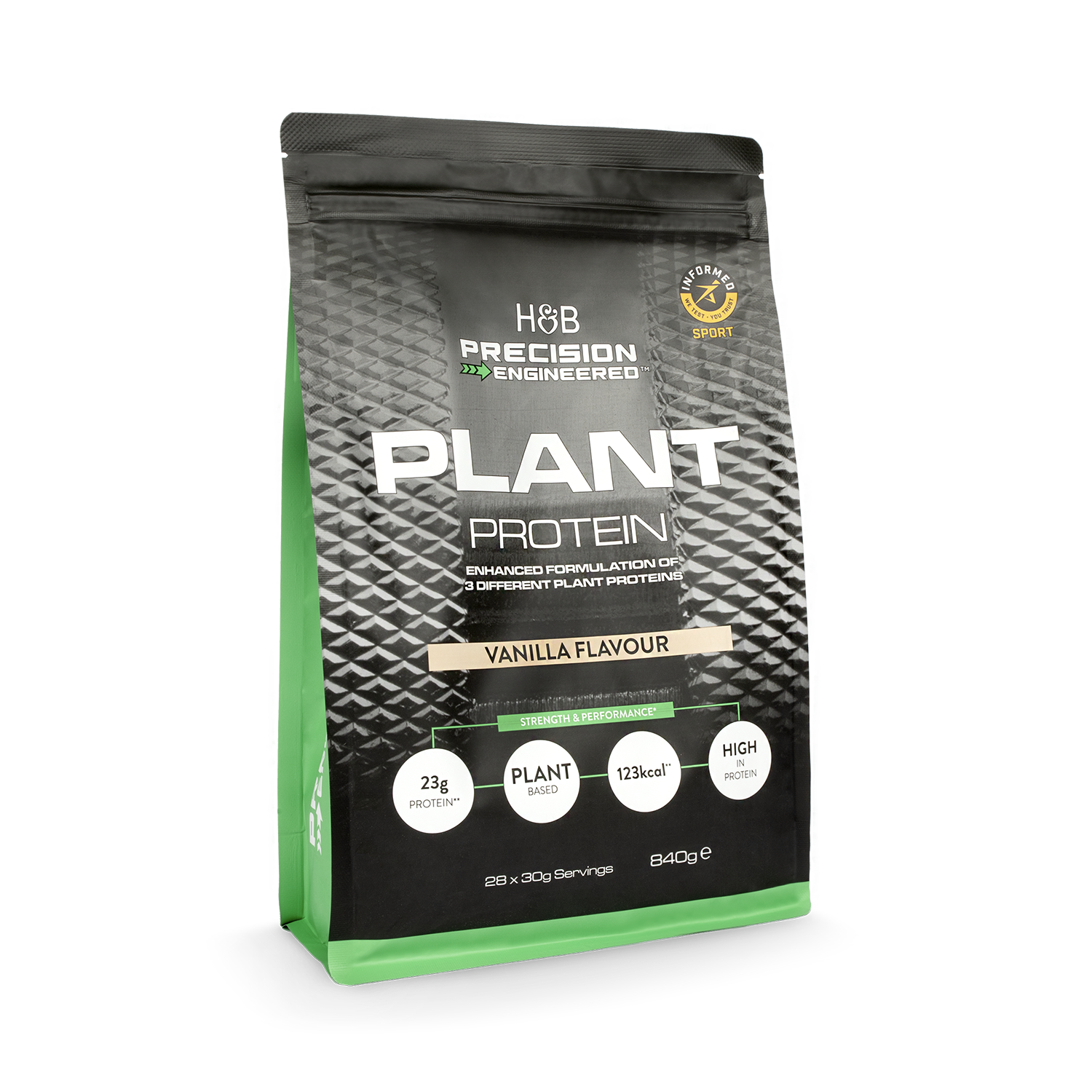
| Cheapest plant proteins in the UK at roughly £1 | is a pea, soy, and brown rice blend with a DigeZyme digestive enzyme complex added specifically to aid breakdown. Zero lactose because it contains no dairy at all, around 69g protein per 100g, and one of the cheapest plant proteins in the UK at roughly £1.50 to £1.70 per 100g. It is the best pick if dairy protein itself is your trigger. |
| 5 | Gentlest formulation in the category | is the cleanest-label plant protein on UK shelves: a pea, brown rice, hemp, and algae blend at 30g protein per serving, with no artificial sweeteners, no soy, and no gums. For sensitive stomachs that also react to artificial sweeteners, this removes both triggers at once. It is premium priced, but the gentlest formulation in the category. | |
| 6 | Hydrolysed wheyFrom £77.99 Pros
| Specialist option | is isolate that has been partially broken down into smaller peptides, so your gut has less work to do. It is the gentlest dairy option for people who want whey's amino profile but still struggle with standard isolate. It costs the most per 25g protein, so treat it as the step you take only if isolate is not enough. |


Live comparison
Sensitive-Stomach Protein products
FlavourSize (g)QtyServingsOfferTotal Per 25g protein 50001180 £35.99 25.0g102£0.200 2500190 £20.99 25.0g102£0.233 1000136 £11.99 25.0g102£0.333 |
FlavourSize (g)QtyServingsOfferTotal Per 25g protein 50001170.7 £35.99 25.0g107£0.211 2000168.3 £17.99 25.0g107£0.264 1000134.1 £11.99 25.0g107£0.351 |
FlavourSize (g)QtyServingsOfferTotal Per 25g protein 50001160 £35.99 25.0g121£0.225 2000164 £17.99 25.0g121£0.281 1000132 £11.99 25.0g121£0.375 |
FlavourSize (g)QtyServingsOfferTotal Per 25g protein 50001172 £39.99 25.0g117£0.232 2500186 £21.99 25.0g117£0.256 1000134.4 £12.99 25.0g117£0.378 |
FlavourSize (g)QtyServingsOfferTotal Per 25g protein 50001160 £38.99 25.0g106£0.244 3000196 £29.99 25.0g106£0.312 1000132 £13.49 25.0g106£0.422 |
FlavourSize (g)QtyServingsOfferTotal Per 25g protein 50001177 £44.99 25.0g105£0.254 30001106.2 £27.99 25.0g105£0.264 1000135.4 £13.99 25.0g105£0.395 |
FlavourSize (g)QtyServingsOfferTotal Per 25g protein 1000132.8 £8.99£20.00 -55%25.0g118£0.274 |
FlavourSize (g)QtyServingsOfferTotal Per 25g protein 40001139.2 £47.99 25.0g108£0.345 2000169.6 £25.99 25.0g108£0.373 1000134.8 £13.99 25.0g108£0.402 |
FlavourSize (g)QtyServingsOfferTotal Per 25g protein 40001114.9 £39.99£54.99 -27%25.0g117£0.348 |
FlavourSize (g)QtyServingsOfferTotal Per 25g protein 40001114.9 £39.99£54.99 -27%25.0g117£0.348 |
FlavourSize (g)QtyServingsOfferTotal Per 25g protein 50001168 £59.99 25.0g106£0.357 2500184 £31.99 25.0g106£0.381 1000133.6 £13.99 25.0g106£0.416 |
FlavourSize (g)QtyServingsOfferTotal Per 25g protein 50001160 £59.99 25.0g123£0.375 2500180 £31.49 25.0g123£0.394 1000132 £13.99 25.0g123£0.437 |
FlavourSize (g)QtyServingsOfferTotal Per 25g protein 40001128 £47.99 25.0g127£0.375 2000164 £24.99 25.0g127£0.390 1000132 £13.99 25.0g127£0.437 |
FlavourSize (g)QtyServingsOfferTotal Per 25g protein 50001190 £77.99 25.0g111£0.410 2000176 £38.99 25.0g111£0.513 1000138 £19.99 25.0g111£0.526 |
FlavourSize (g)QtyServingsOfferTotal Per 25g protein 50001168 £70.99 25.0g113£0.423 30001100.8 £46.99 25.0g113£0.466 1000133.6 £17.99 25.0g113£0.535 |
FlavourSize (g)QtyServingsOfferTotal Per 25g protein 2500180 £33.99 25.0g117£0.425 1000132 £14.99 25.0g117£0.468 |
FlavourSize (g)QtyServingsOfferTotal Per 25g protein 50001166 £72.99 25.0g119£0.440 3000199.6 £52.99 25.0g119£0.532 1000133.2 £17.99 25.0g119£0.542 |
FlavourSize (g)QtyServingsOfferTotal Per 25g protein 50001152 £67.49 25.0g113£0.444 2500176 £35.49 25.0g113£0.467 1000130.4 £14.99 25.0g116£0.493 |
FlavourSize (g)QtyServingsOfferTotal Per 25g protein 1000132.3 £14.99£19.99 -25%25.0g118£0.463 |
FlavourSize (g)QtyServingsOfferTotal Per 25g protein 2700182.1 £41.49 25.0g127£0.505 900127.4 £13.99 25.0g127£0.511 960129.2 £14.99 25.0g127£0.514 |
FlavourSize (g)QtyServingsOfferTotal Per 25g protein 5000196 £48.99 25.0g180£0.510 3000157.6 £30.99 25.0g180£0.538 1000119.2 £14.49 25.0g180£0.755 |
FlavourSize (g)QtyServingsOfferTotal Per 25g protein 50001162 £82.99 25.0g106£0.512 2500181 £45.99 25.0g106£0.568 1000132.4 £20.00 25.0g106£0.617 |
FlavourSize (g)QtyServingsOfferTotal Per 25g protein 40001136 £72.99 25.0g107£0.537 2000168 £39.49 25.0g107£0.581 1000133.6 £21.99 25.0g108£0.654 |
FlavourSize (g)QtyServingsOfferTotal Per 25g protein 40001137.6 £77.49 25.0g105£0.563 2000168.8 £41.99 25.0g105£0.610 1000134.4 £22.99 25.0g105£0.668 |
FlavourSize (g)QtyServingsOfferTotal Per 25g protein 1000117.2 £9.80 25.0g174£0.570 50018.6 £7.75 25.0g174£0.901 |
FlavourSize (g)QtyServingsOfferTotal Per 25g protein 50001138 £79.99 25.0g132£0.580 2500169 £42.99 25.0g132£0.623 1000127.6 £18.99 25.0g132£0.688 |
FlavourSize (g)QtyServingsOfferTotal Per 25g protein 900123.3 £13.99 25.0g130£0.602 500112.9 £8.99 25.0g130£0.696 |
FlavourSize (g)QtyServingsOfferTotal Per 25g protein 50001161.2 £99.99 25.0g109£0.620 2000164.5 £47.99 25.0g109£0.744 1000132.2 £26.99 25.0g109£0.837 |
FlavourSize (g)QtyServingsOfferTotal Per 25g protein 25018 £4.99£8.99 -44%25.0g123£0.624 |
FlavourSize (g)QtyServingsOfferTotal Per 25g protein 25018 £4.99£8.99 -44%25.0g123£0.624 |
FlavourSize (g)QtyServingsOfferTotal Per 25g protein 50001180 £113.76 25.0g112£0.632 908132.7 £23.94 25.0g112£0.732 |
FlavourSize (g)QtyServingsOfferTotal Per 25g protein 50001161.6 £102.99 25.0g108£0.637 3000197 £63.99 25.0g108£0.660 2000164.6 £45.99 25.0g108£0.711 |
FlavourSize (g)QtyServingsOfferTotal Per 25g protein 50001180 £114.99 25.0g113£0.639 2500190 £59.99 25.0g113£0.667 1000136 £26.99 25.0g113£0.750 |
FlavourSize (g)QtyServingsOfferTotal Per 25g protein 1000119.2 £12.99 25.0g180£0.677 50019.6 £8.99 25.0g180£0.936 25014.8 £4.99 25.0g180£1.040 |
FlavourSize (g)QtyServingsOfferTotal Per 25g protein 4000138.4 £25.99£58.49 -56%25.0g399£0.677 |
FlavourSize (g)QtyServingsOfferTotal Per 25g protein 4000138.4 £25.99£58.49 -56%25.0g399£0.677 |
FlavourSize (g)QtyServingsOfferTotal Per 25g protein 40001129.6 £87.99 25.0g110£0.679 2000164.8 £48.49 25.0g110£0.748 1000132.4 £25.99 25.0g110£0.802 |
FlavourSize (g)QtyServingsOfferTotal Per 25g protein 1000136 £24.99 25.0g108£0.694 25019 £9.99 25.0g108£1.110 |
FlavourSize (g)QtyServingsOfferTotal Per 25g protein 2700179.9 £55.49 25.0g131£0.694 2790179.2 £55.49 25.0g133£0.700 900128.4 £19.99 25.0g122£0.703 |
FlavourSize (g)QtyServingsOfferTotal Per 25g protein 1000120.8 £14.50 25.0g158£0.697 500110.4 £11.70 25.0g158£1.125 |
FlavourSize (g)QtyServingsOfferTotal Per 25g protein 27018.1 £5.95 25.0g136£0.739 |
FlavourSize (g)QtyServingsOfferTotal Per 25g protein 1000132 £24.99 25.0g127£0.781 25018 £9.99 25.0g127£1.249 |
FlavourSize (g)QtyServingsOfferTotal Per 25g protein 870130.3 £23.99 25.0g115£0.792 840129.9 £23.99 25.0g113£0.802 1000134.8 £41.49 25.0g114£1.192 |
FlavourSize (g)QtyServingsOfferTotal Per 25g protein 5000188 £70.80 25.0g215£0.805 1400124.6 £23.94 25.0g215£0.972 700112.3 £14.34 25.0g215£1.164 |
FlavourSize (g)QtyServingsOfferTotal Per 25g protein 50001153 £126.00 25.0g129£0.824 1000130.6 £35.94 25.0g129£1.175 30019.2 £14.34 25.0g129£1.562 |
FlavourSize (g)QtyServingsOfferTotal Per 25g protein 600119.2 £15.99 25.0g108£0.833 1000132.4 £39.99 25.0g112£1.234 45001142.2 £177.49 25.0g112£1.248 |
FlavourSize (g)QtyServingsOfferTotal Per 25g protein 840126.2 £22.00 25.0g131£0.839 |
FlavourSize (g)QtyServingsOfferTotal Per 25g protein 303023.3 £20.99 25.0g130£0.903 301511.6 £11.99 25.0g130£1.031 3075.4 £5.99 25.0g130£1.104 |
FlavourSize (g)QtyServingsOfferTotal Per 25g protein 5000144 £39.99£69.99 -43%25.0g426£0.909 |
FlavourSize (g)QtyServingsOfferTotal Per 25g protein 1800158.3 £54.95 25.0g115£0.942 900129.2 £33.95 25.0g115£1.164 15014.9 £7.95 25.0g115£1.636 |
FlavourSize (g)QtyServingsOfferTotal Per 25g protein 2500131 £29.99 25.0g298£0.967 |
FlavourSize (g)QtyServingsOfferTotal Per 25g protein 400013.8 £49.99£59.99 -17%25.0g5951£13.018 |










Community perspective
What others are saying
Watch what buyers found
Hands-on opinions
How To Pick The Best Protein Powder (CHOOSE WISELY!)
Jeremy Ethier
A topic-specific video selected for additional practical context on Best Protein Powder for Sensitive Stomachs UK: What UK Buyers Should Know.

Best overall Sensitive-Stomach Protein
Impact Whey Isolate Powder
MyProtein · 600g
Pros
- Provides 25g protein for about 108 kcal, keeping non-protein calories low (0.3g fat)
How much lactose is in each type of protein?
Lactose content is the single best predictor of whether a dairy protein will bloat you. The practical takeaway is that if you currently use whey concentrate and bloat, move one step down this list to isolate. If isolate still troubles you, the issue is likely the milk protein rather than lactose, so jump to plant. For the full breakdown of the two whey types see whey isolate vs concentrate.
- 1
Whey concentrate: 3 to 5g lactose per 30g serving, the most common trigger.
- 2
Micellar casein: roughly 1 to 1.5g per serving, slow digesting but low lactose.
- 3
Whey isolate: under 1g per serving, filtered to remove most lactose and fat.
- 4
Hydrolysed whey: under 1g, and pre-broken into smaller peptides for easier digestion.
- 5
Plant protein (pea, rice, soy, hemp): 0g lactose, since it contains no dairy at all.
Sweeteners and gums that trigger bloating
Even a zero-lactose protein can bloat you if it is loaded with the wrong fillers. The cleanest formulations keep the ingredient list short. An unflavoured isolate or a no-artificial-sweetener plant blend like Form is the safest bet if you have ruled out lactose and still react. See our protein powder without artificial sweeteners guide for the full short-ingredient list.
- 1
Sugar alcohols: sorbitol, maltitol, xylitol, and isomalt are poorly absorbed and a well-documented cause of gas and bloating in low-sugar products.
- 2
High inulin or chicory root fibre: marketed as gut-friendly, but in large amounts it ferments aggressively and bloats sensitive guts.
- 3
Thickening gums: xanthan and guar gum in some shakes can add to the heavy, full feeling.
How to take protein without the bloat
If your symptoms are headaches rather than bloating, that can point to a different cause. We cover it in can protein shakes cause headaches.
- 1
Cap each shake at 25 to 30g of protein. Two smaller servings digest more comfortably than one large one.
- 2
Mix with more liquid. A thinner shake at 400ml or more per scoop is gentler than a thick, concentrated one.
- 3
Use water or a low-lactose milk. Mixing whey with regular dairy milk stacks lactose on lactose. Water, lactose-free milk, or a plant milk avoids that.
- 4
Give it 2 weeks. Some bloating settles as your gut adapts. If it has not improved after two weeks on isolate, switch to plant.
What gentle protein should cost per 25g
Choosing a gentler protein should not mean overpaying. UK benchmarks as of June 2026, measured by cost per 25g of protein, show a clear tier structure. The UK whey isolate comparison table ranks every isolate by cost per 25g of protein, refreshed weekly across 85+ retailers. Work out your own target with the protein calculator.
- 1
Vegan blends such as Bulk Vegan are the cheapest gentle option, often around 55 to 65p per 25g of protein.
- 2
Whey isolate from MyProtein or Bulk runs roughly 95p to £1.10 per 25g of protein in larger bags, the best balance of digestibility and price.
- 3
Clear whey costs around £1.10 to £1.40 per 25g, a small premium for the lighter texture.
- 4
Hydrolysed whey is the most expensive at £1.40 or more per 25g, worth it only if isolate is not enough.
References
Sources and further reading
- 01Food Standards Agency — food allergen guidance
UK guidance on declared allergens and food labelling; intolerance and allergy are not interchangeable.
Frequently asked questions
What is the best protein powder for a sensitive stomach?+
Whey protein isolate is the best protein powder for most sensitive stomachs because it contains under 1g of lactose per serving, compared with 3-5g in whey concentrate. MyProtein Impact Whey Isolate and Bulk Pure Whey Isolate are the best value low-lactose options in the UK. If dairy is the trigger, a pea-and-rice vegan blend such as Bulk Vegan Protein Powder removes lactose entirely and adds digestive enzymes.
Why does protein powder make me bloated?+
Protein powder usually causes bloating for one of three reasons: lactose in whey concentrate (the most common cause), sugar alcohols or gums used as fillers and sweeteners, or simply taking too large a dose at once. Switching to whey isolate or a plant protein, checking the label for sorbitol and inulin, and capping each shake at 25-30g of protein resolves it for most people.
Is whey isolate easier to digest than concentrate?+
Yes. Whey isolate is filtered to remove most of the lactose and fat, leaving under 1g of lactose per serving versus 3-5g in whey concentrate. Hydrolysed whey is broken down further into smaller peptides and is gentler again. For lactose-sensitive lifters, isolate is the simplest fix that keeps the benefits of dairy protein.
Can lactose intolerant people drink whey protein?+
Most lactose intolerant people tolerate whey isolate, hydrolysed whey, or micellar casein because the residual lactose is under 1g per serving. Whey concentrate is more likely to cause symptoms. If even isolate causes problems, the issue may be a milk protein sensitivity rather than lactose, in which case a plant-based protein is the reliable answer.