

Quick answer
A label can raise suspicion, but it cannot prove amino spiking. Look for unexplained free-form glycine, taurine or cheap amino blends, implausible protein claims and missing transparency. Then favour reputable brands and independent certification where the risk matters. Do not treat a missing published amino profile as proof of fraud, and do not use price alone as a purity test. ProteinDeals uses protein density and cost per 25g protein to expose weak value; laboratory or verified certification evidence is needed for stronger claims.
What is protein spiking (and amino spiking)?
Protein spiking happens when a manufacturer adds cheap ingredients to a powder so it passes a protein test and can claim a higher protein content than it truly delivers. It is also called amino spiking because the cheap ingredients are usually free-form amino acids. The motive is straightforward: whole whey protein costs money, while free-form aminos and fillers cost very little, so spiking cuts production cost while keeping the headline protein number high.
It matters because not all amino acids are equal. The protein you actually want from whey is rich in muscle-building aminos, especially leucine. Spiking strips those out and replaces them with cheaper filler that does far less for recovery or muscle protein synthesis.
How amino spiking works
Many labs test protein by measuring nitrogen content rather than the individual amino acids, since every amino acid contains nitrogen and the reading is used to estimate total protein. That method only works if the manufacturer plays fair. Two tricks commonly game it.
- 1
Cheap filler aminos. Adding low-value amino acids like glycine and taurine raises the nitrogen reading without adding meaningful muscle-building protein.
- 2
Non-protein nitrogen sources. Adding compounds like creatine and beta-alanine, which contain nitrogen but are not whole protein, further inflates the apparent protein figure.
The 3 checks: how to spot a spiked protein
You can rule out most spiked products in under a minute with three checks.
- 1
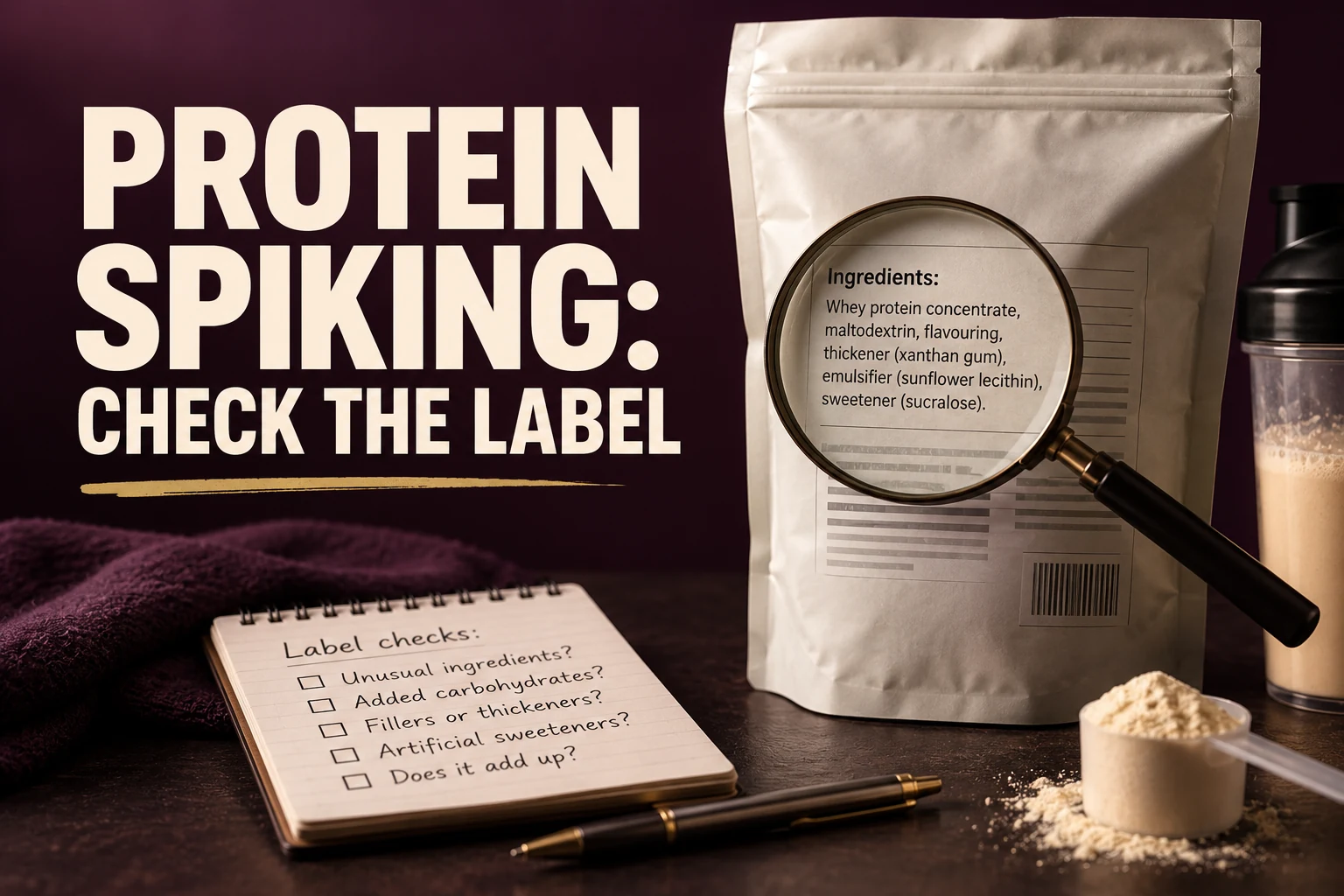
No proprietary blend, and the amino profile is listed. A proprietary blend hides how much of each ingredient sits in the mix. If a label will not say exactly how much whey protein is in a serving, or skips the amino acid breakdown entirely, treat it with caution.
- 2
Around 11g of leucine per 100g of protein. Whey runs about 11% leucine, so 100g of whey protein should carry roughly 11g of leucine. If leucine is not listed but BCAAs are, whey is about 25% BCAAs, so look for around 25g of BCAAs per 100g of protein. Falling well short of either figure is a red flag.
- 3
A fair price per 25g protein. Whey is a commodity, so genuine whey should almost never be far cheaper than everything else on the shelf. ProteinDeals data puts a fair UK range at roughly 70p to £1.10 per 25g protein. A price well below that, paired with a vague label, is the classic spiking signature.
Community perspective
What others are saying
I have never understood the hype of this protein brand. Plus the founder is defending their mislabeling which shows that this brand is pro marketing. I mean they are selling a blend of whey+isolate and there is nothing special about it.
u/tushkyyyy in r/Fitness_India
This is the single best protein powder post I have seen, thank you for the information! Could you please share where you found the third-party label testing information?
u/boojayer in r/Protein
Watch what buyers found
Hands-on opinions
Protein Spiking Is Back! Does Your Protein Powder Pass The Test?
Jim Stoppani, PhD
A topic-specific video selected for additional practical context on Protein Spiking & Amino Spiking UK: 7 Red Flags and Label Checks.
UK whey proteins that pass the checks
Rather than name and shame, here are established UK whey proteins that pass all three checks: high protein density with no filler padding, a published amino profile with no proprietary blend, and a sane price per 25g protein. Figures are live from ProteinDeals, so follow the links for today's exact price.
- 1
Our best-value pick that also carries third-party testing is Bulk Pure Whey, Informed Sport batch tested and consistently among the cheapest per 25g protein in the UK.
| Product | Protein /100g | Price /25g protein | Why it passes |
|---|---|---|---|
Applied Nutrition ISO-XP | 90g | ~97.5p | 90% isolate, near-zero carbs, full amino profile |
Bulk Pure Whey Isolate | 84g | ~100p | 84% isolate, full amino profile published |
Optimum Nutrition Gold Standard | 79g | ~85p | Published multi-source blend, no proprietary blend |
MyProtein Impact Whey | 72g | ~75p | 72% protein, published amino profile, fair price |
Bulk Pure Whey | 71g | ~70p | Informed Sport batch tested, best value |

Cheapest Whey Protein
Diet Whey Protein Powder
Pure Source Nutrition · 1kg
Why suspiciously cheap protein is a warning sign
Whey is a global commodity, so its base cost does not vary much between honest brands. That is exactly why price makes such a useful spiking signal. If one powder is dramatically cheaper per 25g protein than everything else, and its label stays vague, the saving usually comes from what has been left out or padded rather than from a genuinely better deal.
This is where comparing on real cost per 25g protein beats comparing sticker prices. ProteinDeals normalises every product to that same metric across the UK retailers we track, so a genuinely cheap, honest whey stands out from a cheap, spiked one. Check the cheapest protein powder ranking to see where a product sits, and read is cheap whey protein any good for more on telling a bargain from a red flag.
Red flags to avoid on the label
Pass every check below and you are almost certainly getting what you pay for. Fail one or more and you are rolling the dice on quality, so buy something else.
- 1
A proprietary blend that hides how much whey is actually in each serving.
- 2
No amino acid profile listed, or leucine and BCAAs well below whey's typical 11% and 25% share of protein.
- 3
More grams of amino acids than protein on the label, a sign of added non-protein nitrogen.
- 4
Protein per 100g under about 65g with no good reason, which usually points to filler.
- 5
A price far below everything else, especially paired with any of the signs above.
References
Sources and further reading
- 01ProteinDeals — live product comparison
Current product, nutrition and retailer data used for the article's buying context.
Frequently asked questions
What is protein spiking?+
Protein spiking, also called amino spiking, describes a manufacturer adding cheap free-form amino acids or fillers such as glycine, taurine, creatine, or beta-alanine to a powder so it passes a nitrogen-based protein test and can claim more protein than it actually delivers as whole protein.
How do I know if my protein powder is amino spiked?+
Check three things. The label should show a full amino acid profile with no proprietary blend. Whey runs about 11% leucine, so look for roughly 11g of leucine per 100g of protein. The price should not be suspiciously cheap, since genuine whey rarely costs much less than about 70p per 25g protein in the UK.
Is Optimum Nutrition Gold Standard good quality?+
Yes. Gold Standard publishes its full multi-source blend of whey isolate, concentrate, and hydrolysate with no proprietary blend, delivers 24g of protein per scoop, and sits in a normal price band per 25g protein, passing all three quality checks.
Clear whey does not list amino acids. Is that a red flag?+
Not on its own. Clear whey is usually whey isolate or hydrolysate, both high quality, and reputable brands like MyProtein and Bulk publish the amino profile on request. A missing profile from an unknown brand paired with a suspiciously low price is the combination to watch for.
My protein has 22% BCAAs and 10% leucine. Is that ok?+
Yes, that sits close to real whey, which runs about 25% BCAAs and 11% leucine as a share of protein. Slightly under is normal variation, and it only becomes a red flag when the numbers fall far short, or when amino acids are listed but total protein is not.