

Quick answer
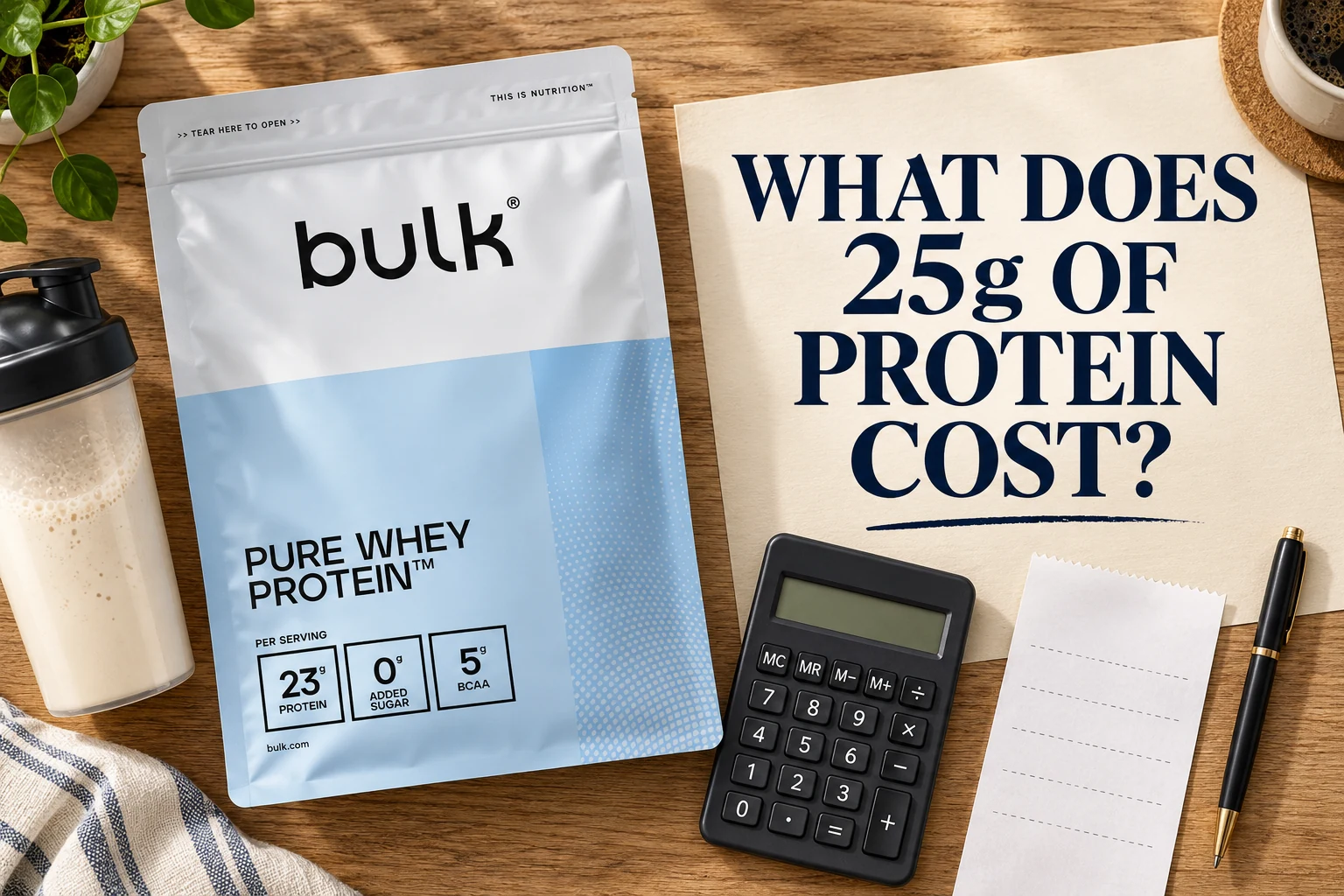
Pack protein = pack weight in grams multiplied by protein per 100g, divided by 100. Cost per 25g protein = final delivered price multiplied by 25, divided by pack protein. A £24, 1kg bag at 80g protein per 100g contains 800g protein and costs £0.75 per 25g protein.
The two-line formula
Pack protein = pack grams × protein per 100g ÷ 100. Cost per 25g protein = delivered price × 25 ÷ pack protein. Use the exact flavour, final checkout price and correct pack size.
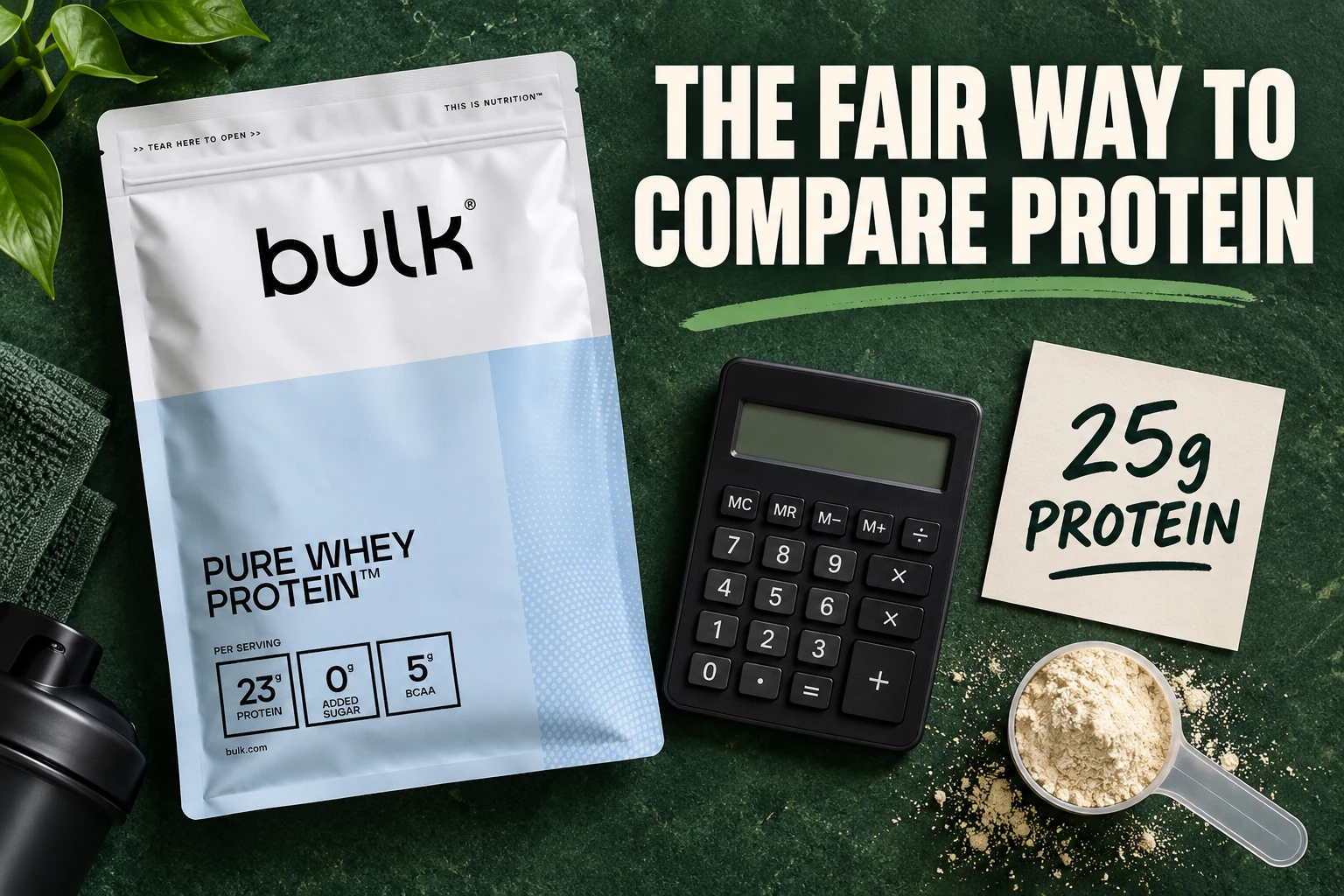
This is ProteinDeals' primary value metric because it controls for pack size and protein density at once. Apply suitability first—whey, isolate, vegan or casein—then use cost per 25g protein to rank products that can genuinely serve the same job.
| Step | Calculation | Result |
|---|---|---|
| Total protein | Pack weight × protein per 100g ÷ 100 | Grams of protein in the pack |
| Cost per 25g protein | Final price × 25 ÷ total protein | Price for 25g of protein |
| Cost in pence | Cost in pounds × 100 | Pence per 25g protein |
Worked example: a 1kg bag
Imagine a 1kg bag costing £24 with 80g protein per 100g. Convert 1kg to 1,000g. The bag contains 1,000 × 80 ÷ 100 = 800g of protein.
Divide £24 by 800, then multiply by 25. The result is £0.75 per 25g protein, or 75p. Compare this figure with other products.

Practice comparison: which bag is cheaper?
Bag A costs £22, weighs 1kg, and contains 65g protein per 100g. It holds 650g of protein, so £22 × 25 ÷ 650 = £0.85 per 25g protein, rounded to the nearest penny.
Bag B costs £26, weighs 1kg, and contains 80g protein per 100g. It holds 800g of protein, so £26 × 25 ÷ 800 = £0.81 per 25g protein, rounded to the nearest penny.
Bag A has the lower shelf price, but Bag B provides protein more cheaply. Protein concentration is why comparing the price of the tub alone gives the wrong answer.
| Product | Pack price | Total protein | Cost per 25g protein |
|---|---|---|---|
Bag A | £22 | 650g | £0.85 |
Bag B | £26 | 800g | £0.81 |
Community perspective
What others are saying
You can calculate the grams of protein per dollar. Just multiply the protein per serving by the number of servings, and then divide by the price.
u/ashtree35 in r/nutrition
Awesome question! I've been there too! One way to make it simpler is to calculate the price per serving and then divide it by the protein per serving. It'll give you a better idea of which foods are giving you the most protein bang for your buck.
u/thefarmpure in r/nutrition
Watch what buyers found
Hands-on opinions
The Complete Guide to Calculating Your RDA Protein Intake (Step-by-Step)
Protein Intake Calculator
A topic-specific video selected for additional practical context on How to Calculate Protein Cost per 25g protein: A Practical Step-by-Step Guide.
Use the checkout price, not the advertised price
Apply any valid discount before doing the calculation, then add unavoidable delivery charges. If a £25 bag falls to £20 with a code but costs £3.99 to deliver, use £23.99 unless the delivery charge covers other products in the same order.
Subscription savings, minimum-spend codes and multi-buy offers need the same treatment. Compare the amount you must spend and the amount of protein you actually receive, not the largest percentage printed on the page.

Cheapest Whey Protein
Diet Whey Protein Powder
Pure Source Nutrition · 1kg
Common calculation mistakes
Do not divide price by the grams in one scoop. Scoop sizes differ and tell you nothing about the value of the complete pack. Do not treat 80g protein per 100g as 80g in the whole bag. It must be applied to the total weight.
Check that you are using protein per 100g of powder, not protein per serving. Also confirm the nutrition belongs to the selected flavour, because flavoured versions can contain slightly different amounts of protein.
- 1
Convert kilograms to grams before starting: 1kg equals 1,000g.
- 2
Use protein per 100g rather than the serving claim.
- 3
Apply discounts and delivery to obtain the real price.
- 4
Compare products within a category when their purposes differ substantially.
When protein cost is not the whole decision
Cost per 25g protein answers a narrow but valuable question: which product supplies protein most cheaply? It does not measure taste, allergens, lactose, third-party sport certification, ingredient preferences or whether a mass gainer and an isolate are meant for the same job.
Use the figure to create a shortlist, then check nutrition per 100g and the qualities that matter to you. The protein value guide explains how UK categories tend to compare, while the protein powder comparison performs the calculation automatically against tracked products.
References
Sources and further reading
- 01Competition and Markets Authority — price-reduction claims
UK guidance relevant to reference prices, discount claims and online urgency messaging.
Frequently asked questions
How do I calculate the cost of 25g of protein?+
Calculate total protein as pack weight in grams multiplied by protein per 100g, divided by 100. Multiply the final delivered price by 25, then divide by total protein. Multiply that result by 100 to express it in pence.
Should delivery be included?+
Include unavoidable delivery when comparing a single purchase. If one delivery charge covers several items, allocate it sensibly or compare both products before delivery and check the final basket separately.
Is price per 100g of powder the same thing?+
No. Price per 100g accounts for pack size but not protein concentration. Cost per 25g protein also accounts for how much of the powder is actually protein.
Why not compare protein per scoop?+
Manufacturers choose different scoop and serving sizes. Nutrition per 100g and cost per 25g protein provide a consistent basis for comparing products.