

Quick answer
Whey concentrate wins for most buyers. Isolate earns its premium only through lower lactose or leaner macros, not extra muscle gain. If isolate costs over roughly 20% more per 25g protein and concentrate suits you, choose concentrate.
Live comparison
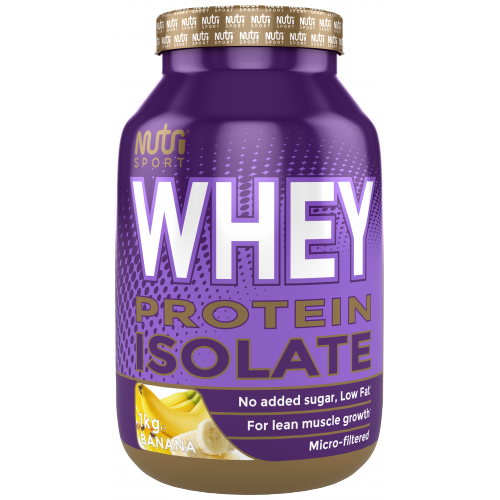
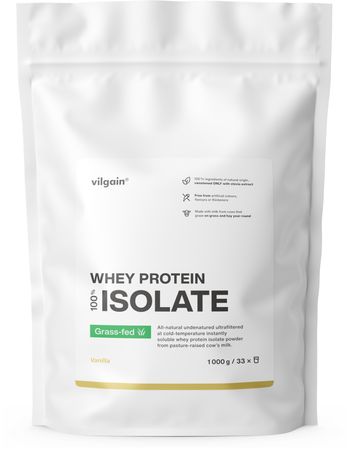
Whey Isolate products
FlavourSize (g)QtyServingsOfferTotal Per 25g protein 50001190 £77.99 25.0g111£0.410 2000176 £38.99 25.0g111£0.513 1000138 £19.99 25.0g111£0.526 |
FlavourSize (g)QtyServingsOfferTotal Per 25g protein 50001180 £114.99 25.0g113£0.639 2500190 £59.99 25.0g113£0.667 1000136 £26.99 25.0g113£0.750 |
FlavourSize (g)QtyServingsOfferTotal Per 25g protein 870130.3 £23.99 25.0g115£0.792 840129.9 £23.99 25.0g113£0.802 1000134.8 £41.49 25.0g114£1.192 |
FlavourSize (g)QtyServingsOfferTotal Per 25g protein 50001153 £126.00 25.0g129£0.824 1000130.6 £35.94 25.0g129£1.175 30019.2 £14.34 25.0g129£1.562 |
FlavourSize (g)QtyServingsOfferTotal Per 25g protein 600119.2 £15.99 25.0g108£0.833 1000132.4 £39.99 25.0g112£1.234 45001142.2 £177.49 25.0g112£1.248 |
FlavourSize (g)QtyServingsOfferTotal Per 25g protein 1800158.3 £54.95 25.0g115£0.942 900129.2 £33.95 25.0g115£1.164 15014.9 £7.95 25.0g115£1.636 |
FlavourSize (g)QtyServingsOfferTotal Per 25g protein 1800164.8 £64.95 25.0g-£1.002 540119.4 £24.95 25.0g-£1.283 |
FlavourSize (g)QtyServingsOfferTotal Per 25g protein 1800164.8 £69.95 25.0g-£1.079 |
FlavourSize (g)QtyServingsOfferTotal Per 25g protein 50001168 £184.99 25.0g109£1.101 2500184 £94.99 25.0g109£1.131 1000133.6 £41.99 25.0g109£1.250 |
FlavourSize (g)QtyServingsOfferTotal Per 25g protein 50001174.4 £192.99 25.0g106£1.107 30001104.6 £116.99 25.0g106£1.118 2000169.8 £80.99 25.0g106£1.161 |
FlavourSize (g)QtyServingsOfferTotal Per 25g protein 50001162 £184.99 25.0g111£1.142 2500181 £94.99 25.0g111£1.173 1000132.4 £41.99 25.0g111£1.296 |
FlavourSize (g)QtyServingsOfferTotal Per 25g protein 1000132.4 £39.99 25.0g112£1.234 |
FlavourSize (g)QtyServingsOfferTotal Per 25g protein 375113.5 £17.99£24.99 -28%25.0g104£1.329 |
FlavourSize (g)QtyServingsOfferTotal Per 25g protein 375113.5 £17.99£24.99 -28%25.0g104£1.329 |
FlavourSize (g)QtyServingsOfferTotal Per 25g protein 1800164.6 £85.95 25.0g104£1.331 850130.5 £51.95 25.0g104£1.703 450116.1 £28.95 25.0g104£1.793 |
FlavourSize (g)QtyServingsOfferTotal Per 25g protein 2267.96179.8 £110.00 25.0g109£1.378 1133.98139.9 £63.00 25.0g109£1.578 |
FlavourSize (g)QtyServingsOfferTotal Per 25g protein 990131.7 £43.99 25.0g112£1.389 36001106.6 £154.99 25.0g120£1.454 38401106 £154.99 25.0g126£1.462 |
FlavourSize (g)QtyServingsOfferTotal Per 25g protein 2000171.2 £99.99 25.0g103£1.404 900132 £49.99 25.0g103£1.560 |
FlavourSize (g)QtyServingsOfferTotal Per 25g protein 40001137.6 £196.99 25.0g106£1.432 2000168.8 £105.49 25.0g106£1.533 1000134.4 £65.99 25.0g106£1.918 |
FlavourSize (g)QtyServingsOfferTotal Per 25g protein 1000134.8 £49.99 25.0g105£1.436 500117.4 £27.99 25.0g105£1.609 |
FlavourSize (g)QtyServingsOfferTotal Per 25g protein 2267.96171 £102.00 25.0g120£1.437 |
FlavourSize (g)QtyServingsOfferTotal Per 25g protein 2267.96171.7 £110.00 25.0g125£1.535 37.86073.5 £119.00 25.0g117£1.619 1133.98138.6 £63.00 25.0g112£1.634 |
FlavourSize (g)QtyServingsOfferTotal Per 25g protein 2220171.9 £112.00 25.0g133£1.557 1110136 £59.00 25.0g133£1.641 |
FlavourSize (g)QtyServingsOfferTotal Per 25g protein 1860171.4 £112.00 25.0g109£1.568 930135.7 £59.00 25.0g109£1.652 |
FlavourSize (g)QtyServingsOfferTotal Per 25g protein 1500149.8 £79.99 25.0g104£1.606 |
FlavourSize (g)QtyServingsOfferTotal Per 25g protein 930130.9 £58.00 25.0g110£1.878 450114.9 £38.00 25.0g110£2.543 |
FlavourSize (g)QtyServingsOfferTotal Per 25g protein 480113.4 £28.49 25.0g132£2.120 |
FlavourSize (g)QtyServingsOfferTotal Per 25g protein 590120 £54.00 25.0g112£2.700 655120 £54.00 25.0g112£2.700 625120 £54.00 25.0g113£2.700 |
FlavourSize (g)QtyServingsOfferTotal Per 25g protein 314.419.6 £33.00 25.0g112£3.437 30619.6 £33.00 25.0g113£3.438 301.219.6 £33.00 25.0g113£3.438 |
FlavourSize (g)QtyServingsOfferTotal Per 25g protein 26218 £31.00 25.0g112£3.875 |
FlavourSize (g)QtyServingsOfferTotal Per 25g protein 70519 £37.99 25.0g278£4.210 75019 £37.99 25.0g300£4.221 775.519 £37.99 25.0g313£4.223 |
FlavourSize (g)QtyServingsOfferTotal Per 25g protein 3010.6 £3.49 25.0g180£5.817 |








Concentrate keeps more of whey’s original components
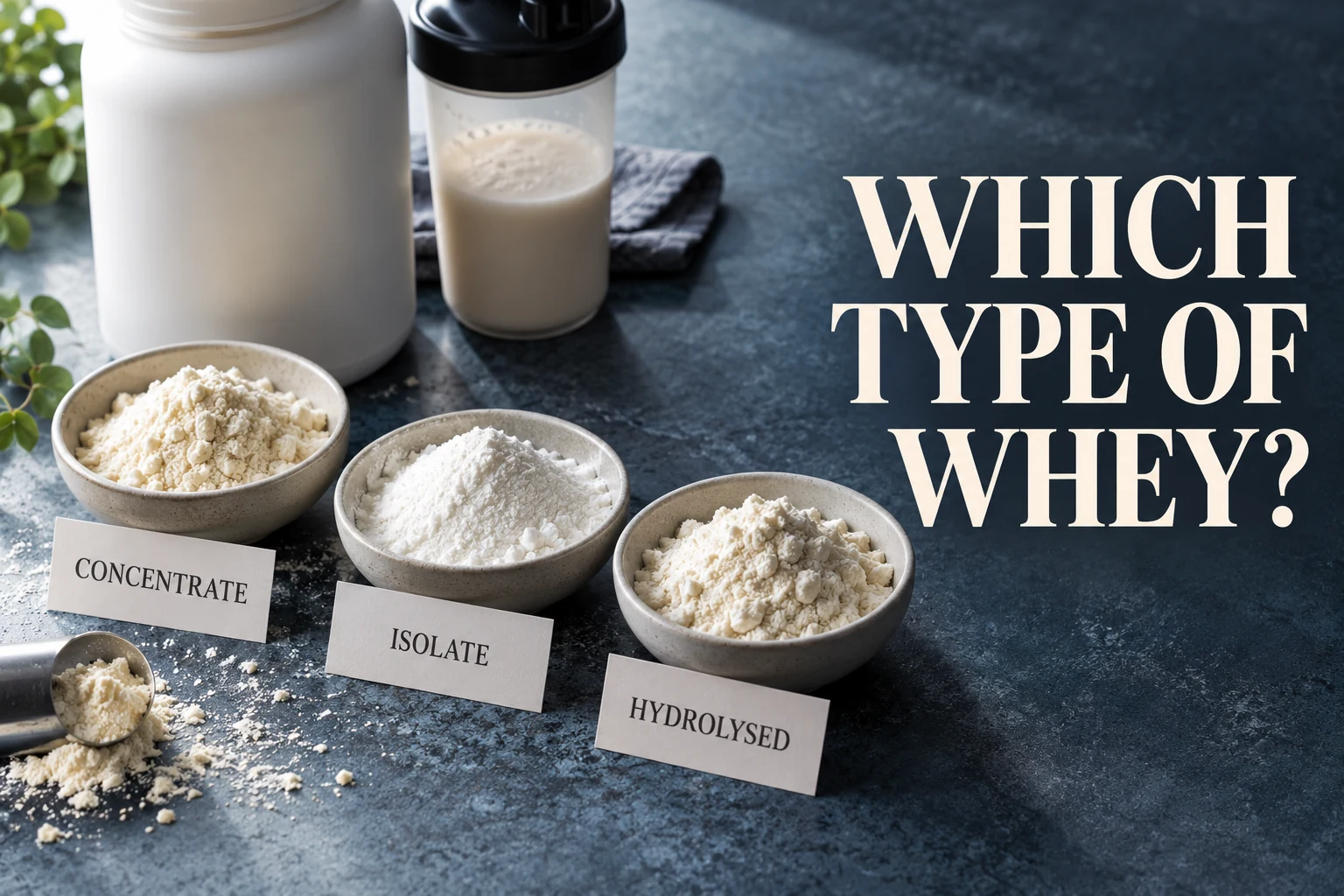
When liquid whey is drawn off during cheese and dairy production, it goes through filtration and drying that can stop at different points, producing ingredients with different final protein concentrations. A finished flavoured concentrate typically lands around 70-80% protein, carrying more lactose, fat, minerals and flavour compounds along with it than an isolate would.
Because it needs less processing, concentrate is usually the cheapest complete protein powder you can buy, and the retained milk fat and lactose often make for a creamier shake. Mixability and popularity still vary by brand and formulation, so it's worth checking the dedicated page for current whey concentrate prices rather than assuming one product represents the whole category.
Isolate removes more non-protein material
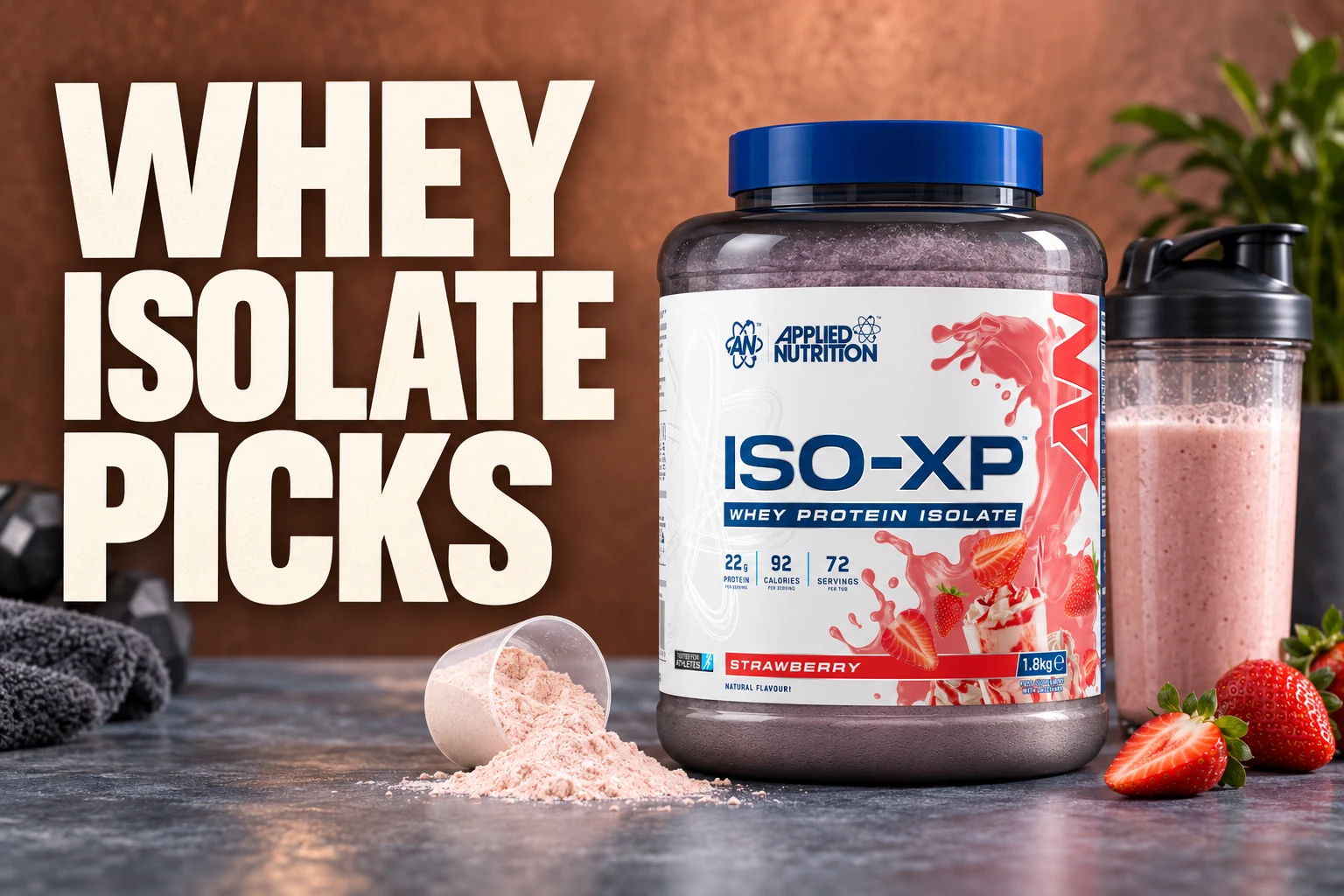
Isolate goes a step further, typically through membrane filtration or ion exchange, to strip out additional fat and lactose. The unflavoured raw material can reach around 90% protein, though finished flavoured tubs usually test lower once cocoa and other ingredients are mixed back in.
That extra protein density is useful if you have mild lactose sensitivity, are tracking macros tightly, or simply prefer a leaner formula. It's worth remembering isolate is still a milk-derived product, so it is not safe for a milk allergy, and anyone with severe lactose intolerance may still want to take individual caution. Current whey isolate prices across UK retailers are tracked separately.
Community perspective
What others are saying
Tbh, this entire debate about concentrate vs isolate is not for newbies or someone looking for general fitness. It’s for those who have years of training experience and are looking to cut even that 1% of excess carb or fat intake. I myself have been using MB’s performance whey for over 2 years now and I have no problem with whatever excess crab there exists per scoop.
u/[deleted] in r/Fitness_India
The whey protein vs isolate convo really depends on what your body tolerates. I switched to isolate because concentrate was messing with my stomach; less lactose in isolate helped a lot. If digestion isn’t an issue for you, concentrate’s usually fine. But yeah, when protein isolate vs concentrate gets brought up, the biggest difference is how your gut handles it.
u/francoisdeverly in r/askfitness
Watch what buyers found
Hands-on opinions
Pick The Right Whey Protein in Under 4 Minutes
PictureFit
A topic-specific video selected for additional practical context on Whey Isolate vs Concentrate: Price, Quality and Value Compared.
Treat old price ranges as context, not a quote
Historical tracking has generally shown isolate sitting 30-50% above concentrate per 100g, though the gap swings a lot depending on brand, pack size and retailer. That's a useful sense of the usual relationship, but it's no substitute for checking today's actual prices.
Some of the most aggressive prices ever recorded sat around £0.48 per 100g for concentrate and £0.90 for isolate, while specialist products in either category can climb past £2.00 per 100g. That spread on its own shows protein type is only one factor in what you pay.
Large bags and strong promotions from retailers like MyProtein or Bulk can close the gap considerably. The comparison that matters is cost per 25g protein, not per 100g of powder, because an isolate priced close to a concentrate can end up the better deal once you account for its higher protein density.

Cheapest Whey Isolate
Grass Fed Hydrolysed Beef Protein Isolate 95% - HydroBEEF™
Peak Supps · 1kg
Pros
- Provides 25g protein for about 111 kcal, keeping non-protein calories low (0.8g fat)
- 52.5% cheaper per 25g protein than the median of 26 other Protein Isolate product families in this comparison
Translate composition into a daily difference
A simplified raw-powder comparison puts roughly 90g of protein in 100g of isolate against 75g in concentrate, a 20% increase in density. Real finished products vary, so always calculate from the actual label rather than this example. Framed this way, the isolate premium often looks smaller once you price per 25g protein instead of per gram of powder.
Isolate generally carries less fat, carbohydrate and lactose, though exact figures (something like 1g versus 5-7g) will differ by flavour and cannot be assumed across the board. Multiply whatever per-serving difference you find by how often you actually drink a shake: the macro gap may end up fairly modest, even though digestive tolerance can still be the deciding factor for some people.
Concentrate makes sense when
Concentrate tends to suit:
- 1
Budget-conscious buyers, since it offers the best protein per pound spent
- 2
General fitness users who don't have specific macro targets to hit
- 3
People who tolerate lactose without issues
- 4
Anyone buying in bulk, as 5kg bags of concentrate are among the cheapest protein available
Isolate earns the extra spend when
Isolate is worth the premium for:
- 1
People with mild lactose intolerance (severe intolerance may need a dairy-free option instead)
- 2
Anyone on a calorie-restricted diet where every gram of fat matters
- 3
Competitive athletes who need precise macro tracking
- 4
Anyone who experiences bloating from concentrate
Choose by constraint, then by live cost
Concentrate is the sensible default when it digests comfortably and keeping protein cost down matters most. Its extra fat and carbohydrate are usually a small part of a whole day's diet, but that's determined by the specific label in front of you, not by the category name alone.
Isolate earns its place for lower lactose, tighter macro targets, or straightforward preference. Any claim that concentrate delivers '80% of the benefit' doesn't really hold up: both are complete whey proteins, and results depend far more on hitting adequate total protein intake than on a fixed percentage tied to how the powder was processed.
A practical way to decide: sort both categories by cost per 25g of protein, then rule out anything that clashes with your digestive tolerance or dietary needs. Checking the latest protein powder deals will tell you whether a current promotion changes that answer.
References
Sources and further reading
- 01Competition and Markets Authority — price-reduction claims
UK guidance relevant to reference prices, discount claims and online urgency messaging.