
Quick answer
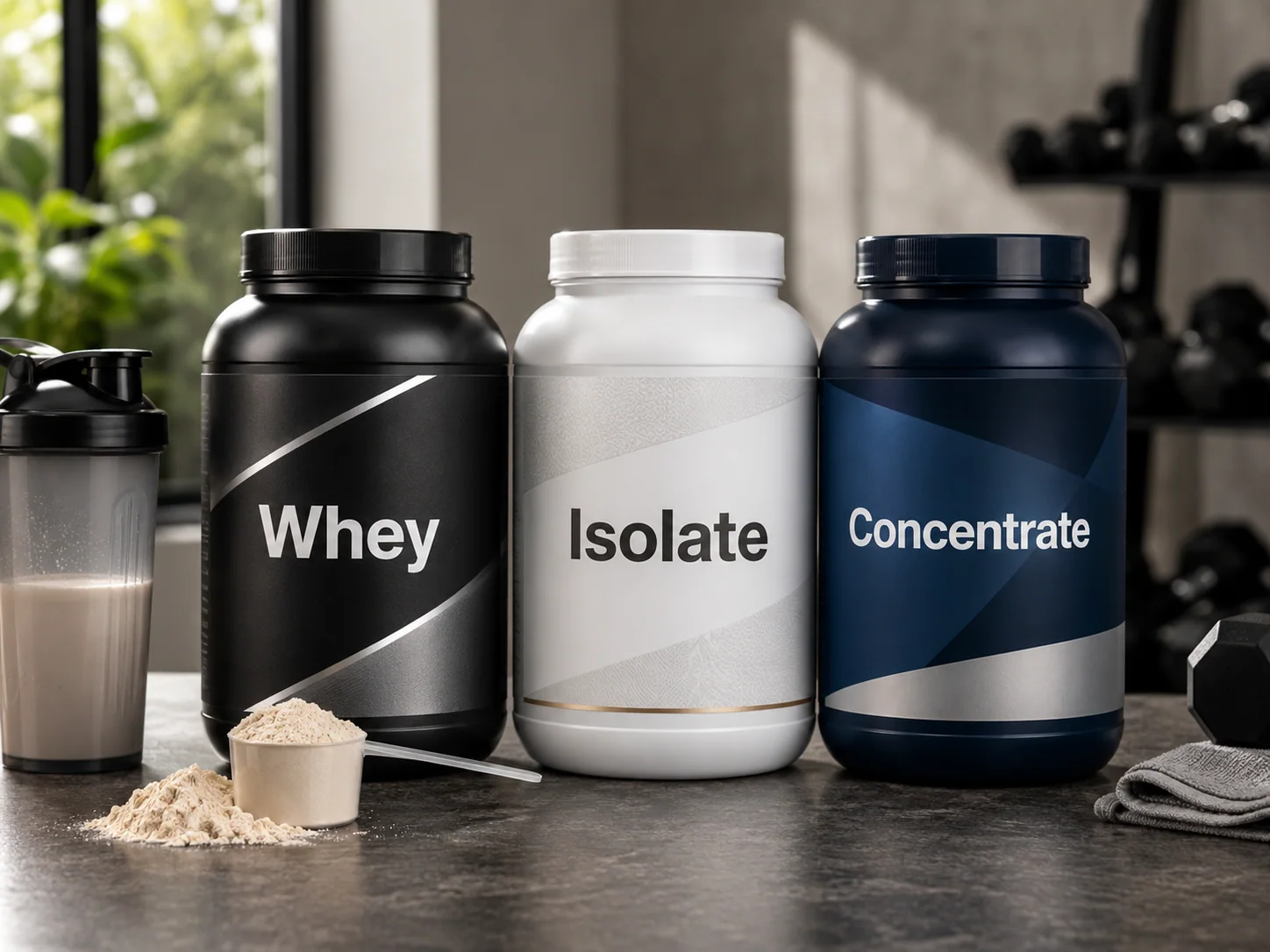
Whey is the broad family; concentrate and isolate are two forms within it. Concentrate wins for most buyers on cost and creamy texture. Isolate wins when lower lactose or slightly leaner macros solve a real problem. Our concentrate pick is MyProtein or Bulk by live value; our isolate pick is Applied Nutrition ISO-XP.
The three types of whey, quickly explained
All whey protein starts in the same place: the liquid left over when milk is curdled to make cheese. That liquid is filtered and dried into powder. What separates concentrate, isolate and hydrolysate is how much additional processing happens after that first step.
Concentrate is the least processed. Isolate goes through extra filtration to raise protein density and strip out more fat and lactose. Hydrolysate, sometimes called hydrolysed whey, takes isolate and partially breaks down the protein chains with enzymes, which may speed digestion slightly.
Live comparison
Whey Isolate products
FlavourSize (g)QtyServingsOfferTotal Per serving 50001167 £77.99 28.5g126£0.467 2000167 £38.99 28.5g126£0.582 1000133 £19.99 28.5g126£0.606 |
FlavourSize (g)QtyServingsOfferTotal Per serving 50001167 £114.99 27.0g122£0.689 2500183 £59.99 27.0g122£0.723 1000133 £26.99 27.0g122£0.818 |
FlavourSize (g)QtyServingsOfferTotal Per serving 870130 £19.99 25.0g115£0.666 840130 £19.99 25.0g113£0.666 1000140 £27.99 25.0g115£0.700 |
FlavourSize (g)QtyServingsOfferTotal Per serving 1800153 £54.95 27.3g112£1.037 900127 £33.95 27.3g112£1.257 15014 £7.95 27.3g112£1.988 |
FlavourSize (g)QtyServingsOfferTotal Per serving 990130 £30.00 26.0g118£1.000 36001120 £110.49 22.0g107£0.921 38401120 £110.49 22.0g112£0.921 |
FlavourSize (g)QtyServingsOfferTotal Per serving 1800160 £64.95 27.0g-£1.083 540118 £24.95 27.0g-£1.386 |
FlavourSize (g)QtyServingsOfferTotal Per serving 990130 £31.99 26.0g118£1.066 2700190 £87.49 22.0g107£0.972 2880190 £87.49 22.0g112£0.972 |
FlavourSize (g)QtyServingsOfferTotal Per serving 50001167 £184.99 25.0g110£1.108 2500183 £94.99 25.0g110£1.144 1000133 £41.99 25.0g110£1.272 |
FlavourSize (g)QtyServingsOfferTotal Per serving 50001167 £192.99 26.2g110£1.156 30001100 £116.99 26.2g110£1.170 2000167 £80.99 26.2g110£1.209 |
FlavourSize (g)QtyServingsOfferTotal Per serving 50001167 £184.99 24.0g108£1.108 2500183 £94.99 24.0g108£1.144 1000133 £41.99 24.0g108£1.272 |
FlavourSize (g)QtyServingsOfferTotal Per serving 1000133 £39.99 25.0g109£1.212 |
FlavourSize (g)QtyServingsOfferTotal Per serving 375115 £17.99 22.6g94£1.199 |
FlavourSize (g)QtyServingsOfferTotal Per serving 1800172 £85.95 22.4g93£1.194 850134 £51.95 22.4g93£1.528 450118 £28.95 22.4g93£1.608 |
FlavourSize (g)QtyServingsOfferTotal Per serving 2267.96168 £110.00 30.0g130£1.618 1133.98134 £62.00 30.0g130£1.824 |
FlavourSize (g)QtyServingsOfferTotal Per serving 2000167 £99.99 27.0g112£1.492 900130 £49.99 27.0g112£1.666 |
FlavourSize (g)QtyServingsOfferTotal Per serving 2267.96171 £101.00 25.0g120£1.423 |
FlavourSize (g)QtyServingsOfferTotal Per serving 1000133 £49.99 26.0g109£1.515 500117 £27.99 26.0g109£1.646 |
FlavourSize (g)QtyServingsOfferTotal Per serving 40001160 £208.49 22.0g91£1.303 2000180 £109.99 22.0g91£1.375 1000140 £58.99 22.0g91£1.475 |
FlavourSize (g)QtyServingsOfferTotal Per serving 2267.96164 £117.00 30.0g135£1.828 37.86060 £117.00 30.0g140£1.950 1133.98132 £62.00 30.0g135£1.938 |
FlavourSize (g)QtyServingsOfferTotal Per serving 2220160 £110.00 30.0g160£1.833 1110130 £58.00 30.0g160£1.933 |
FlavourSize (g)QtyServingsOfferTotal Per serving 1860160 £110.00 30.0g130£1.833 930130 £58.00 30.0g130£1.933 |
FlavourSize (g)QtyServingsOfferTotal Per serving 1800160 £69.95 17.0g-£1.166 |
FlavourSize (g)QtyServingsOfferTotal Per serving 930131 £58.00 25.0g110£1.871 450115 £38.00 25.0g110£2.533 |
FlavourSize (g)QtyServingsOfferTotal Per serving 655125 £46.00 20.0g90£1.840 590125 £46.00 20.0g90£1.840 625125 £46.00 20.0g90£1.840 |
FlavourSize (g)QtyServingsOfferTotal Per serving 262110 £25.00 20.0g90£2.500 |
FlavourSize (g)QtyServingsOfferTotal Per serving 314.4112 £31.00 20.0g90£2.583 306112 £31.00 20.0g90£2.583 301.2112 £31.00 20.0g90£2.583 |
FlavourSize (g)QtyServingsOfferTotal Per serving 705115 £37.99 15.0g114£2.533 750115 £37.99 15.0g108£2.533 775.5115 £37.99 15.0g105£2.533 |
FlavourSize (g)QtyServingsOfferTotal Per serving 3011 £3.49 15.0g108£3.490 |








Whey concentrate
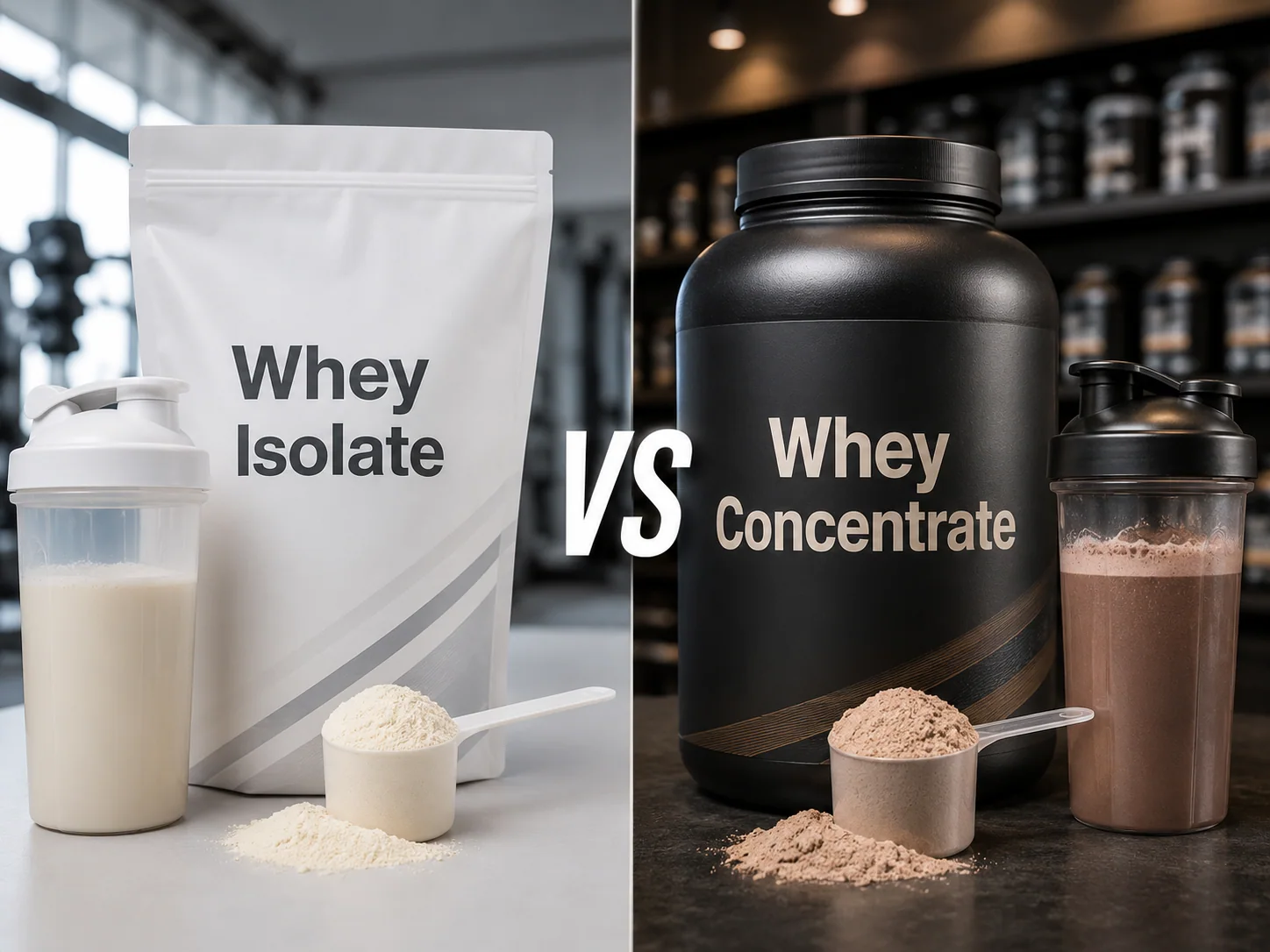
Whey concentrate typically delivers between 70g and 80g of protein per 100g of powder. The remaining 20-30g is a mix of carbohydrates, fat and naturally occurring lactose. For most people, this is not a problem. It simply means a slightly richer flavour and a lower cost per gram of protein.
Concentrate is the default choice for anyone who digests dairy without difficulty and is buying based on value. It is the most widely sold form in the UK for exactly this reason: the cost per gram of protein is usually the lowest, and the flavour profile is generally creamier and more forgiving than isolate.
Whey isolate
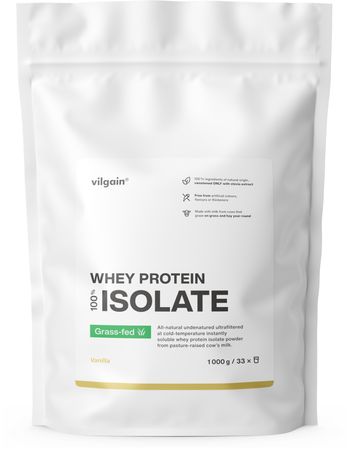
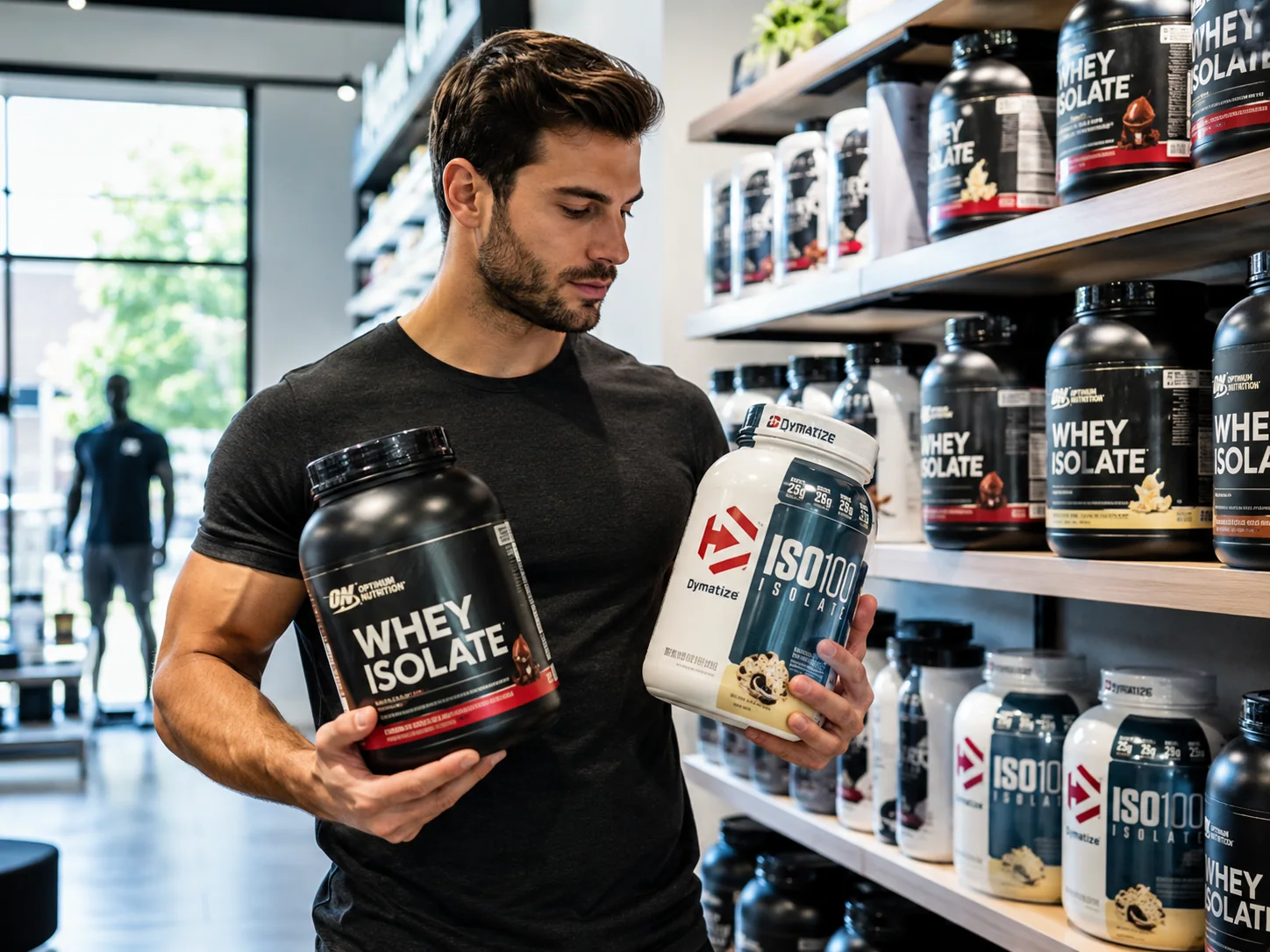
Whey isolate is put through additional cross-flow microfiltration or ion-exchange processing until protein content typically reaches 85-95g per 100g. Fat and lactose are reduced substantially, often to under 1g per serving.
The practical case for isolate is narrower than the marketing suggests. It matters if you are lactose intolerant, if you are cutting calories tightly enough that every gram of fat counts, or if you are competing and need a very lean protein source. For most everyday training, the macro difference over a single scoop is small and the cost premium is real.
Community perspective
What others are saying
Tbh, this entire debate about concentrate vs isolate is not for newbies or someone looking for general fitness. It’s for those who have years of training experience and are looking to cut even that 1% of excess carb or fat intake. I myself have been using MB’s performance whey for over 2 years now and I have no problem with whatever excess crab there exists per scoop.
u/[deleted] in r/Fitness_India
The whey protein vs isolate convo really depends on what your body tolerates. I switched to isolate because concentrate was messing with my stomach; less lactose in isolate helped a lot. If digestion isn’t an issue for you, concentrate’s usually fine. But yeah, when protein isolate vs concentrate gets brought up, the biggest difference is how your gut handles it.
u/francoisdeverly in r/askfitness
Watch what buyers found
Hands-on opinions
Pick The Right Whey Protein in Under 4 Minutes
PictureFit
A topic-specific video selected for additional practical context on Whey vs Isolate vs Concentrate: Price, Quality and Value Compared.
Hydrolysed whey
Hydrolysed whey is pre-digested. Enzyme treatment breaks peptide bonds before you consume it. The claimed benefit is faster absorption, which could matter within a very tight post-workout window. The research on whether faster digestion meaningfully changes muscle protein synthesis for recreational lifters is mixed at best.
It is also the most expensive format by a significant margin and has a characteristically bitter taste that many people find unpleasant. Unless you are a competitive athlete with a specific reason to prioritise absorption speed, the cost is hard to justify.

Cheapest Whey Isolate
Grass Fed Hydrolysed Beef Protein Isolate 95% - HydroBEEF™
Peak Supps · 1kg
Pros
- Whey isolate gives a leaner, lower-lactose protein source
- Subscription drops the pack from £24.99 to £22.49, saving £2.50 (10%)
- 40.6% below the £4.21/100g average across 24 comparable /compare listings
Cons
- Lowest price requires a recurring subscription
Which one should you buy?
If you digest dairy normally and you are buying for value and daily protein targets, whey concentrate is the right choice in most cases. It offers the lowest cost per gram of protein and performs identically to isolate for muscle building purposes when equated for total protein intake.
If you are lactose intolerant or find concentrate causes bloating, move to isolate. The extra cost is worth it if it means you can actually take it consistently.
If you are cutting aggressively and want to minimise every calorie, isolate makes sense for the reduced fat and carb content.
Hydrolysate is for competitive athletes, not everyday buyers. The premium is large and the benefit for most people is marginal to non-existent.
How to compare them by value
The fairest comparison across all three formats is cost per gram of protein, not cost per serving or cost per 100g. A serving of concentrate and a serving of isolate may both contain 25g protein but at very different prices per gram.
Use the live comparison table on ProteinDeals to check current UK prices across all three formats. The best value option shifts regularly as discounts change, and the difference between a cheap isolate and an expensive concentrate can sometimes reverse.
References
Sources and further reading
- 01Competition and Markets Authority — price-reduction claims
UK guidance relevant to reference prices, discount claims and online urgency messaging.
Frequently asked questions
Is whey isolate worth the extra cost?+
For most people, no. Unless you are lactose intolerant or cutting calories very tightly, whey concentrate delivers the same muscle-building results at a lower price per gram of protein.
Does whey isolate have less lactose?+
Yes. The additional filtration used to produce isolate removes most of the lactose, making it a better option for people who are lactose intolerant.
What is the protein percentage in whey concentrate?+
Typically 70-80g of protein per 100g of powder, depending on the product and brand.