

Quick answer
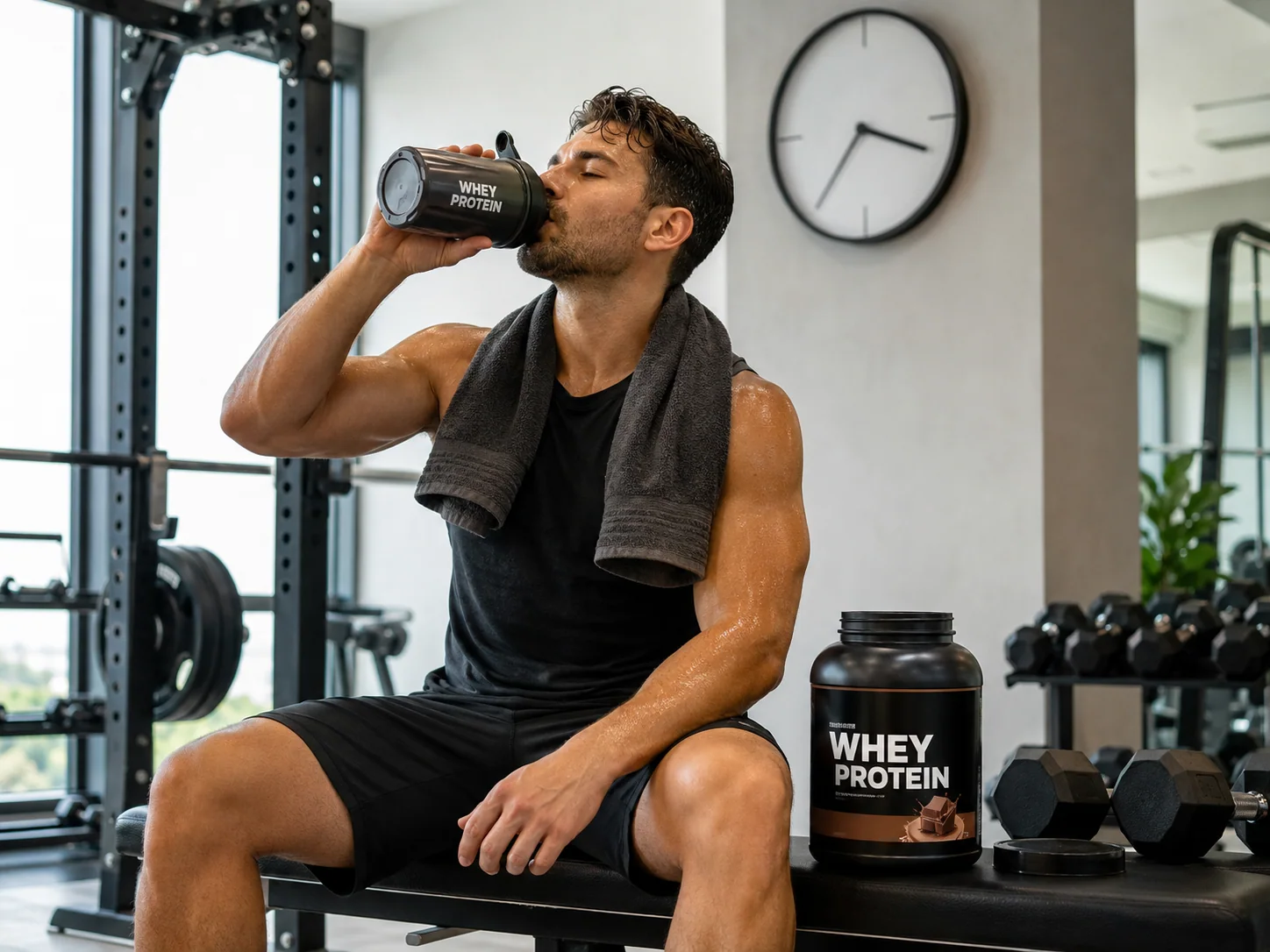
The best time for whey is whenever it helps you reach the day's protein target. After training is convenient, not magical; a useful meal or shake within a few hours is enough for most people. We would prioritise 25–40g of quality protein across several meals before worrying about a 30-minute anabolic window.
The anabolic window: myth or real?
The idea of an anabolic window, a short period immediately after training when your muscles are primed to absorb protein, became popular in the 1990s and 2000s. The original research was often conducted on fasted subjects or people who had not eaten for hours before training.
More recent and better-controlled research suggests the window is much wider than 30 minutes. A 2013 meta-analysis by Schoenfeld and colleagues concluded that the post-workout timing effect largely disappears when total daily protein intake is adequate. If you are eating enough protein across the day, the exact minute you consume your post-workout shake matters far less than popular culture suggests.
What timing does and does not do
Protein consumed around training does support muscle protein synthesis. The question is whether the timing bonus is large enough to prioritise over total daily intake.
The evidence suggests that consuming protein within one to two hours before or after training is sensible, but that missing this window does not negate your session. A meal two hours before training and a meal two hours after training still provides the nutritional support your muscles need.
Morning protein and overnight fasting
After sleeping for seven to nine hours, muscle protein synthesis rates are suppressed from the overnight fast. Consuming 30-40g of protein at breakfast helps reverse this. For people training in the morning, a protein shake alongside or shortly after waking is practical and effective.
There is modest evidence that distributing protein across breakfast, lunch and dinner, rather than eating most of it at dinner, supports better muscle protein synthesis across the day. Morning protein is therefore useful regardless of training time.
Community perspective
What others are saying
Whenever. The “anabolic window” doesn’t exist. That’s just bro science. Your body digests protein and utilizes it throughout the day and when you sleep.
u/AlxDahGrate in r/AskMenAdvice
I usually take around 15-20 g of whey in my pre workout smoothie, and then I'll have a proper meal after I'm done with my training.
u/Fig-Wonderful in r/askfitness
That’s old info. The “anabolic window” has been mostly debunked. Muscle protein synthesis after workout continues for a LOOOONG time.
u/Bigboss_26 in r/askfitness
Watch what buyers found
Hands-on opinions
The Smartest Way To Use Protein To Build Muscle (Science Explained)
Jeff Nippard
A topic-specific video selected for additional practical context on Best Time to Take Whey Protein: Best Options Compared for 2026.
Pre-workout protein
If you have eaten a protein-containing meal within two to three hours before training, your body is still processing those amino acids during your session. In this scenario, a pre-workout protein shake adds minimal benefit.
If you are training first thing in the morning or more than three to four hours after your last meal, consuming 20-30g of protein before training makes practical sense. Whey is convenient here because it mixes quickly and is easy to drink before a session.

Cheapest Whey Protein
Diet Whey Protein Powder
Pure Source Nutrition · 1kg
Pros
- Whey concentrate supplies a complete essential-amino-acid profile
- Current tracked price is £16.99 for 1kg (£1.70/100g)
Cons
- Whey concentrate may not suit lactose-sensitive users
Post-workout protein
Post-workout protein is useful, and consuming a shake within one to two hours after training is a sensible default habit. For trained athletes doing high-volume sessions, there may be a more meaningful benefit to faster replenishment.
The practical recommendation is this: take your whey protein at a time you will consistently remember and consume it. Consistency over time matters more than optimising the exact minutes around each session.
Before bed protein
Casein protein, the slower-digesting milk protein often sold separately, has the most established case for pre-sleep consumption. It provides a sustained amino acid release overnight.
Whey consumed before bed is not without benefit, but its faster digestion means the amino acid release is largely complete within two hours. For someone who has eaten sufficient protein during the day, a pre-bed whey shake is a nice addition rather than a necessity. If you want a pre-sleep protein source, a casein shake, Greek yoghurt, or cottage cheese is a better structural fit.


References
Sources and further reading
- 01Morton et al. — protein supplementation and resistance training
Systematic review and meta-analysis informing the emphasis on total protein and resistance training.
Frequently asked questions
Should I take whey protein on rest days?+
Yes. Muscle repair happens across the full 24-48 hours after training, not just during the session. Hitting your daily protein target on rest days is just as important as on training days.
Is it OK to take whey protein first thing in the morning?+
Yes. A morning shake is a practical way to start building toward your daily protein target after the overnight fast, particularly for people who train in the morning.
How long does whey protein take to digest?+
Whey protein is fast-digesting. Amino acids typically appear in the bloodstream within 60-90 minutes of consumption and peak within about two hours.