

Quick answer
Impact Whey Chocolate Smooth is our best MyProtein product for most buyers. Keep it when its delivered cost per 25g protein sits within 10% of Bulk; switch when Bulk's saving is larger. Isolate and clear whey must solve a specific tolerance, macro or format need.
Myprotein is cheap only at the price you can actually buy
Impact Whey Chocolate Smooth is our best MyProtein product for most buyers; Impact Whey Isolate is the conditional upgrade; Clear Whey is the format choice. The biggest discount badge should choose none of them. Use the Myprotein price comparison for the current product table; this guide explains the buying trade-offs.
Compare the delivered checkout cost per 25g protein against the same category elsewhere. We keep Impact Whey when it sits within 10% of Bulk Pure Whey, and switch when Bulk's saving is larger. Isolate and clear whey must justify their premium through tolerance, macros or drink style.
Live comparison
Myprotein products
FlavourSize (g)QtyServingsOfferTotal Per 25g protein 43501125.3 £99.99 25.0g132£0.798 1000128.8 £25.99 25.0g127£0.902 50001146 £144.49 25.0g129£0.990 |
FlavourSize (g)QtyServingsOfferTotal Per 25g protein 2250163 £55.99 25.0g156£0.889 750121 £19.99 25.0g156£0.952 375110.8 £11.99 25.0g153£1.110 |
FlavourSize (g)QtyServingsOfferTotal Per 25g protein 50001112 £107.99 25.0g151£0.964 2500154 £59.99 25.0g162£1.111 1000123.2 £28.49 25.0g155£1.228 |
FlavourSize (g)QtyServingsOfferTotal Per 25g protein 1000129.6 £34.49 25.0g128£1.165 |
FlavourSize (g)QtyServingsOfferTotal Per 25g protein 1020129.4 £44.99 25.0g127£1.532 |
FlavourSize (g)QtyServingsOfferTotal Per 25g protein 600115.8 £27.49 25.0g142£1.735 |
FlavourSize (g)QtyServingsOfferTotal Per 25g protein - £8.99 25.0g495- |


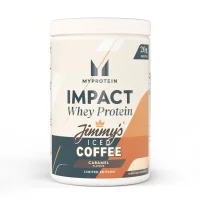
How to compare a code-driven price
Start by ignoring the crossed-out RRP entirely. Select the product variant, apply the available code, add any delivery charge, and check whether the discount requires a larger basket. That delivered total is the number that actually matters for comparison.
Next, work out the protein in the bag from its weight and declared protein per 100g. Multiply the delivered price by 25 and divide by that total, or use the Myprotein brand comparison to see cost per 25g protein directly. Do the same for the rival at today's price, rather than comparing Myprotein's sale against someone else's RRP.
A large bag can reduce the unit cost, but it also increases waste and commitment if things don't work out. If you haven't tried the flavour before, compare the smallest sensible pack first. Price history tells you more than trying to predict a fixed "Impact Week" cycle that the retailer never actually guarantees.
What each close rival is actually competing on
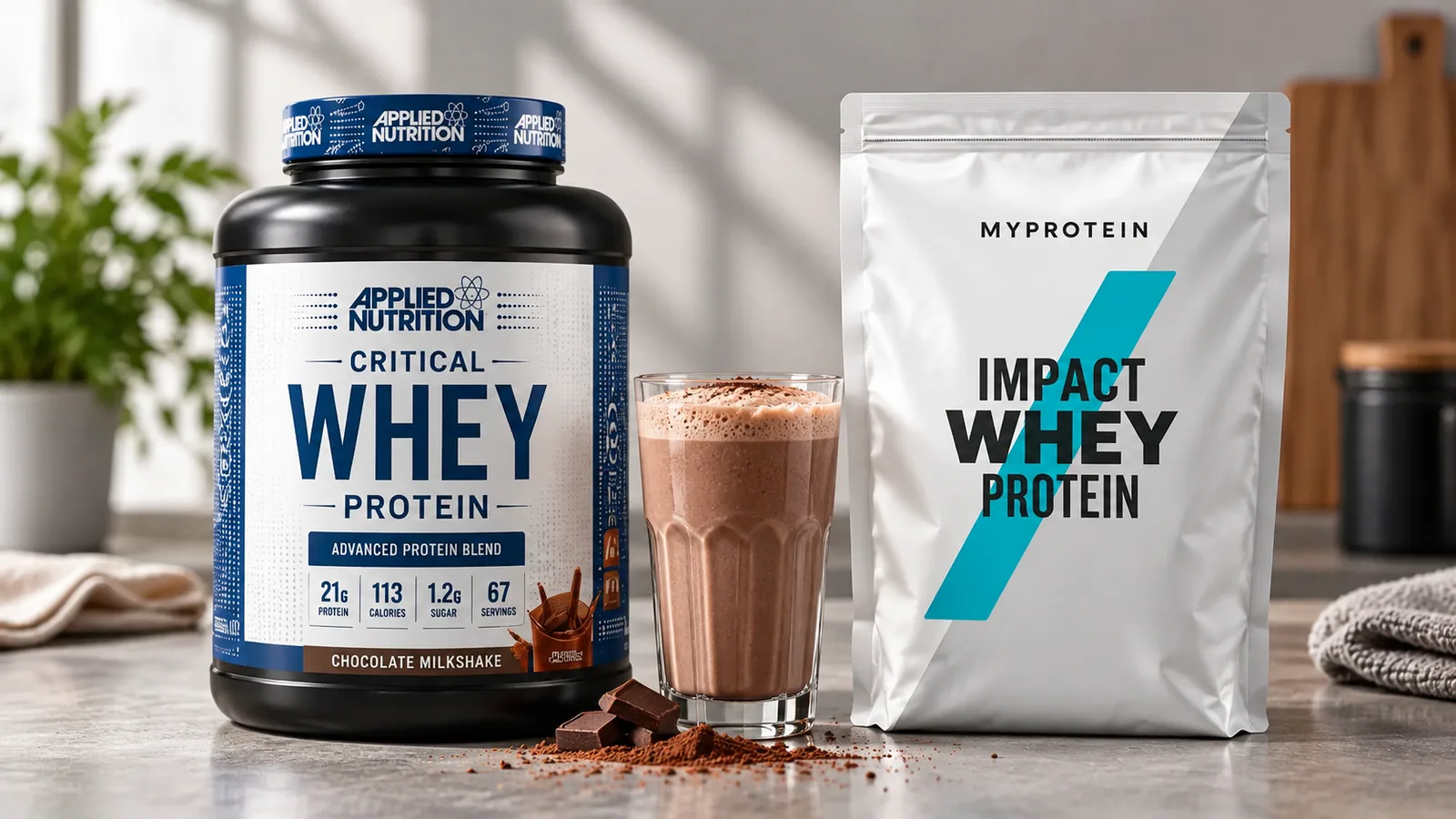
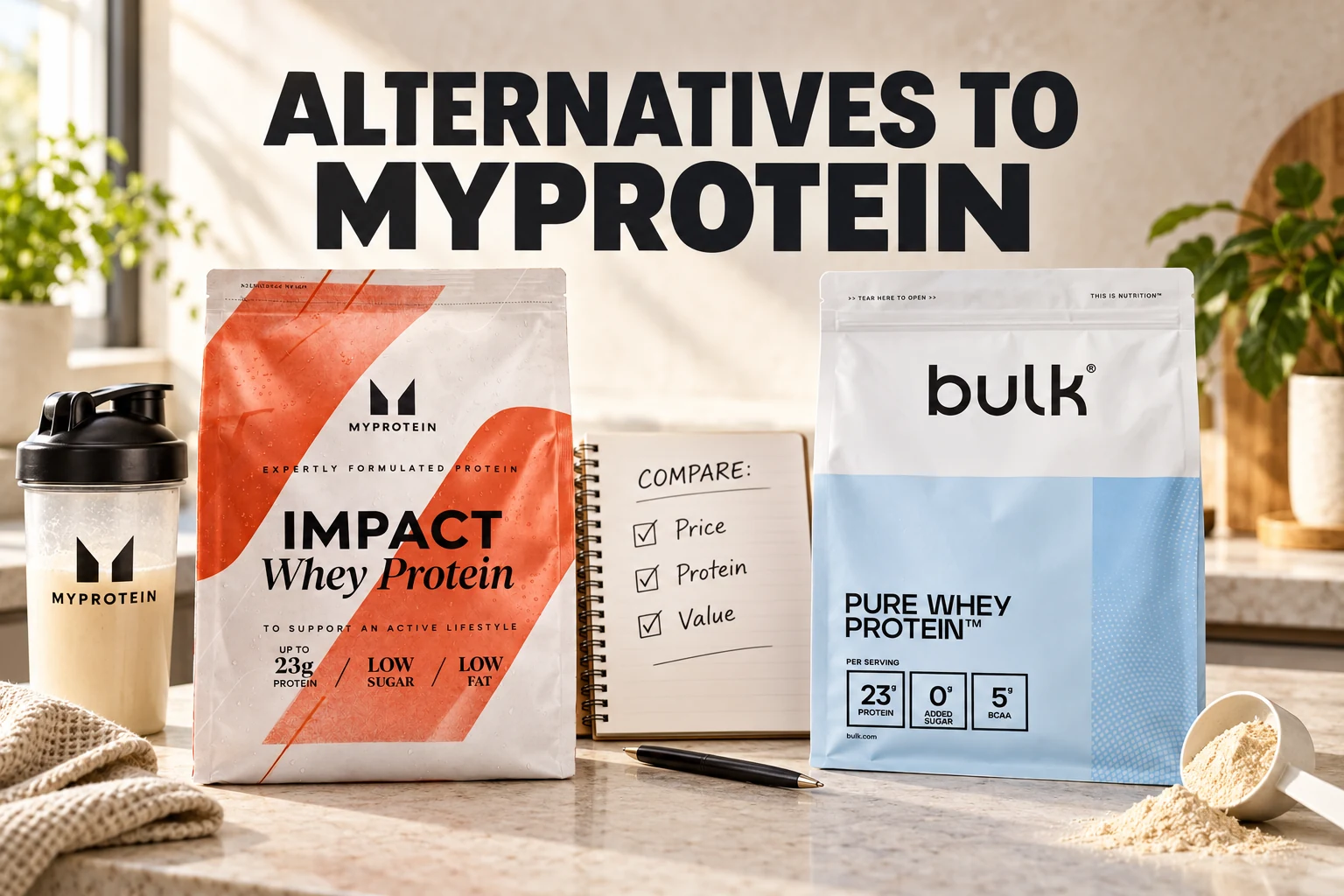
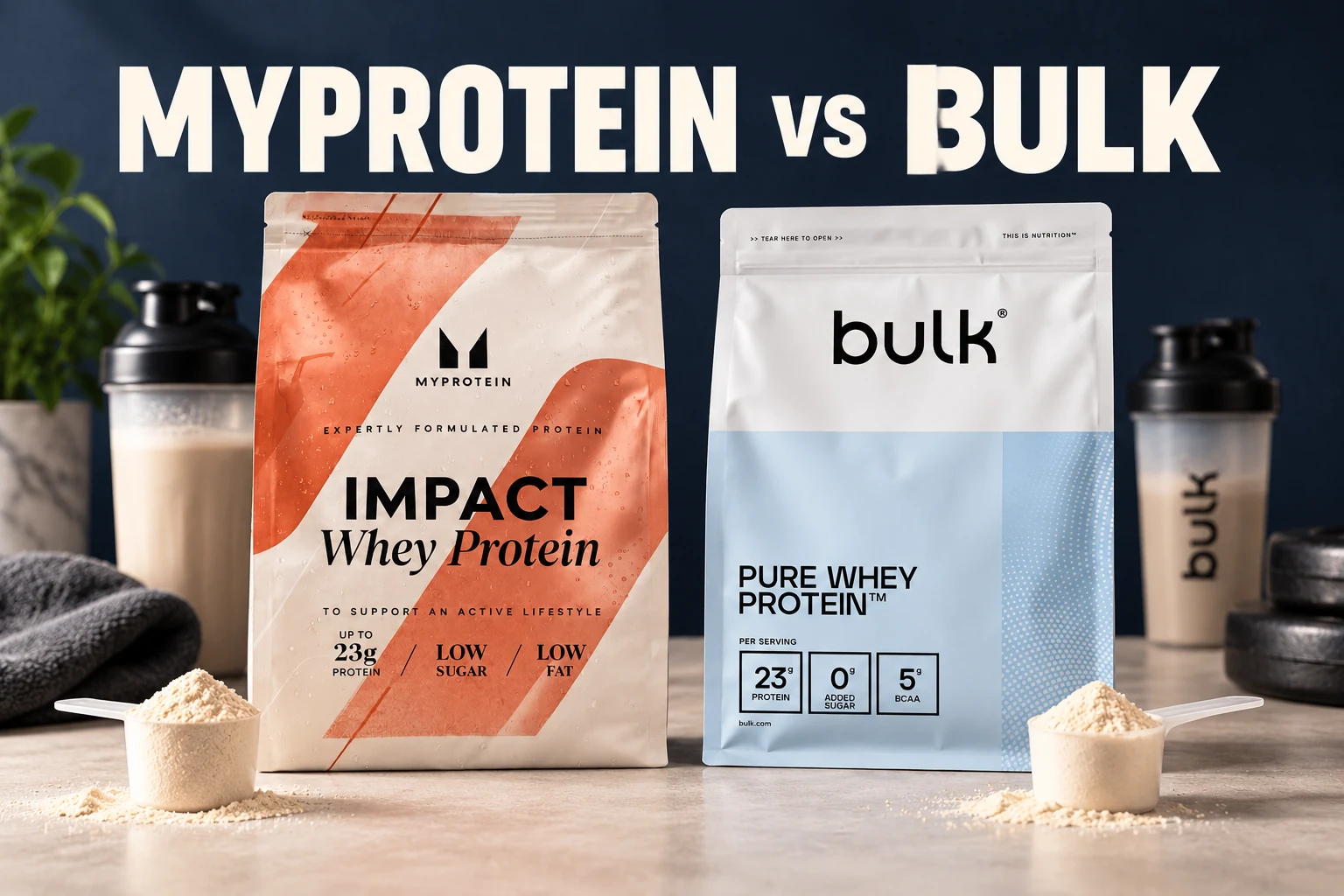
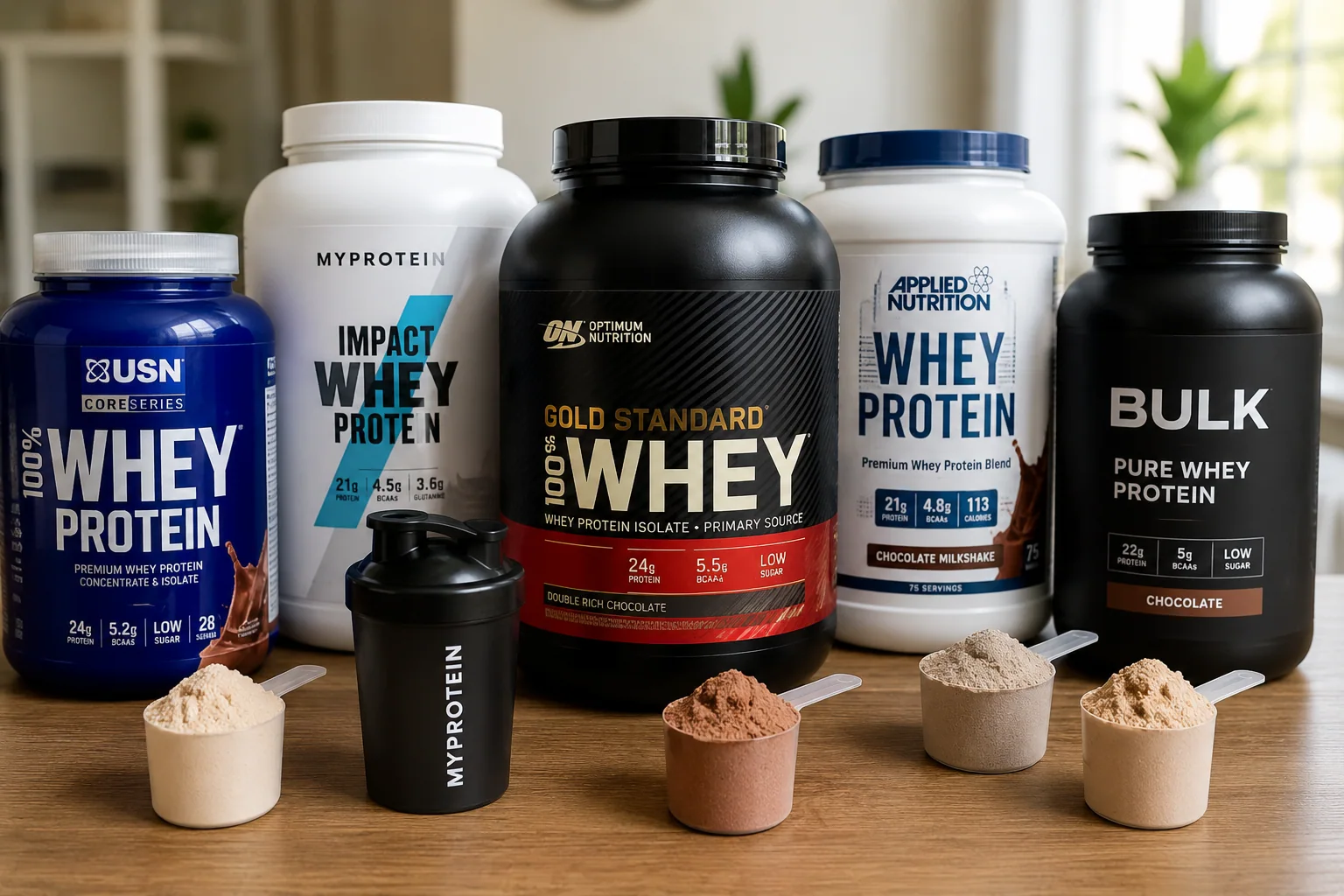
Bulk is the closest direct-to-consumer comparison: broad flavour ranges, large bags and frequent promotions. Put Pure Whey beside Impact Whey at current checkout prices and compare protein density, delivery and the flavour you'd genuinely want to drink.
Optimum Nutrition Gold Standard is usually a premium comparison rather than a pure budget rival. Its blend, retail availability and third-party sport certification may matter to some buyers, but none of those qualities can be reduced to protein-per-pound alone.
Applied Nutrition and Warrior bring different retailer availability, formulas and certification choices to the table. Check the exact SKU carefully: a brand having certified products doesn't mean every product, or every batch, carries the same programme. The live whey table is the right place for current prices; the dedicated head-to-head guides cover the non-price trade-offs in more depth.
Community perspective
What others are saying
Watch what buyers found
Hands-on opinions
How To Pick The Best Protein Powder For You | Nutritionist Explains... | Myprotein
Myprotein
A topic-specific video selected for additional practical context on Myprotein Comparison UK: Products, Rivals and Real Value.
Impact Whey, isolate and clear whey solve different problems
Impact Whey is the conventional milkshake-style concentrate and the natural price benchmark. Its nutrition varies by flavour, so don't carry one protein-per-100g figure across the entire range.
Impact Whey Isolate removes more non-protein material and is generally lower in lactose, fat and carbohydrate. It isn't automatically lactose-free, and extra processing doesn't make it a better muscle-building product at matched protein intake. Pay the premium when the nutritional or digestive difference is genuinely useful to you.
Clear Whey Isolate produces a lighter, juice-style drink. Its advantage is mostly sensory: some people simply find it easier to drink than another creamy shake. Compare it against other clear proteins, not just budget concentrate, since the format itself carries a premium.
The Whey and other premium blends add extra processing, ingredients or positioning. Read the current formula rather than assuming a higher tier automatically guarantees a meaningful outcome. The Impact Whey versus isolate guide is the better next step for the most common decision buyers face.

Cheapest Myprotein Whey
Impact Whey Protein Powder
MyProtein · 600g
Cons
- 18.3% dearer per 25g protein than the median of 65 other Whey Protein product families in this comparison
Direct, marketplace or high-street?
The direct site often has the widest range and the most prominent codes, but it's not sensible to call any single channel permanently cheapest. Marketplace, specialist and high-street promotions all shift over time, as do delivery costs and available sizes.
Compare the same variant and delivered quantity across channels. On a marketplace, also check the seller, fulfilment and subscription renewal terms. A high-street purchase may cost more per gram yet still make sense if you need a small bag today or want an easier return.
The Myprotein brand page is a current snapshot, not a guarantee. Open the retailer page before paying, since a comparison tool can't apply a personal offer or confirm that stock and codes haven't changed since it was last checked.
Why a 50% code may not mean half-price value
A discount percentage describes the gap from a reference price, not how competitive the final price actually is. If the reference price shifts, a larger percentage can still produce the same, or even a worse, checkout total.
Codes may exclude certain products, sizes or already-reduced lines, and retailers don't necessarily allow stacking multiple discounts together. Test the actual basket you intend to buy rather than building a strategy around supposed permanent or predictable promotions.
Use recorded price history to judge whether today's total is genuinely good. Then compare cost per 25g protein against current rivals. That two-stage check is far more reliable than urgency banners, countdowns, or an influencer's headline percentage.
When another product is the more rational buy
Choose elsewhere when a rival is cheaper for the same useful quantity, when you prefer its flavour or ingredients, or when buying direct would force you into more powder than you actually need.
Tested athletes should verify the exact product and batch against the relevant certification directory. Brand reputation, or certification of a different line entirely, is not enough protection from strict-liability anti-doping rules.
Myprotein may also be the wrong fit if promotion-heavy pricing creates friction for you. Convenience has real value: a stable local or subscription option can be the rational choice even when its theoretical sale-floor price is slightly higher. The alternatives guide groups choices by reason for switching, rather than pretending one rival replaces every Myprotein product outright.
The comparison in four answers
Is Myprotein cheap? It can be, but only the current delivered cost per 25g protein actually answers that question. A large discount percentage alone doesn't.
Concentrate or isolate? Concentrate is usually the value starting point; isolate is worth it when lower lactose or slightly leaner nutrition matters enough to justify paying more.
Where should you buy it? Compare identical variants across channels and include delivery, seller details and subscription conditions. There's no permanently cheapest retailer.
Why so many codes? Promotions are simply part of how the price is presented. Judge the checkout total against price history and rivals, rather than trying to infer value from the size of the code itself.
References
Sources and further reading
- 01Competition and Markets Authority — price-reduction claims
UK guidance relevant to reference prices, discount claims and online urgency messaging.