

Quick answer
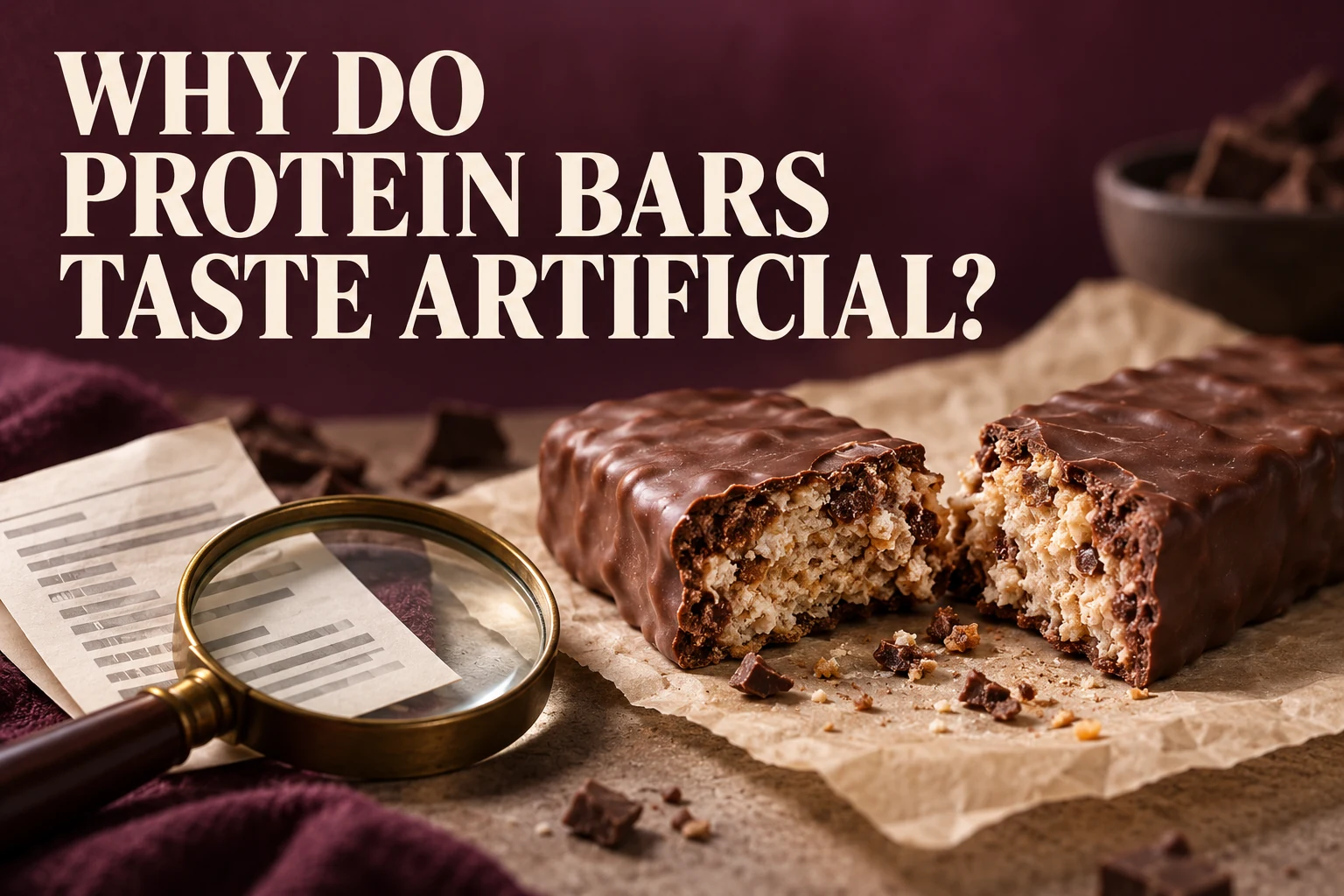
Usually it is the sweetener system, not the protein. Across 87 UK protein bars in our catalogue, 67% contained polyols such as maltitol, 69% glycerol and 33% sucralose. Intense sweeteners can leave a lingering sweetness, some stevia extracts taste bitter, and cooling polyols such as xylitol add a minty chill. Bars without these exist, but they usually carry less protein.
What 87 protein bars have in common
- Contain polyols
- 67%Mostly maltitol
- Contain glycerol
- 69%Keeps bars soft
- Contain sucralose
- 33%An intense sweetener
Most protein bars are built the same way: protein for the label, then a set of ingredients to make a low-sugar bar taste sweet and stay soft. We checked the ingredient lists of 87 distinct protein bars in the ProteinDeals catalogue, from Myprotein, Grenade, The Protein Works, Optimum Nutrition, MaxiNutrition and others.
Two in three contained polyols, and almost as many contained glycerol. A third used sucralose. Only about 29% used neither a polyol nor an intense sweetener, and those were mostly nut and date bars with less protein. If a bar tastes artificial, the reason is usually somewhere in that list.
What's in 87 UK protein bars
Share of bars whose published ingredient list includes each ingredient. ProteinDeals catalogue, October 2026.
Based on ingredient text captured from retailer pages. A bar can contain several of these, so the shares add up to more than 100%.
The ingredients that change the taste
Each of these does a job in the bar. Each can also be what you are tasting.
- 1
Intense sweeteners. Sucralose and steviol glycosides are hundreds of times sweeter than sugar, so a tiny amount does the work. The trade-off is a sweetness that can linger after you swallow. Stevia varies by type: in a 2020 consumer study, rebaudioside A tasted noticeably more bitter than sugar, while the newer rebaudiosides D and M did not, though they lingered more.
- 2
Polyols. Maltitol, the most common, tastes close to sugar with little aftertaste. Xylitol and erythritol are different: they absorb heat as they dissolve, which gives a cool, almost minty feel. Bars with more than 10% added polyols must carry the warning "excessive consumption may produce laxative effects".
- 3
Glycerol. A sweet-tasting humectant that holds water and keeps bars soft. It is in most bars, and at high levels it adds its own warm sweetness.
- 4
The protein itself. Hydrolysed proteins, added to stop bars hardening, can bring bitter or brothy notes, and milk and soy proteins carry flavours that heavy flavouring has to cover.
- 5
The coating. A third of the bars we checked used palm fat. A compound coating made with vegetable fat melts differently from chocolate and can taste waxy by comparison.
How to read the label before you buy
You can usually spot a bar's sweetener system from the pack in a few seconds.
- 1
Look for "with sweetener(s)". UK rules require it next to the name when a product contains sweeteners, so it is a quick signal before you read the full list.
- 2
Check for the laxative warning. It means the bar is more than 10% added polyols, which is where cooling, aftertaste and digestive effects are most likely.
- 3
Read the first five ingredients. If a polyol or polydextrose sits near the top, it is doing much of the sweetening and bulking.
- 4
Check the coating. "Milk chocolate" and "compound coating" or "vegetable fat" are different things, and you will notice the difference.
Bars with fewer of these ingredients
Bars without polyols or intense sweeteners exist, but they usually trade away protein. The nut-based KIND Protein bars in our catalogue carry about 12g of protein, against around 20g for a typical protein bar. The Myprotein x Hotel Chocolat Layered Bar lists no maltitol or sucralose and still has about 18g of protein, though it costs more per bar than Myprotein's standard Layered Bar.
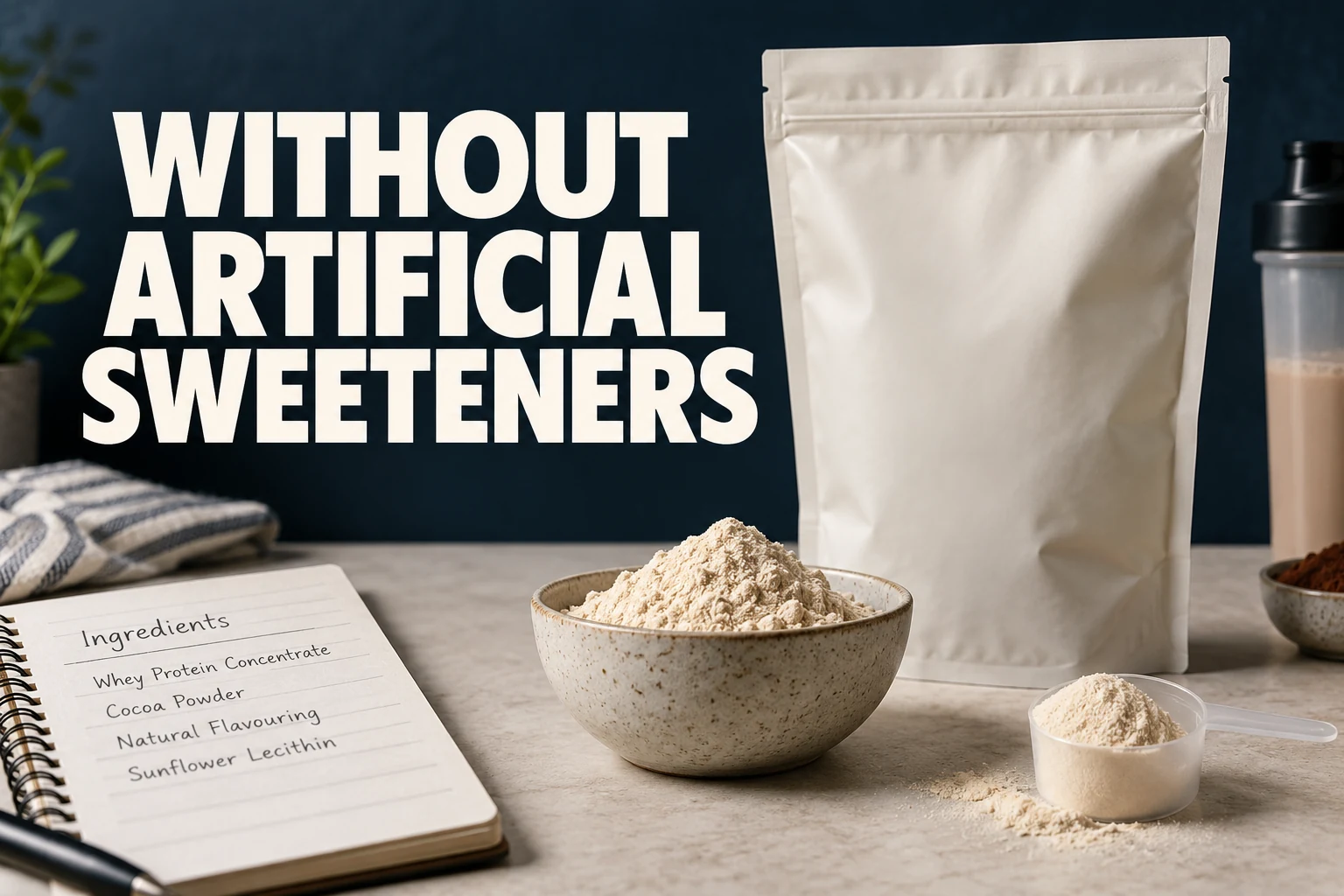
If taste is the priority, it can be worth paying more for fewer of these ingredients. If protein per pound matters more, our protein bar guide and the bars comparison rank bars by price per gram of protein. For powders, see protein powder without artificial sweeteners.

Top-rated in our taste test
Impact Protein Bar
MyProtein · 12x64g
Cons
- At 31% protein, a 25g protein portion supplies about 296 kcal, rather than the roughly 100 kcal supplied by the protein itself
References
Sources and further reading
- 01legislation.gov.uk — Regulation (EU) No 1169/2011, Annex III (UK retained)
Required wording for foods with sweeteners and with more than 10% added polyols.
- 02Tan et al. — Consumer-Based Sensory Characterization of Steviol Glycosides (Rebaudioside A, D, and M), Foods, 2020
Reb A was more bitter than sucrose; Reb D and M were not, but lingered longer.
- 03FoodNavigator — Whey protein for longer shelf life and softer bars, 2005
Industry coverage of hydrolysed whey used to slow protein bar hardening.
- 04ProteinDeals catalogue — ingredient lists for 87 protein bars, October 2026
Shares calculated from ingredient text captured from retailer pages.
Frequently asked questions
Why do protein bars give me a funny aftertaste?+
Usually the sweeteners. Intense sweeteners such as sucralose and some stevia extracts can leave a lingering or slightly bitter sweetness, and cooling polyols such as xylitol or erythritol add a minty chill.
Is maltitol the reason protein bars taste artificial?+
Not usually. Maltitol tastes close to sugar. It is more likely to cause digestive discomfort in larger amounts, which is why bars with more than 10% added polyols must carry a laxative warning.
Are there protein bars without artificial sweeteners?+
Yes, but fewer than you might expect: about 29% of the bars we checked used neither polyols nor intense sweeteners, and most carried less protein than a typical 20g bar.