

Quick answer
ProteinDeals exists because comparing dozens of retailers, pack sizes, flavours and nutrition panels was needlessly time-consuming. The site normalises the final price to cost per 25g protein, while keeping the retailer link visible so every result can be checked.
The problem was not finding protein, it was comparing it
ProteinDeals exists because finding products was easy but comparing them was needlessly time-consuming. Prices were split across brand sites, marketplaces, supplement shops and high-street retailers, while every seller used different pack sizes, flavours, codes and serving claims.
The site focuses on price per 25g protein. A £30 bag can be worse than a £40 bag when it is smaller or protein-poor, and a dramatic sale percentage can still lose to an ordinary rival price.
ProteinDeals performs that repetitive normalisation in one place and keeps the retailer link visible so the result can be checked. The aim is not to declare every cheapest row good; it is to make the real trade-off visible in minutes rather than an evening of tabs.
The calculation behind the ranking
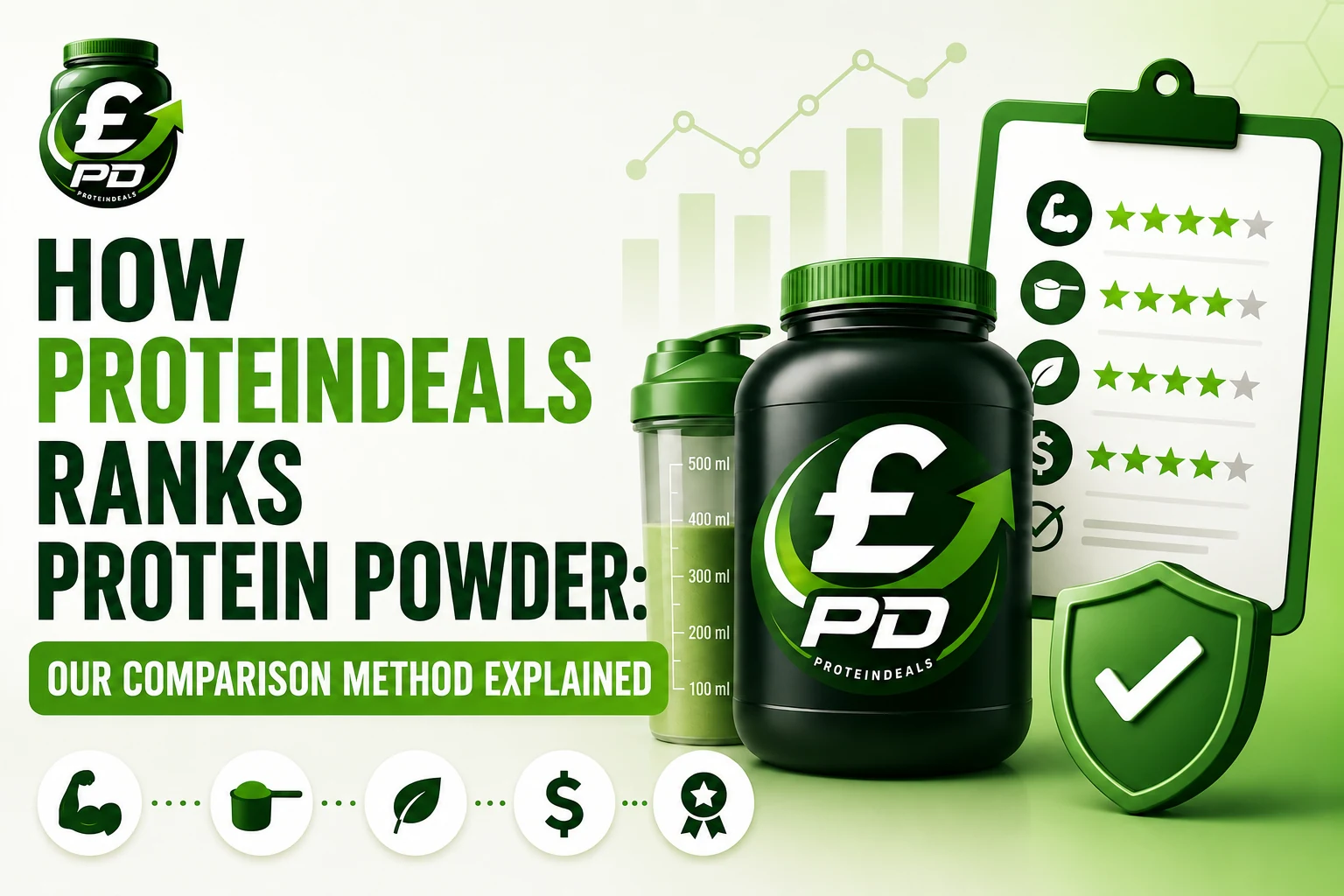
The core value metric is price per 25g protein. ProteinDeals takes the pack price, the total pack weight and the protein declared per 100g, then works out how many grams of actual protein the whole product contains. Dividing price by that total and multiplying by 25 gives the cost of 25g of protein.
As an example, a 1kg powder with 80g of protein per 100g contains 800g of protein in total. At £24 a bag, 25g of protein costs 75p. A different 1kg bag might cost only £22, but with just 65g protein per 100g it only contains 650g of protein, working out to roughly 85p per 25g protein. The cheaper shelf price is, in that case, the worse protein deal.
The comparison table calculates calories and price for 25g of protein, so manufacturer scoop sizes do not distort the comparison. Published nutrition per 100g remains available in product details. Price per 25g protein is the sharper value measure on top of that: it folds a product's price, size and protein concentration into one number.
That stops a large bag from winning simply because it is large, and stops a protein-dense powder being judged only by its higher shelf price. You can still filter by category, so whey, isolate, vegan protein and mass gainers get compared against products built for a similar purpose rather than against each other.
Discounts are shown wherever they can be identified, but a code can expire, exclude a flavour, or require a minimum spend. The retailer's checkout is always the final price check. The deals page is a starting point, not a promise that every promotion applies to every basket.
What happens to a product price
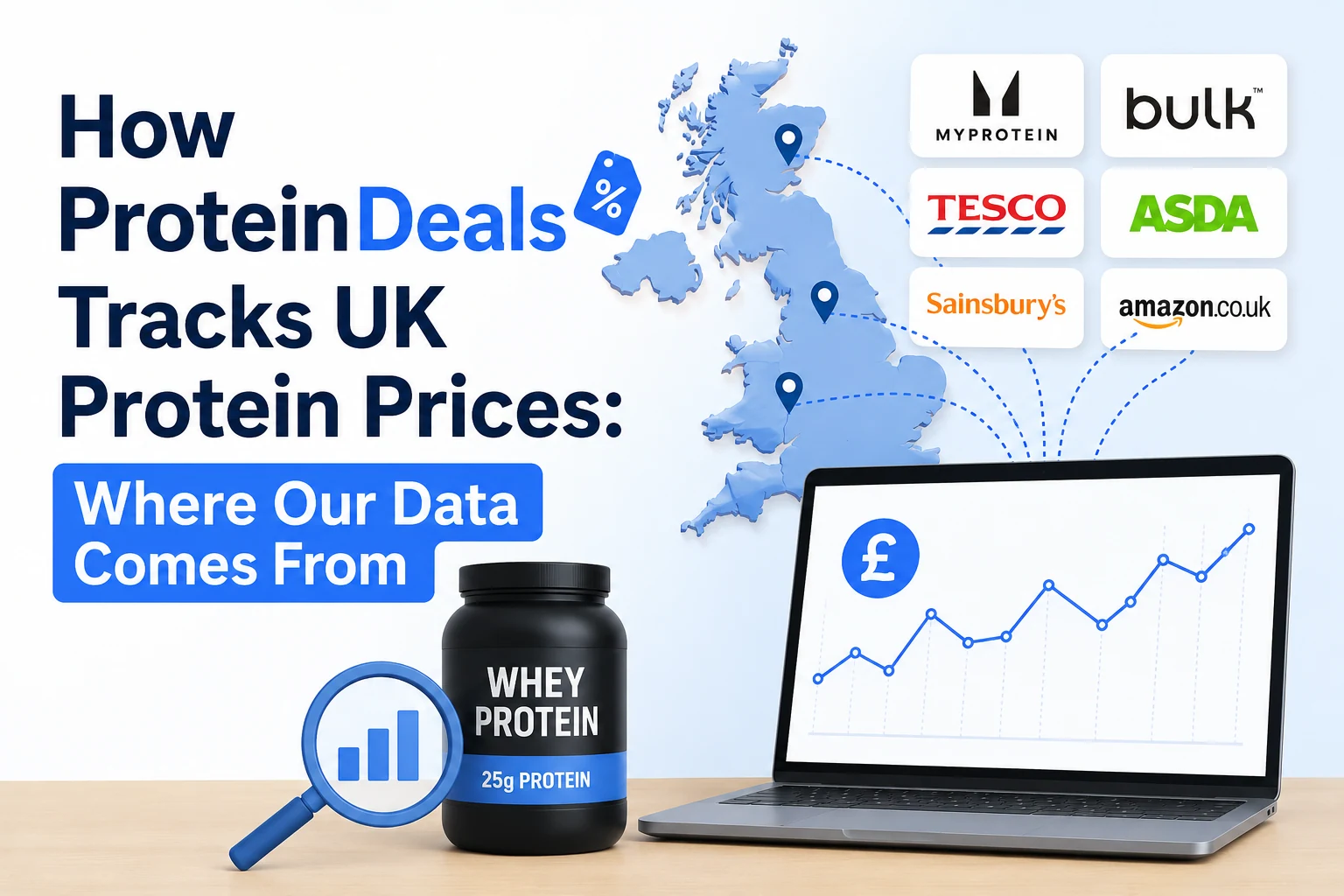
A useful listing takes more than a headline price copied off a shop page. The offer has to be matched to the correct product, weight and flavour, then combined with the right nutrition per 100g. Only once that's done can price per 25g protein be calculated and compared fairly.
Price history adds context a single snapshot can't provide. A dramatic crossed-out RRP might still just be an ordinary selling price, while a modest-looking reduction can turn out to be a genuine low. Watching how a price has moved over time helps you judge a sale rather than simply trusting its label.
Retail pages change, nutrition varies by flavour, and data feeds occasionally fail. Those are real limits of any comparison service. The methodology page explains how ProteinDeals tracks UK prices, and the contact page is the fastest route for flagging a mismatch.
Community perspective
What others are saying
Pretty crazy that whey was considered a byproduct and now it's skyrocketing in price. Crazy. Things are just too far gone these days
u/ElectricalFinance725 in r/CostcoCanada
I heard that protein prices will go up across the board, a friend who owns a supplement store told me to expect up to $30 per 5lbs
u/blindside56 in r/CostcoCanada
Here’s the thing. If people stop buying this stuff for that high of a price they’ll stop trying to sell it for that high of a price. You don’t need to specifically have protein powder to live it’s not a necessity.
u/HotDogDonald in r/CostcoCanada
Watch what buyers found
Hands-on opinions
The Smartest Way To Use Protein To Build Muscle (Science Explained)
Jeff Nippard
A topic-specific video selected for additional practical context on Why I Built ProteinDeals, and How the Comparisons Work.
Price is objective; value is personal
A sort by price-per-1g-of-protein is deliberately unsentimental: a lesser-known product can rank above a famous one simply by supplying protein more cheaply. That's useful evidence, but it can't measure taste, texture, digestive comfort, ingredient preferences, or how much you trust a particular manufacturer.
That's why the editorial guides treat price as one input rather than the whole verdict. An isolate may be worth more to someone limiting lactose, an Informed Sport-tested product may matter to a tested athlete, and a pricier flavour you reliably finish can be better value than a bargain bag left half-used in the cupboard.
Some outbound retailer links can earn ProteinDeals a referral fee without increasing the price you pay. That helps fund the project, but it shouldn't change the underlying comparison, and commercial links are clearly labelled rather than presented as independent evidence.

Cheapest Whey Protein
Diet Whey Protein Powder
Pure Source Nutrition · 1kg
How to use the site without being misled by a bargain
Start with the comparison page for the type of product you actually want. Sort by price per 25g protein to find the strongest raw value, then check calories for that protein amount, pack size and the published nutrition details. Opening the product page shows available retailers in one place, saving you from repeating the same search across a dozen sites.
Treat unusually low figures as something to verify, not something to trust blindly. Make sure the retailer page opens on the same size and flavour, check delivery charges, and confirm any code actually works before paying. Marketplace listings deserve an extra check of the seller and fulfilment details.
Finally, choose something you'll actually keep using. Price per 25g protein is excellent at exposing a misleadingly cheap bag or an inflated sale, but it isn't the only consideration. The cheapest protein is not good value if its flavour, ingredients or texture mean you stop using it halfway through the tub.
What the project should become next
The useful direction from here is better context, not simply more listings: clearer variant matching, longer price histories, stronger nutrition checks, and guides that explain when the cheapest product is actually the wrong choice for a particular need.
Corrections are part of that ongoing work. If you spot the wrong size, an outdated nutrition panel, a dead offer, or a missing retailer, send the product URL through the contact page. A specific example is far more useful than a general complaint, and it can improve the comparison for everyone else too.
The aim stays simple: save people from spending an evening checking the same product across a pile of browser tabs, make the true price of 25g of protein easy to see, and leave the final choice with the person actually buying it.
References
Sources and further reading
- 01Competition and Markets Authority — price-reduction claims
UK guidance relevant to reference prices, discount claims and online urgency messaging.