
Quick answer
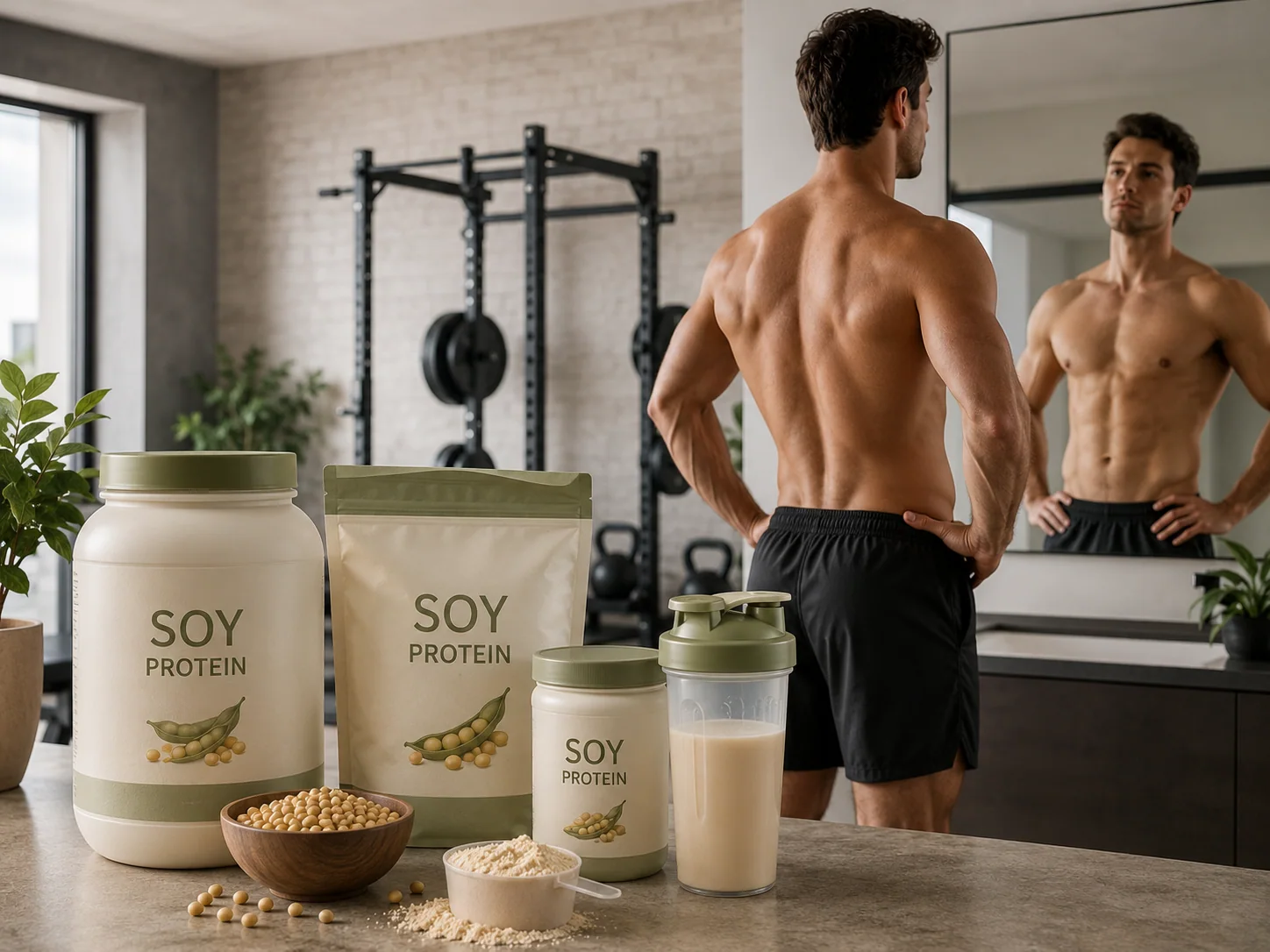
Normal food and supplement intakes of soy protein do not appear to feminise men or cause gynaecomastia. Human evidence matters more than rodent studies or anecdotes. Soy isolate is a complete, often inexpensive vegan protein; persistent breast tissue, pain or hormonal concerns need medical assessment rather than dietary guesswork.
Where the concern comes from
Soy contains isoflavones — a class of phytoestrogens, which are plant compounds that have a weak structural similarity to oestrogen. The concern is that these compounds bind to oestrogen receptors in the human body, producing oestrogenic effects including breast tissue growth in men.
The logic is superficially plausible. Oestrogen does promote breast tissue development. Soy isoflavones do interact with oestrogen receptors. The question is whether they interact with enough strength and at typical dietary doses to produce meaningful hormonal effects.
What phytoestrogens actually do in the body
Soy isoflavones — primarily genistein and daidzein — bind to oestrogen receptors, but they bind with substantially weaker affinity than human oestrogen. Estimates vary, but isoflavones are considered to have roughly 0.01–0.1% of the potency of oestradiol at the same receptor.
They also behave as selective oestrogen receptor modulators (SERMs) — they can act as weak oestrogen agonists in some tissues and weak antagonists in others, depending on the receptor subtype present. This is a meaningfully different mechanism from the straightforward oestrogenic effect that the man-boobs claim implies.
What the research shows on testosterone
Multiple clinical trials have measured testosterone levels in men consuming soy protein or soy isoflavones at doses equivalent to or higher than typical supplementation levels. The consistent finding is no significant change in testosterone, oestradiol or other sex hormones compared to control groups.
A comprehensive 2010 meta-analysis in Fertility and Sterility reviewed nine clinical studies and found that neither soy foods nor soy isoflavone supplements affected testosterone levels in men. A 2021 systematic review reached the same conclusion. The research base on this question is substantial and largely consistent.
Community perspective
What others are saying
Watch what buyers found
Hands-on opinions
Does Soy cause manboobs?! Gynecomastia, Testosterone, Estrogen
Nutrition Made Simple!
A topic-specific video selected for additional practical context on Does Soy Protein Cause Man Boobs: A Smarter Buyer's Guide for 2026.
What about gynaecomastia specifically?
There are a small number of case reports in the medical literature of men developing gynaecomastia associated with very high soy consumption. The cases that have been examined typically involved consumption far exceeding normal supplementation levels — one widely cited case involved a man drinking roughly 3 litres of soy milk per day.
At typical protein powder supplementation doses, there is no clinical evidence linking soy protein to gynaecomastia in healthy men. The case reports are interesting but represent extreme outliers, not a risk relevant to standard supplement use.

Cheapest Vegan Protein
Soy Protein Isolate Powder – 90% Protein
Pure Source Nutrition · 500g
Pros
- Soy is a complete dairy-free protein containing all nine essential amino acids
- Current tracked price is £7.99 for 500g (£1.60/100g)
Other soy concerns addressed
Thyroid function: soy isoflavones can interfere with thyroid hormone synthesis enzymes and may reduce thyroid hormone absorption when consumed simultaneously with thyroid medication. For people with hypothyroidism on medication, spacing soy intake away from medication timing is reasonable. For healthy individuals with normal thyroid function, the effect at typical doses is not clinically meaningful.
Sperm quality: some studies have found associations between high soy intake and reduced sperm concentration, though the effect sizes are small and findings are inconsistent. No causal mechanism has been confirmed, and the studies tend to involve high-intake populations rather than typical supplementation doses.
For the vast majority of healthy men consuming soy protein at normal supplementation doses, the existing evidence does not support meaningful hormonal disruption.
The bottom line
The man-boobs claim is not supported by the clinical research at realistic consumption levels. Soy isoflavones are weak, selective oestrogen receptor modulators — not oestrogen equivalents — and multiple well-designed trials have found no significant effect on testosterone or oestradiol in men consuming soy protein at typical supplementation doses.
If you are a healthy man without thyroid issues or soy allergies, soy protein is a safe, complete and effective protein source. The fear around it is based on mechanistic plausibility that has not translated into observed effects in human trials at relevant doses.
References
Sources and further reading
- 01Reed et al. — soy and male reproductive hormones
Updated meta-analysis of clinical studies relevant to common soy and feminisation claims.
Frequently asked questions
How much soy protein is safe for men?+
Clinical research has studied intakes well above typical supplementation levels — up to 50–70g of soy protein per day — without finding significant hormonal effects. Standard protein powder serving sizes of 25–35g are well within this range.
Should men avoid soy protein?+
Not based on current evidence. Healthy men without soy allergies or thyroid conditions can consume soy protein at normal supplementation levels without concern about hormonal effects.
Is soy protein worse than whey for men?+
No. Soy protein is slightly less efficient per gram than whey due to lower leucine content, but this is a performance nuance, not a safety issue. The hormonal concerns are not supported by the research.