
Quick answer
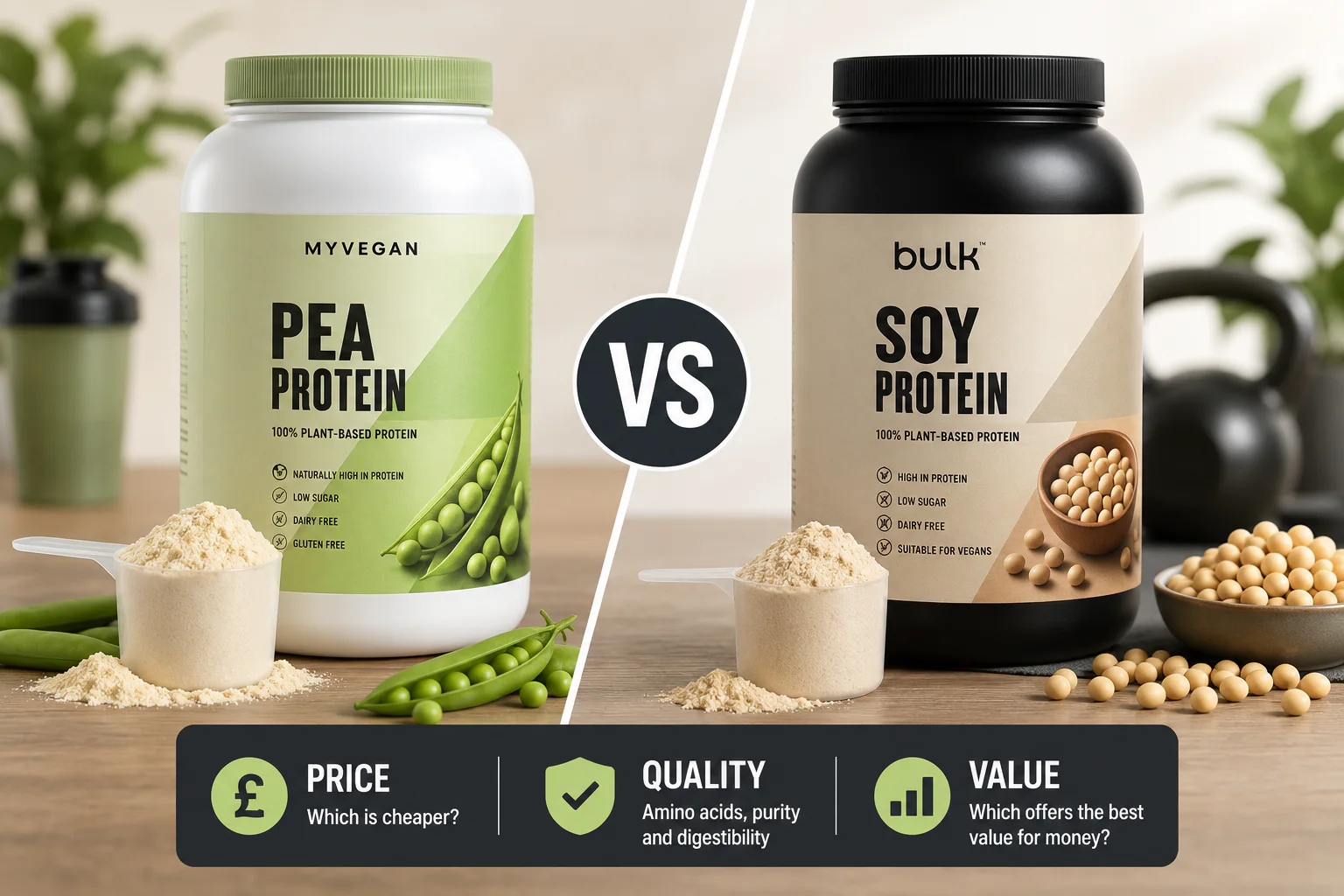
Soy isolate wins on completeness and usually price; pea wins for buyers avoiding soy or preferring its taste. Our default vegan value choice is soy isolate, while a pea-and-rice blend is the better non-soy all-rounder. Compare exact protein density and delivered cost rather than treating plant sources as interchangeable.
The key difference upfront
Soy protein is a complete protein. It contains all nine essential amino acids in proportions that closely match human requirements. Pea protein is nearly complete but lower in methionine, one of the sulphur-containing essential amino acids.
This gives soy a slight nutritional edge on paper. Whether it matters in practice depends on the rest of your diet and how much you are consuming from each source.
Live comparison
Vegan Protein products
FlavourSize (g)Size (ml)QtyServingsOfferTotal Per serving 50001167 £36.99 27.0g111£0.221 2500183 £20.99 27.0g111£0.253 1000133 £11.99 27.0g111£0.363 |
FlavourSize (g)Size (ml)QtyServingsOfferTotal Per serving 50001167 £40.99 25.8g121£0.245 2500183 £22.99 25.8g121£0.277 1000133 £13.99 25.8g121£0.424 |
FlavourSize (g)Size (ml)QtyServingsOfferTotal Per serving 50001167 £38.99 24.0g102£0.233 30001100 £29.99 24.0g102£0.300 1000133 £13.49 24.2g102£0.409 |
FlavourSize (g)Size (ml)QtyServingsOfferTotal Per serving 50001167 £44.99 26.5g112£0.269 30001100 £27.99 26.5g112£0.280 1000133 £13.99 26.5g112£0.424 |
FlavourSize (g)Size (ml)QtyServingsOfferTotal Per serving 40001132 £47.99 26.0g113£0.364 2000166 £25.99 26.0g113£0.394 1000133 £13.99 26.0g113£0.424 |
FlavourSize (g)Size (ml)QtyServingsOfferTotal Per serving 40001133 £39.99 21.4g101£0.301 |
FlavourSize (g)Size (ml)QtyServingsOfferTotal Per serving 50001167 £59.99 25.0g107£0.359 2500183 £31.99 25.0g107£0.385 1000133 £13.99 25.0g107£0.424 |
FlavourSize (g)Size (ml)QtyServingsOfferTotal Per serving 2700190 £30.00 23.0g116£0.333 2880190 £30.00 21.0g118£0.333 900130 £14.99 23.0g116£0.500 |
FlavourSize (g)Size (ml)QtyServingsOfferTotal Per serving 50001167 £59.99 24.0g119£0.359 2500183 £31.49 24.0g119£0.379 1000133 £13.99 24.0g119£0.424 |
FlavourSize (g)Size (ml)QtyServingsOfferTotal Per serving 40001132 £47.99 24.0g122£0.364 2000166 £24.99 24.0g122£0.379 1000133 £13.99 24.0g122£0.424 |
FlavourSize (g)Size (ml)QtyServingsOfferTotal Per serving 50001167 £70.99 25.8g114£0.425 30001100 £46.99 25.8g114£0.470 1000133 £17.99 25.8g114£0.545 |
FlavourSize (g)Size (ml)QtyServingsOfferTotal Per serving 2500183 £33.99 24.0g112£0.410 1000133 £14.99 24.0g112£0.454 |
FlavourSize (g)Size (ml)QtyServingsOfferTotal Per serving 50001167 £72.99 24.9g118£0.437 30001100 £52.99 24.9g118£0.530 1000133 £17.99 24.9g118£0.545 |
FlavourSize (g)Size (ml)QtyServingsOfferTotal Per serving 50001166 £67.49 23.0g106£0.407 2500183 £35.49 23.0g106£0.428 1000133 £14.99 23.0g106£0.454 |
FlavourSize (g)Size (ml)QtyServingsOfferTotal Per serving 40001160 £61.49 21.0g91£0.384 2000180 £33.99 21.0g91£0.425 1000140 £18.49 21.0g91£0.462 |
FlavourSize (g)Size (ml)QtyServingsOfferTotal Per serving 40001132 £67.99 26.0g108£0.515 2000166 £37.49 26.0g108£0.568 1000133 £20.49 26.0g108£0.621 |
FlavourSize (g)Size (ml)QtyServingsOfferTotal Per serving 50001167 £48.99 14.4g104£0.293 30001100 £30.99 14.4g104£0.310 1000133 £14.49 14.4g104£0.439 |
FlavourSize (g)Size (ml)QtyServingsOfferTotal Per serving 50001167 £82.99 24.0g103£0.497 2500183 £45.99 24.0g103£0.554 1000133 £20.00 24.0g103£0.606 |
FlavourSize (g)Size (ml)QtyServingsOfferTotal Per serving 1000150 £9.80 8.6g60£0.196 500125 £7.75 8.6g60£0.310 |
FlavourSize (g)Size (ml)QtyServingsOfferTotal Per serving 50001143 £79.99 24.0g127£0.559 2500171 £42.99 24.0g127£0.605 1000129 £18.99 24.0g127£0.655 |
FlavourSize (g)Size (ml)QtyServingsOfferTotal Per serving 25018 £4.99 24.0g119£0.624 |
FlavourSize (g)Size (ml)QtyServingsOfferTotal Per serving 40001114 £82.49 28.0g124£0.724 2000157 £45.99 28.0g124£0.807 1000128 £24.79 28.0g124£0.885 |
FlavourSize (g)Size (ml)QtyServingsOfferTotal Per serving 50001167 £102.99 24.2g105£0.617 30001100 £63.99 24.2g105£0.640 2000167 £45.99 24.2g105£0.686 |
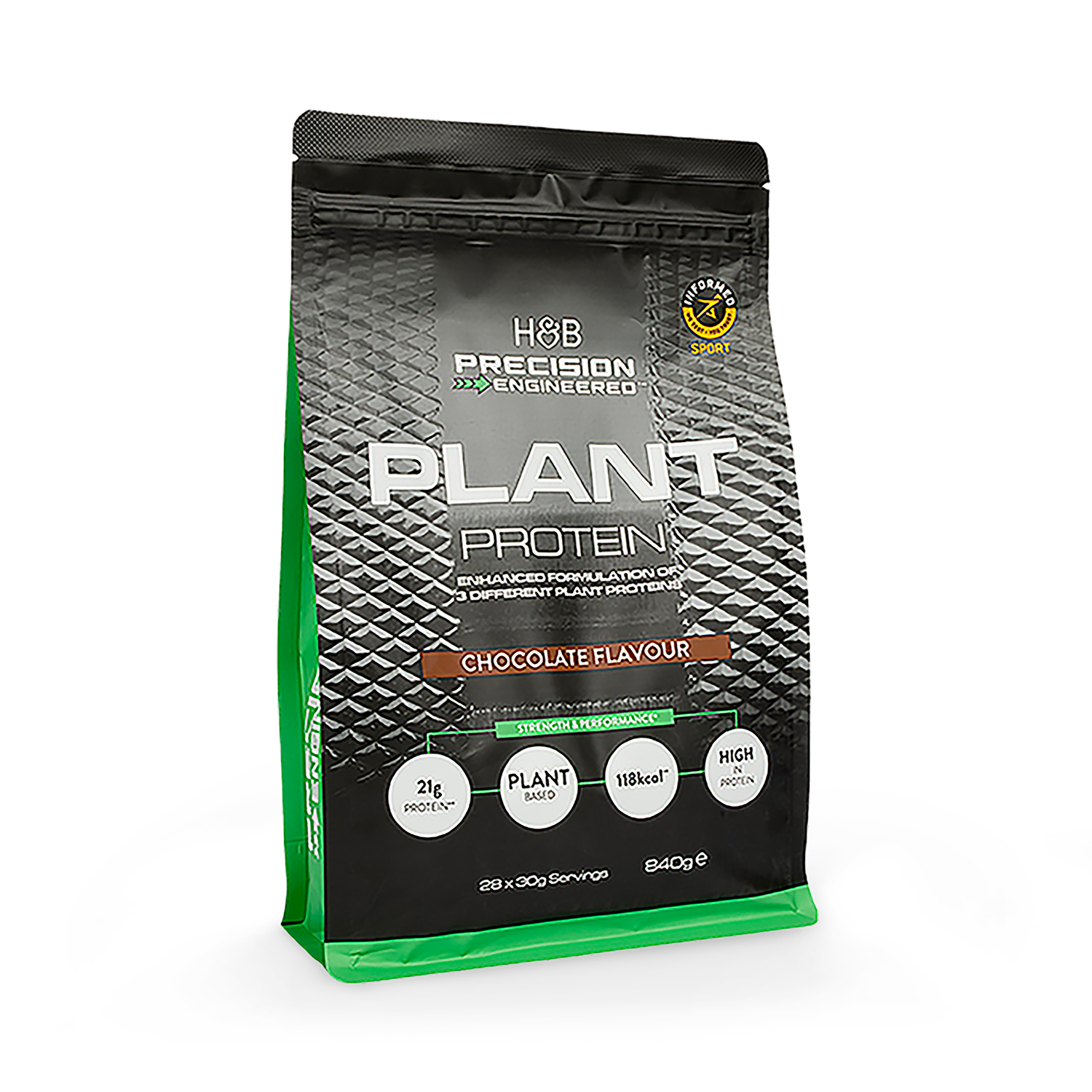
FlavourSize (g)Size (ml)QtyServingsOfferTotal Per serving 840128 £16.00 21.0g118£0.571 |
FlavourSize (g)Size (ml)QtyServingsOfferTotal Per serving 10001100 £24.99 9.0g39£0.250 250125 £9.99 9.0g39£0.400 |
FlavourSize (g)Size (ml)QtyServingsOfferTotal Per serving 1000150 £14.50 10.4g66£0.290 500125 £11.70 10.4g66£0.468 |
FlavourSize (g)Size (ml)QtyServingsOfferTotal Per serving 10001100 £24.99 8.0g41£0.250 250125 £9.99 8.0g41£0.400 |
FlavourSize (g)Size (ml)QtyServingsOfferTotal Per serving 270110 £7.50 20.1g110£0.750 |
FlavourSize (g)Size (ml)QtyServingsOfferTotal Per serving 2500183 £77.49 25.0g117£0.934 1000133 £32.49 25.0g117£0.985 5000133 £146.99 25.0g117£4.454 |
FlavourSize (g)Size (ml)QtyServingsOfferTotal Per serving 2000167 £55.99 21.0g128£0.836 900130 £29.99 21.0g128£1.000 |
FlavourSize (g)Size (ml)QtyServingsOfferTotal Per serving 1000140 £29.99 19.0g93£0.750 500120 £16.99 18.0g93£0.849 |
FlavourSize (g)Size (ml)QtyServingsOfferTotal Per serving 900129 £28.00 23.0g124£0.966 |
FlavourSize (g)Size (ml)QtyServingsOfferTotal Per serving 1000120 £13.99 17.0g174£0.700 500110 £7.99 17.0g174£0.799 |
FlavourSize (g)Size (ml)QtyServingsOfferTotal Per serving 2500142 £49.99 29.0g216£1.190 |
FlavourSize (g)Size (ml)QtyServingsOfferTotal Per serving 390114 £13.59 23.0g120£0.971 |
FlavourSize (g)Size (ml)QtyServingsOfferTotal Per serving 2267.96176 £86.00 25.0g115£1.132 1133.98138 £53.00 25.0g115£1.395 |
FlavourSize (g)Size (ml)QtyServingsOfferTotal Per serving 45033 £13.47 96.0g570£4.490 15013 £4.99 96.0g570£1.663 |
FlavourSize (g)Size (ml)QtyServingsOfferTotal Per serving 980128 £39.99 30.0g127£1.428 |
FlavourSize (g)Size (ml)QtyServingsOfferTotal Per serving 754126 £25.00 20.0g105£0.962 |
FlavourSize (g)Size (ml)QtyServingsOfferTotal Per serving 1530117 £33.90 40.0g400£1.994 |
FlavourSize (g)Size (ml)QtyServingsOfferTotal Per serving 2000166 £69.99 21.0g111£1.060 1000133 £39.99 21.0g111£1.212 500116 £21.99 21.0g111£1.374 |
FlavourSize (g)Size (ml)QtyServingsOfferTotal Per serving 2000266 £83.68 24.0g116£1.268 1000133 £44.99 24.0g116£1.363 |
FlavourSize (g)Size (ml)QtyServingsOfferTotal Per serving 40015 £6.49 25.0g322£1.298 |
FlavourSize (g)Size (ml)QtyServingsOfferTotal Per serving 908130 £34.99 21.8g104£1.166 |
FlavourSize (g)Size (ml)QtyServingsOfferTotal Per serving 1800155 £59.99 20.0g119£1.091 800124 £39.99 20.0g119£1.666 |
FlavourSize (g)Size (ml)QtyServingsOfferTotal Per serving 900130 £33.99 21.0g110£1.133 |
FlavourSize (g)Size (ml)QtyServingsOfferTotal Per serving 300110 £11.99 22.0g100£1.199 |
FlavourSize (g)Size (ml)QtyServingsOfferTotal Per serving 684120 £28.00 24.0g132£1.400 |
FlavourSize (g)Size (ml)QtyServingsOfferTotal Per serving 42016 £8.49 25.0g268£1.415 |
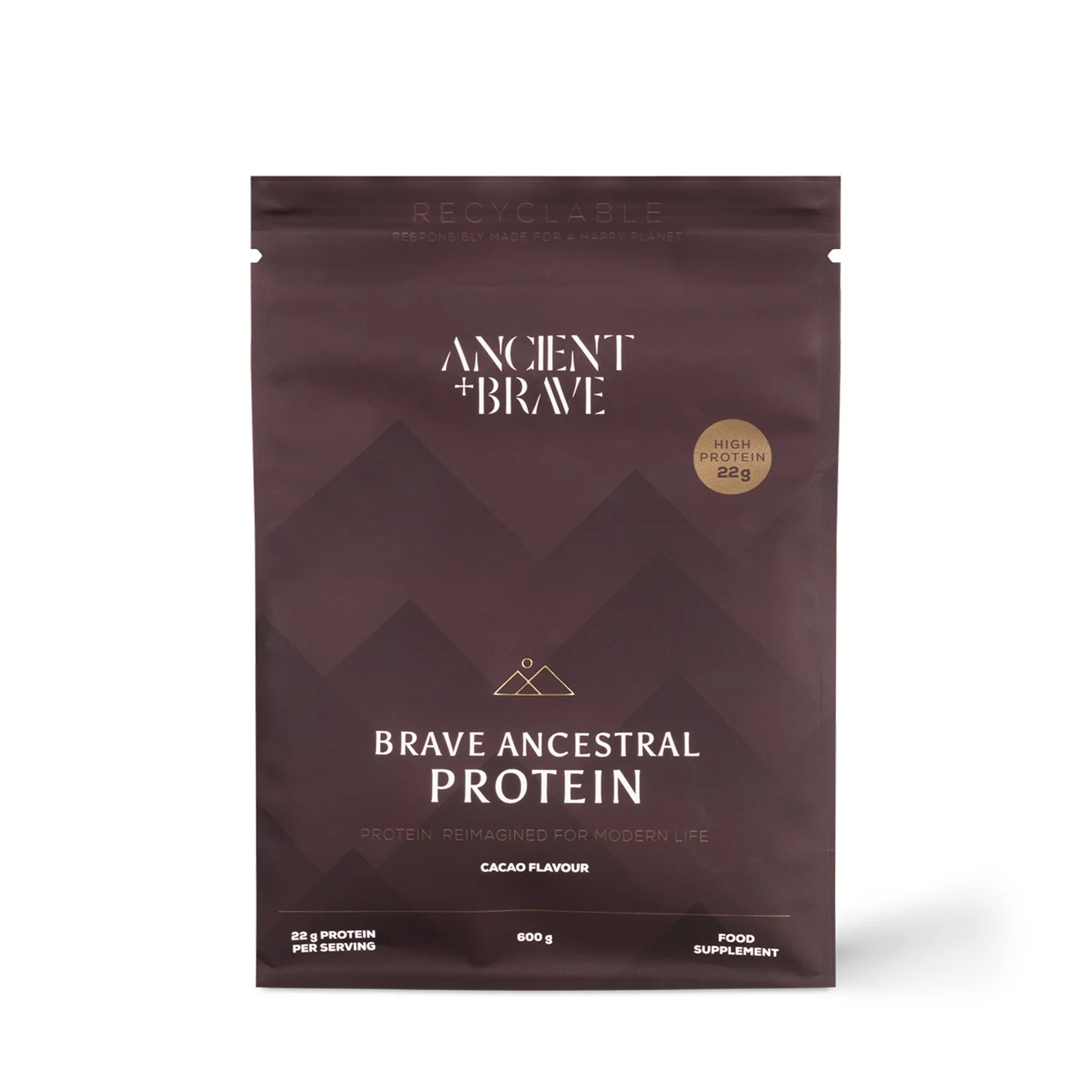
FlavourSize (g)Size (ml)QtyServingsOfferTotal Per serving 600120 £25.99 21.0g109£1.299 |
FlavourSize (g)Size (ml)QtyServingsOfferTotal Per serving 16816 £7.99 21.0g105£1.332 |
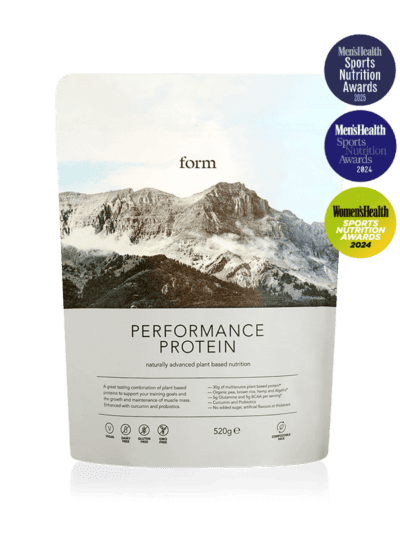
FlavourSize (g)Size (ml)QtyServingsOfferTotal Per serving 520113 £27.00 32.0g-£2.077 |
FlavourSize (g)Size (ml)QtyServingsOfferTotal Per serving 1000125 £39.99 24.2g143£1.600 |
FlavourSize (g)Size (ml)QtyServingsOfferTotal Per serving 300115 £10.00 10.0g72£0.667 10015 £4.00 10.0g72£0.800 |
FlavourSize (g)Size (ml)QtyServingsOfferTotal Per serving 520113 £27.00 30.0g149£2.077 |
FlavourSize (g)Size (ml)QtyServingsOfferTotal Per serving 1000112 £17.99 20.0g271£1.499 50016 £9.99 20.0g271£1.665 |
FlavourSize (g)Size (ml)QtyServingsOfferTotal Per serving 1000133 £54.00 21.0g115£1.636 500116 £30.00 21.0g115£1.875 |
FlavourSize (g)Size (ml)QtyServingsOfferTotal Per serving 520113 £33.00 31.0g148£2.538 |
FlavourSize (g)Size (ml)QtyServingsOfferTotal Per serving 3301212 £14.99 15.0g80£1.249 33044 £5.99 15.0g80£1.498 |
FlavourSize (g)Size (ml)QtyServingsOfferTotal Per serving 1746147 £93.57 23.1g132£1.991 582147 £31.19 7.7g44£0.664 |
FlavourSize (g)Size (ml)QtyServingsOfferTotal Per serving 697.4122 £38.00 20.0g120£1.727 719.4122 £38.00 20.0g130£1.727 671122 £38.00 20.0g120£1.727 |
FlavourSize (g)Size (ml)QtyServingsOfferTotal Per serving 1212 £26.00 22.0g-£2.167 77 £16.50 22.0g-£2.357 - £2.50 22.0g-- |
FlavourSize (g)Size (ml)QtyServingsOfferTotal Per serving 1200110 £31.99 32.0g523£3.199 |
FlavourSize (g)Size (ml)QtyServingsOfferTotal Per serving 520113 £27.00 20.0g133£2.077 |
FlavourSize (g)Size (ml)QtyServingsOfferTotal Per serving 317110 £23.00 20.0g120£2.300 327110 £23.00 20.0g130£2.300 305110 £23.00 20.0g120£2.300 |
FlavourSize (g)Size (ml)QtyServingsOfferTotal Per serving 50011 £6.95 60.0g439£6.950 |
FlavourSize (g)Size (ml)QtyServingsOfferTotal Per serving 600120 £52.00 22.0g110£2.600 |
FlavourSize (g)Size (ml)QtyServingsOfferTotal Per serving 235124 £14.95 5.0g35£0.623 |
FlavourSize (g)Size (ml)QtyServingsOfferTotal Per serving 352.8112 £31.00 20.0g110£2.583 |
FlavourSize (g)Size (ml)QtyServingsOfferTotal Per serving 300130 £33.00 7.4g38£1.100 |
FlavourSize (g)Size (ml)QtyServingsOfferTotal Per serving 54033 £6.75 3.6g290£2.250 18013 £2.39 3.6g290£0.797 |
FlavourSize (g)Size (ml)QtyServingsOfferTotal Per serving 300033 £65.97 --£21.990 10001- £21.99 --- |
FlavourSize (g)Size (ml)QtyServingsOfferTotal Per serving 1191130 £49.99 -150£1.666 |
FlavourSize (g)Size (ml)QtyServingsOfferTotal Per serving 1047130 £49.99 -150£1.666 |
FlavourSize (g)Size (ml)QtyServingsOfferTotal Per serving 10001- £13.99 --- 5001- £8.99 --- 2501- £5.99 --- |
FlavourSize (g)Size (ml)QtyServingsOfferTotal Per serving 1751- £9.00 --- |
FlavourSize (g)Size (ml)QtyServingsOfferTotal Per serving 2501- £15.00 --- |
FlavourSize (g)Size (ml)QtyServingsOfferTotal Per serving - £70.00 --- |
FlavourSize (g)Size (ml)QtyServingsOfferTotal Per serving 1701- £9.95 4.0g-- |
FlavourSize (g)Size (ml)QtyServingsOfferTotal Per serving 30 £19.95 0.0g16£0.665 |



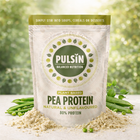
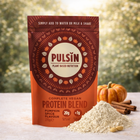


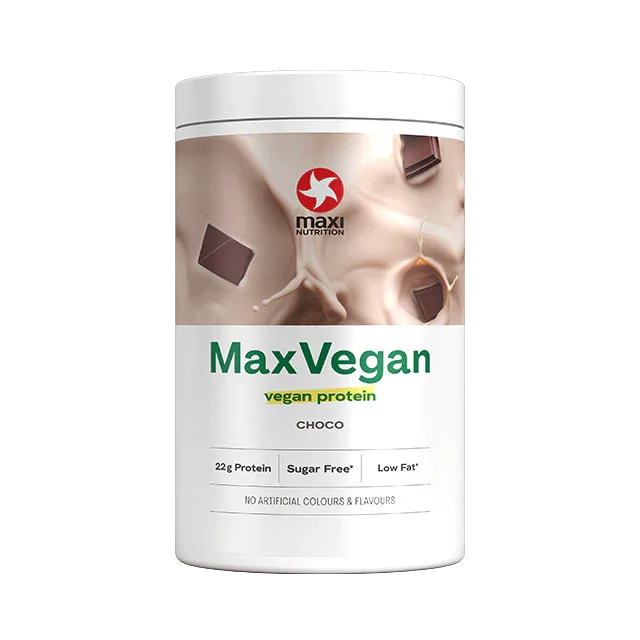

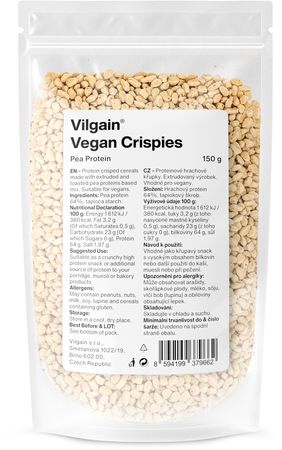














Amino acid profiles compared
Soy protein scores well on the DIAAS digestibility scale, among the highest of any plant protein, and has a leucine content of around 7-8%. It also contains relatively high amounts of glutamine and arginine, which are associated with recovery and immune function.
Pea protein has a leucine content of around 8%, which is slightly higher than soy in some formulations. It is low in methionine but higher in arginine than most other plant proteins. Blending pea with rice protein is the standard method for producing a more complete plant-based amino acid profile, and most UK vegan protein blends use this combination.
Digestibility
Soy has one of the highest digestibility ratings among plant proteins, comparable to animal proteins in some studies. It is genuinely efficient at delivering amino acids to the bloodstream.
Pea protein digests more slowly and has a slightly lower DIAAS score. The practical implication is that a slightly larger serving of pea protein is needed to match the effective amino acid delivery of soy. This is typically addressed by using serving sizes of 30-35g for pea protein rather than 25g.
Community perspective
What others are saying
Watch what buyers found
Hands-on opinions
Whey Protein vs Pea Protein, Which One is Better? | Nutrition Coach Explains | Naked Nutrition
Naked Nutrition
A topic-specific video selected for additional practical context on Pea Protein vs Soy Protein: Price, Quality and Value Compared.
Allergen considerations
Soy is one of the 14 major allergens in the UK. For people with soy allergies or sensitivities, it is not an option regardless of its nutritional profile. Soy also contains phytoestrogens, plant compounds that can weakly mimic oestrogen, which is a concern some consumers cite, though the evidence that moderate soy consumption affects hormones in healthy adults is not strong.
Pea protein is free from the major allergens and is well tolerated by most people with food sensitivities. This is one practical reason it has overtaken soy as the dominant base for UK vegan protein powders.

Cheapest Vegan Protein
Soy Protein Isolate Powder – 90% Protein
Pure Source Nutrition · 500g
Pros
- Soy is a complete dairy-free protein containing all nine essential amino acids
- 39.7% below the £2.65/100g average across 64 comparable /compare listings
Taste and mixability
Soy protein has a neutral to slightly beany flavour. Early soy protein isolates had a stronger flavour that many people found unpleasant, but modern processing has improved this considerably. It mixes well and tends to produce a smoother texture than pea protein.
Pea protein has a more distinctive earthy taste that is harder to neutralise with flavouring. Modern products have improved significantly, but soy still tends to win on palatability in blind taste tests.
Which should you choose?
If you have no soy allergy and no concerns about soy consumption, soy protein is slightly more complete and highly digestible. It is a strong choice for vegan lifters who want to maximise amino acid delivery per gram.
If you have a soy allergy or prefer to avoid soy, pea protein, ideally blended with rice protein, is an excellent alternative with comparable muscle-building outcomes in research. The allergen-free profile and wider availability make it the more practical choice for most UK buyers.
References
Sources and further reading
- 01Reed et al. — soy and male reproductive hormones
Updated meta-analysis of clinical studies relevant to common soy and feminisation claims.
Frequently asked questions
Does soy protein affect testosterone?+
The evidence does not support a meaningful effect on testosterone from moderate soy consumption in healthy adult men. Multiple controlled studies have found no significant hormonal changes at typical dietary intake levels.
Is pea and rice protein better than soy?+
Pea and rice combined produces a complete amino acid profile that is comparable to soy and avoids the allergen concern. For people without soy sensitivity, the difference in outcomes is small.
Which is cheaper in the UK?+
Pea protein is generally slightly cheaper per kg in the UK market. Soy protein isolate can be cheaper at the commodity end, but branded soy products often sit at similar price points to pea.