
Quick answer
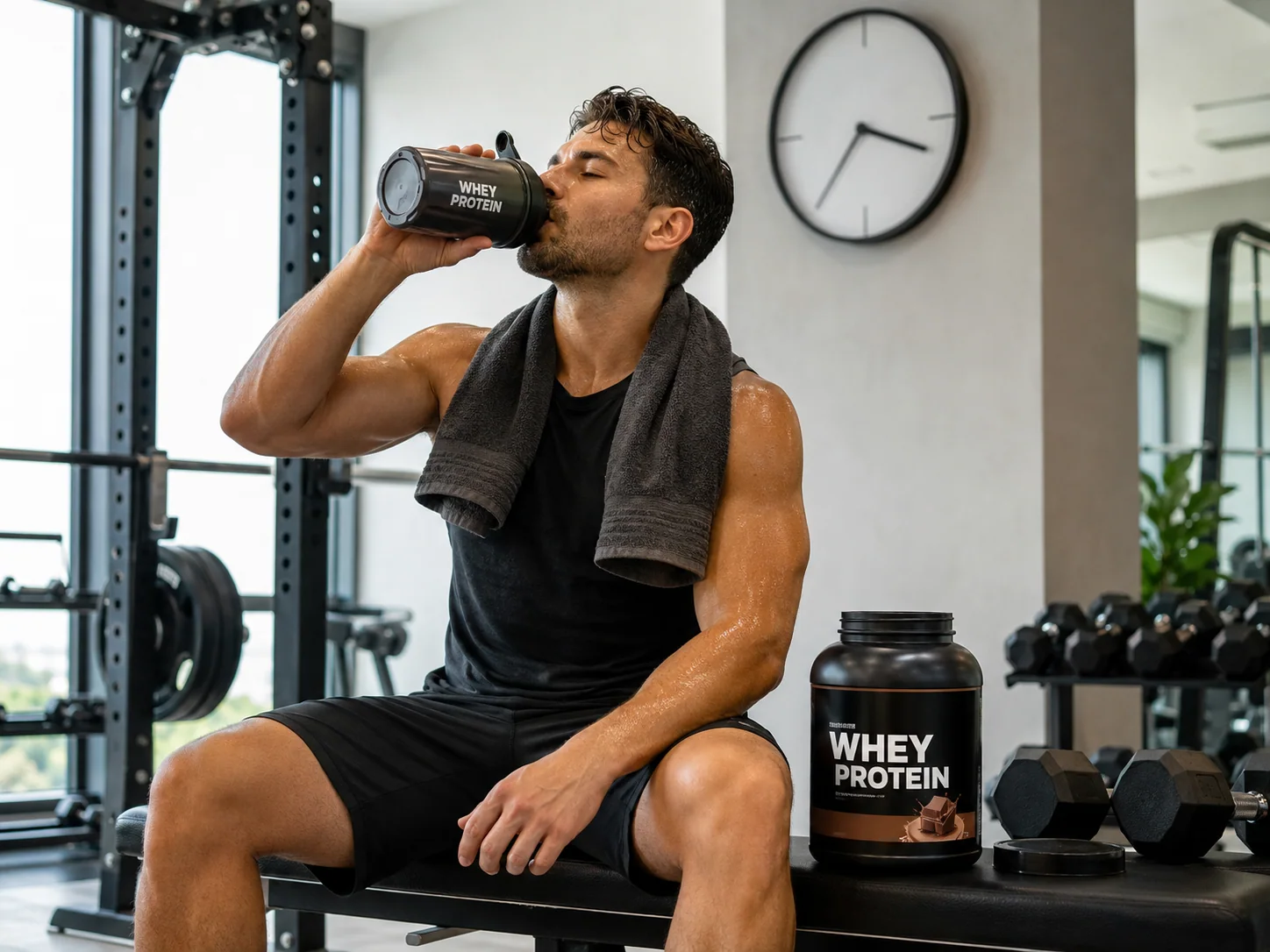
Before versus after training matters far less than total daily protein. If your last protein-rich meal was several hours ago, take whey before; otherwise take it after for convenience. We would not buy a special workout-timing formula—ordinary whey concentrate supplies the same useful protein.
The short answer
Either works. The research does not strongly favour one over the other when total daily protein intake is adequate. What matters most is that you are hitting your protein target across the day, not the precise moment you consume it relative to your session.
That said, there is a practical case for both. Understanding why helps you build a habit that fits your schedule rather than chasing an optimisation that provides marginal benefit.
The case for protein before training
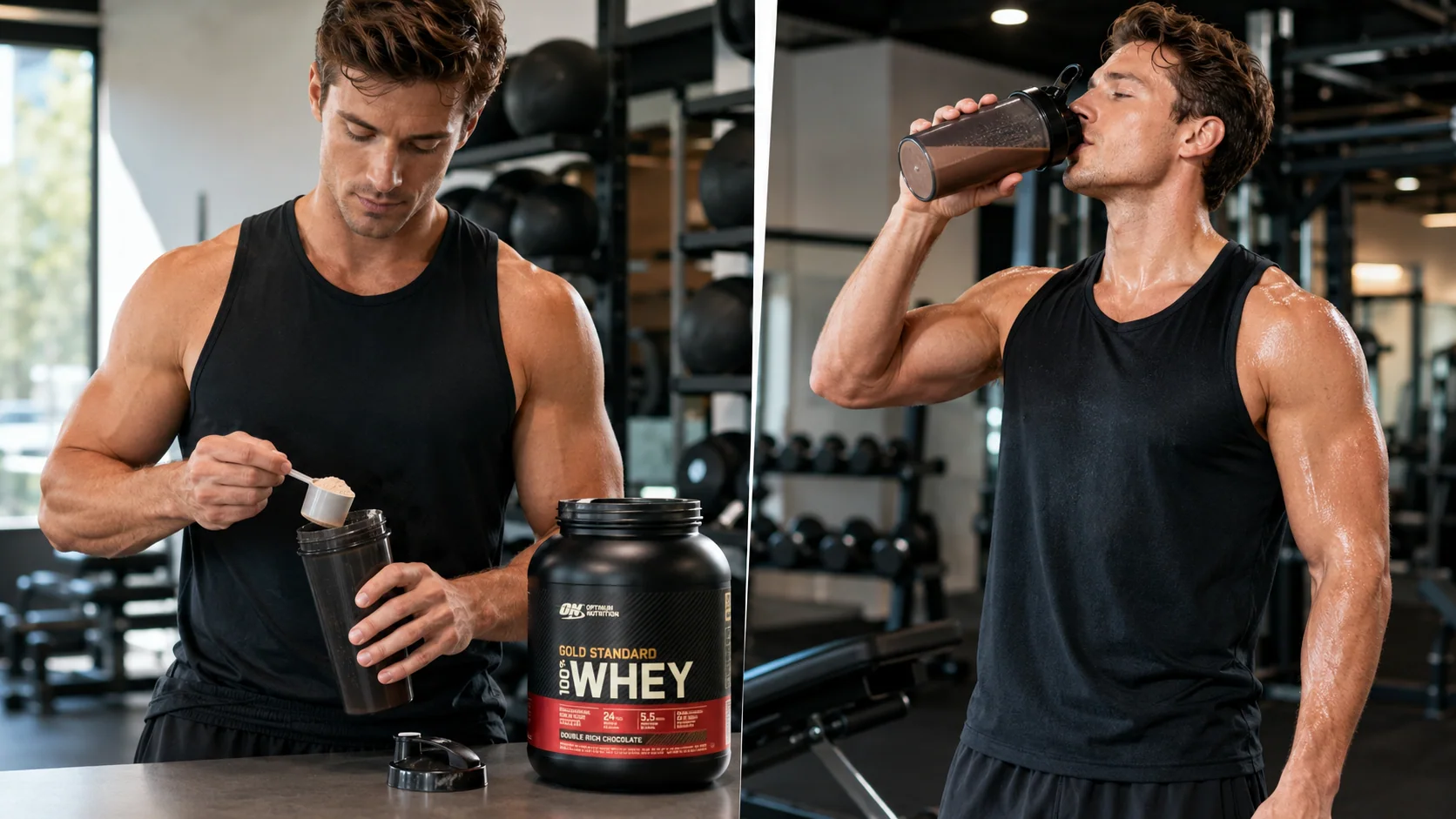
Consuming protein before training ensures amino acids are available in your bloodstream during the session. Muscle protein synthesis can be elevated during and immediately after exercise, and having circulating amino acids at that point means the raw materials are already present.
A pre-workout shake is most useful when you are training early in the morning or have not eaten for four or more hours. If your last meal was within two to three hours of training and included a meaningful protein source, a pre-workout shake adds little on top.
The case for protein after training
Post-workout protein is the most widely studied timing strategy. The muscle is more sensitive to amino acids in the period following a resistance session, and consuming protein after training is a well-supported habit for recovery.
The window is wider than most people assume. Research suggests the meaningful post-workout period extends for at least one to two hours, and potentially longer in trained individuals. You do not need to drink your shake in the changing room. A meal within two hours of finishing your session produces comparable results.
Community perspective
What others are saying
Electrolytes before, during, and after. Whey protein is better before. You can have a normal meal after your workout For intra-workout, sipping on a watered-down Gatorade is popular to keep energy levels stable (it’s even better if you can add 10-12g of protein)
u/Nick_OS_ in r/beginnerfitness
Carbs before workout. Electrolytes during workout. More carbs after workout. Protein whenever. Protein timing is not important. Carb timing is And electrolytes need to be replenished when you're sweating.
u/omrsafetyo in r/beginnerfitness
Watch what buyers found
Hands-on opinions
Pick The Right Whey Protein in Under 4 Minutes
PictureFit
A topic-specific video selected for additional practical context on Whey Protein Before or After Workout: Best Options Compared for 2026.
What if you eat a meal near your session?
A protein-containing meal within one to two hours before training, combined with a protein-containing meal within one to two hours after, provides the same nutritional support as dedicated pre or post-workout shakes. For people who prefer eating meals to drinking shakes, this is a perfectly valid approach.
Whey shakes are convenient because they are fast to prepare, easy to consume without appetite, and quick to digest. The convenience is the main benefit, not a unique physiological effect that food cannot replicate.

Cheapest Whey Protein
Diet Whey Protein Powder
Pure Source Nutrition · 1kg
Pros
- Whey concentrate supplies a complete essential-amino-acid profile
- Current tracked price is £16.99 for 1kg (£1.70/100g)
Cons
- Whey concentrate may not suit lactose-sensitive users
The practical recommendation
If you train in the morning before breakfast: take a whey shake immediately after training and eat a full meal within the next two hours.
If you train in the afternoon or evening with meals before and after: you may not need a shake at all if your meals contain sufficient protein. A shake is still useful for convenience or if you struggle to hit your daily target through food alone.
If you can only pick one timing: after training is the slightly better-evidenced default. But the difference is small enough that you should pick whichever habit you can maintain consistently.
Total daily protein is what drives results
The largest body of evidence on protein and muscle growth points consistently to total daily intake as the primary driver. Two people who both eat 160g of protein per day will produce very similar muscle adaptations over months regardless of whether one front-loads it before training and the other takes it after.
Timing is a refinement on top of adequate total intake. Get the total right first. Once that is consistent, optimising timing can make marginal further improvements.
References
Sources and further reading
- 01Morton et al. — protein supplementation and resistance training
Systematic review and meta-analysis informing the emphasis on total protein and resistance training.
Frequently asked questions
Can I take whey protein both before and after a workout?+
Yes. If your total daily protein intake allows it, taking a shake both before and after training is fine. There is no harm in this approach, though for most people one shake around training is sufficient.
How long before a workout should I take protein?+
Within one to two hours before training is a sensible window. Any closer and you may feel full or uncomfortable during the session.
Does it matter if I mix whey with water or milk?+
Mixing with milk adds extra protein and calories, which may be useful for people in a caloric surplus. Water is lower in calories and digests slightly faster. Both work. The choice depends on your calorie and macro goals.